Artwork
Penn's Treaty with the Indians
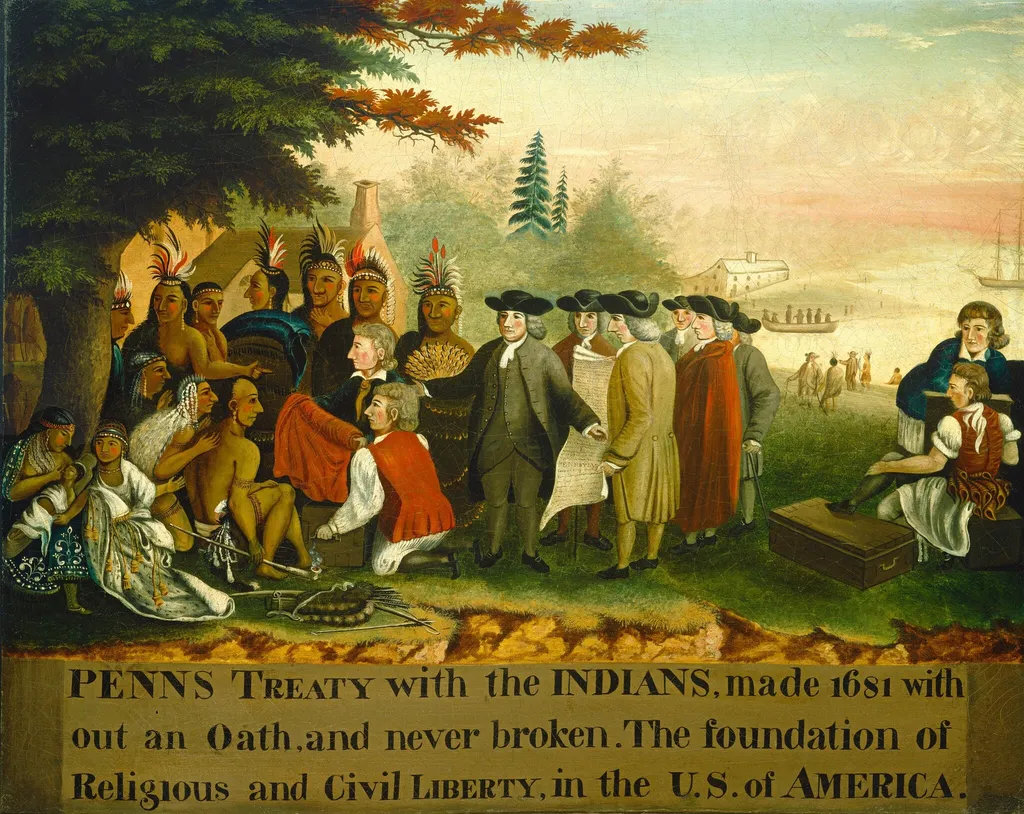
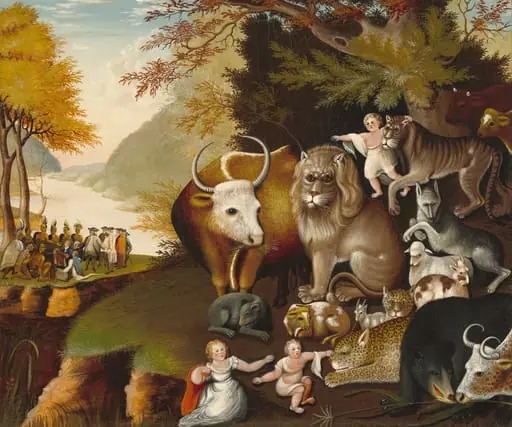
Penn's Treaty with the Indians is an oil painting by the American Folk Art artist Edward Hicks. It dates from 1842 and is held in the collection of the National Gallery of Art.
About this work
Overview
Edward Hicks’s oil on canvas, painted around 1842, portrays a historic meeting between European settlers and Native Americans. The composition centers on two groups clasping hands beneath a solitary tree, with a river, a small boat, and a modest building visible in the distance. The palette is vivid yet shows signs of aging, giving the scene a muted, antiquated appearance.
Subject & Meaning
The work commemorates a treaty negotiated between the colonists and Indigenous peoples, suggesting a moment of peaceful accord.
The work commemorates a treaty negotiated between the colonists and Indigenous peoples, suggesting a moment of peaceful accord. Figures in formal 19th‑century attire stand opposite individuals wearing feathered headbands and traditional garments, emphasizing cultural contrast while highlighting a shared gesture of agreement. An inscription below reinforces the notion of an unbroken pact that contributed to later concepts of liberty.
Technique & Style
Hicks employs a straightforward, folk‑art approach characteristic of his broader oeuvre, using clear outlines and flattened space. The oil medium allows for bright coloration, though the surface now appears softened by age. The scene is rendered with modest detail—such as the log where several figures converse—while the background remains simplified, focusing attention on the central act of handshake.
History & Provenance
Created in the early 1840s, the painting reflects a period of American interest in early colonial narratives. Though specific ownership records are limited, the piece has been associated with collections that emphasize Romantic‑era interpretations of foundational events, aligning with the era’s fascination with idealized historical moments.
Context
The image aligns with Romanticism’s tendency to dramatize historical episodes and celebrate perceived noble virtues. By depicting a harmonious treaty, the work participates in a broader 19th‑century discourse that sought to legitimize the nation’s origins through stories of cooperation between settlers and Indigenous peoples.
Artist & collection

Artist
Edward Hicks spent his life caught between two worlds. A Quaker preacher by Sunday and a painter by weekdays, he painted signs and carriages to support his family while quietly building a body of peaceful, crowded…