Artwork
H Beard Print Collection
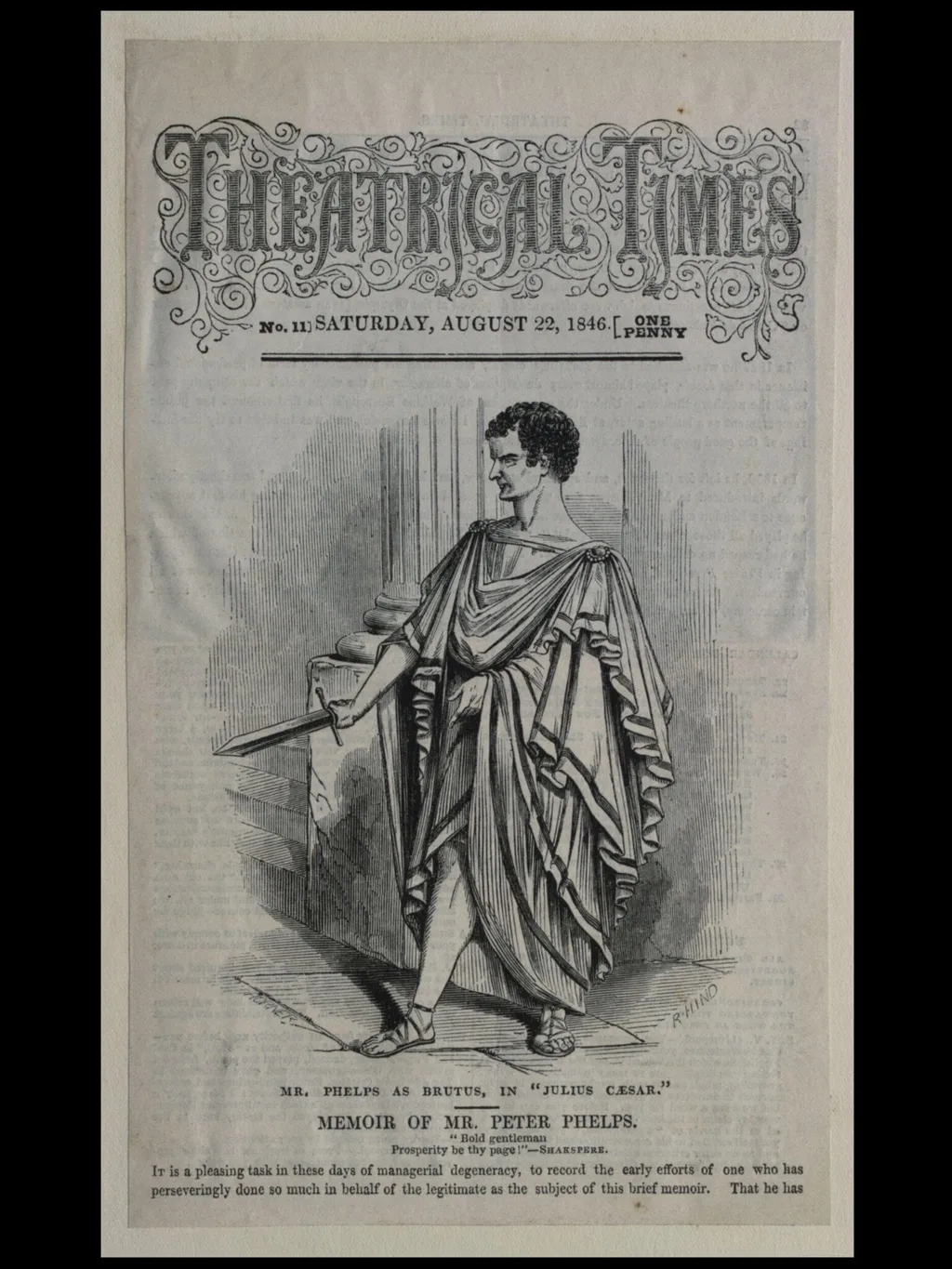
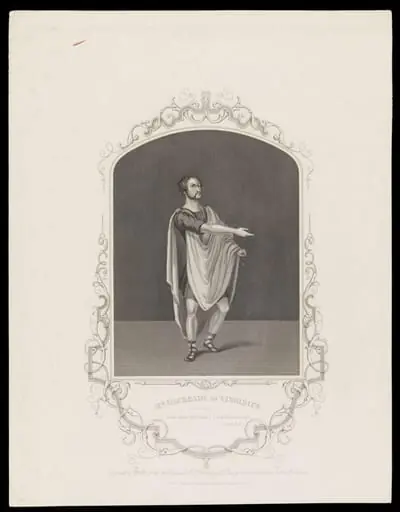
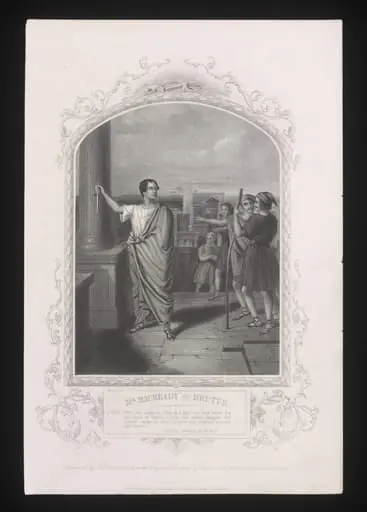
H Beard Print Collection is a print by the Romanticist artist R. Hind. It dates from 22 and is held in the collection of the Victoria and Albert Museum. This 1846 print served as the cover of Theatrical Times, illustrating Samuel Phelps in the role of Brutus from Shakespeare’s Julius Caesar.
About this work
This print shows a famous actor, Samuel Phelps, playing Brutus in *Julius Caesar*. Made in 1846, it was the cover of *Theatrical Times*. The cover also points to an article about him.
The odd part? The article calls him “Peter Phelps” even though it’s about Samuel. That mix-up has stayed a mystery.
If prints like this intrigue you, look up the Victoria and Albert Museum.
Overview
This 1846 print served as the cover of Theatrical Times, illustrating Samuel Phelps in the role of Brutus from Shakespeare’s Julius Caesar.
This 1846 print served as the cover of Theatrical Times, illustrating Samuel Phelps in the role of Brutus from Shakespeare’s Julius Caesar. The image was paired with an article titled 'Memoir of Mr. Peter Phelps,' creating an unusual discrepancy: the subject of the piece was Samuel Phelps, yet the byline named a different individual. The error remains unexplained, though the print endures as a record of mid-19th-century theatrical publicity.
Subject & Meaning
Samuel Phelps, a prominent actor and manager of Sadler’s Wells Theatre, was depicted in a moment of solemn authority as Brutus, emphasizing his reputation for serious Shakespearean roles. The cover aimed to associate the publication with high cultural legitimacy through his performance. The misattribution to 'Peter Phelps' undermines the article’s credibility but also reflects the informal, sometimes careless nature of periodical production at the time.
Technique & Style
The print employs line engraving with hand-coloring, typical of illustrated periodicals in the 1840s. The composition centers Phelps in profile, framed by theatrical drapery and a classical column, evoking the gravitas of Roman tragedy. Text is arranged around the image in a standard periodical layout, balancing visual impact with editorial content without overwhelming the figure.
History & Provenance
The print originated as part of a weekly theatrical journal, distributed to London’s theatergoing public. Its survival is likely due to its association with Phelps, a respected figure in Victorian theatre. The Victoria and Albert Museum holds examples of similar materials, suggesting the print was preserved as part of a broader collection documenting performance history rather than as a standalone artwork.
Context
In 1846, London’s theatre scene was increasingly documented in illustrated journals, blending news, criticism, and portraiture. Theatrical Times competed with other publications to capture public interest through celebrity actors. The error in naming may have arisen from a typesetting mistake or editorial oversight, common in fast-paced print environments where deadlines outweighed fact-checking.
Legacy
The print survives as a quiet artifact of theatrical documentation, notable more for its anomaly than its artistry. The misnamed article has drawn scholarly attention as a curiosity, illustrating how easily historical records can be distorted. It remains a useful case study in the challenges of preserving accurate performance history from ephemeral print sources.
Artist & collection