Artwork
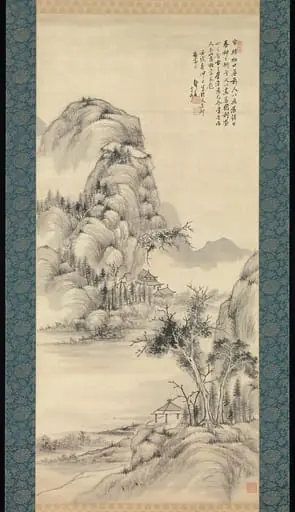
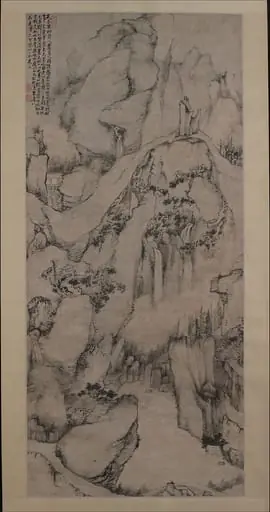
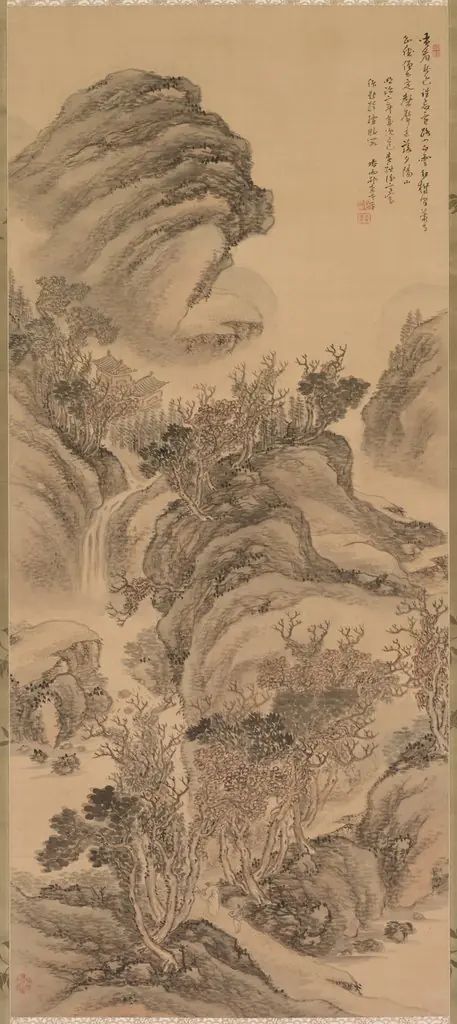
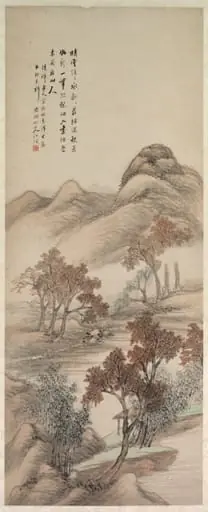
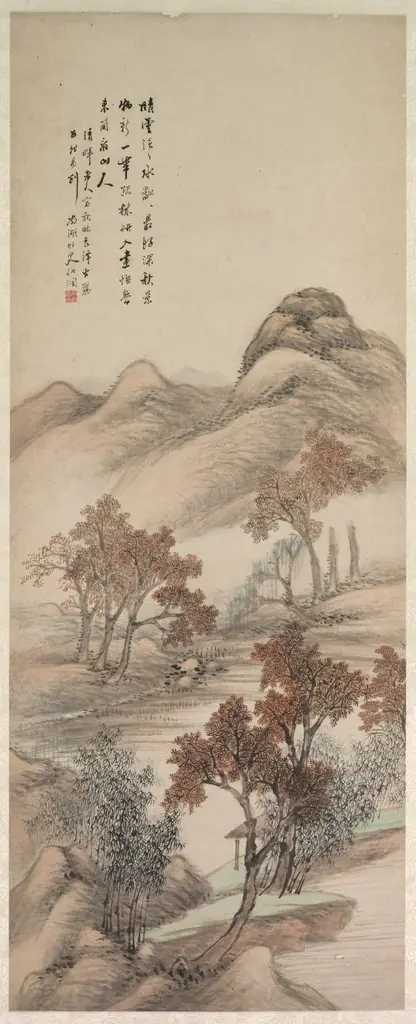
Sunset over Autumn Mountains
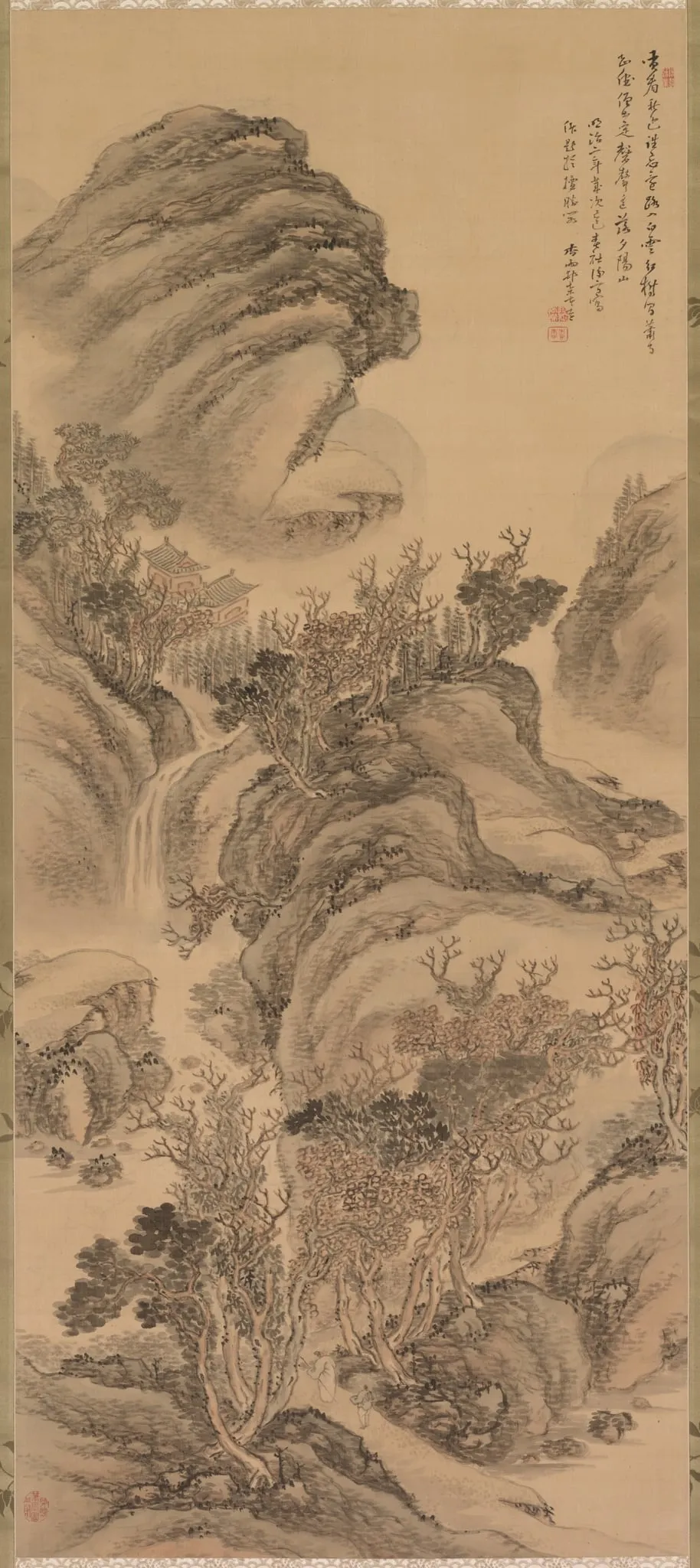
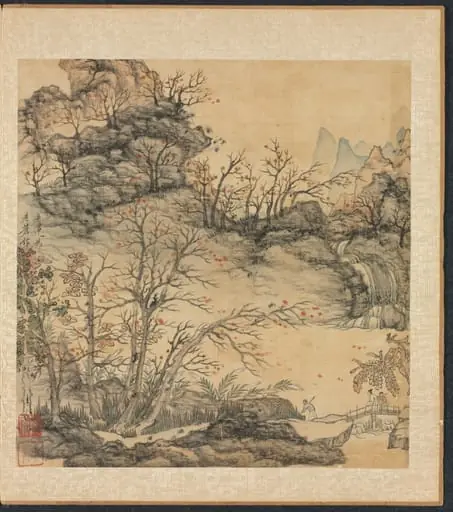
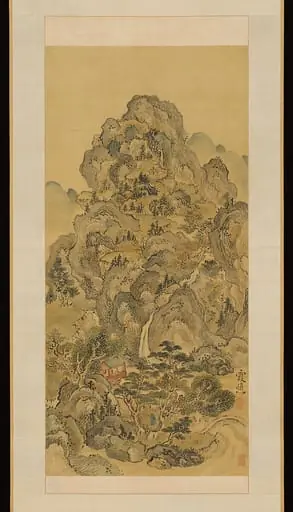
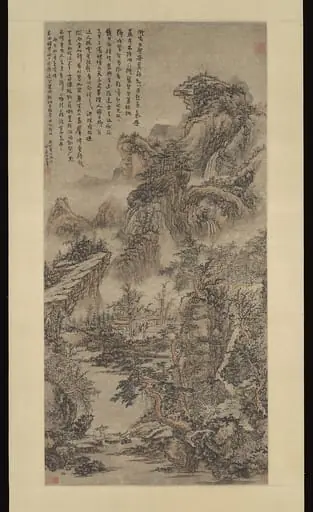
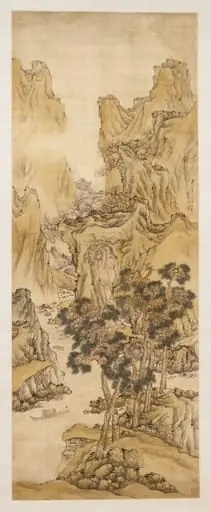
Sunset over Autumn Mountains is an unspecified painting by the Impressionist artist Hoashi Kyōu. It dates from 1869 and is held in the collection of the Cleveland Museum of Art.
About this work
Overview
It resides in The Cleveland Museum of Art’s collection, where it is valued for its restrained tonality and evocative atmosphere.
Painted in 1869 by Hoashi Kyōu, this landscape captures a quiet mountain landscape at twilight. Executed in ink and light color on paper, the work reflects the artist’s engagement with traditional Japanese aesthetics while embracing a more spontaneous, sketch-like approach. It resides in The Cleveland Museum of Art’s collection, where it is valued for its restrained tonality and evocative atmosphere.
Subject & Meaning
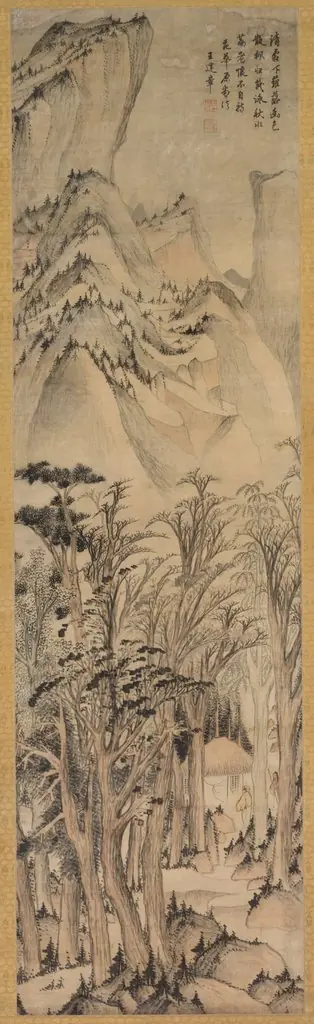
The scene depicts an empty, rugged mountainside at dusk, with bare trees clinging to steep slopes and a faint path leading toward a distant structure. The absence of human figures enhances a sense of solitude, suggesting contemplation rather than narrative. The fading light and muted palette evoke transience, aligning with themes of impermanence common in East Asian landscape traditions.
Technique & Style
Hoashi employed rapid, fluid brushwork to suggest form rather than define it, using diluted ink and subtle washes to create texture in rocks and foliage. The sky’s faint glow is rendered with minimal pigment, allowing the paper’s whiteness to suggest twilight. The loose, almost impressionistic strokes convey movement and atmosphere, bridging ink-wash conventions with a more immediate, observational style.
History & Provenance
Created in the late Edo period, the painting entered The Cleveland Museum of Art’s collection in the 20th century. Its journey from Japan to the United States reflects broader patterns of cultural exchange during a time when Japanese art gained increasing recognition abroad. The work’s preservation in a Western institution underscores its significance beyond its original context.
Context
Hoashi Kyōu worked during a period of transition in Japanese art, as traditional ink painting responded to Western influences and changing social structures. While rooted in literati ideals, his approach shows a move toward personal expression and direct observation. This painting reflects a quiet resistance to formalism, favoring mood and naturalism over idealized composition.
Legacy
Though not widely known outside specialist circles, Hoashi’s work contributes to the understanding of 19th-century Japanese landscape painting as a dynamic, evolving practice. His use of spontaneity and tonal subtlety influenced later artists seeking to reconcile tradition with modern sensibilities. The painting remains a quiet testament to the enduring power of understated naturalism.
Artist & collection