Artwork
Untitled
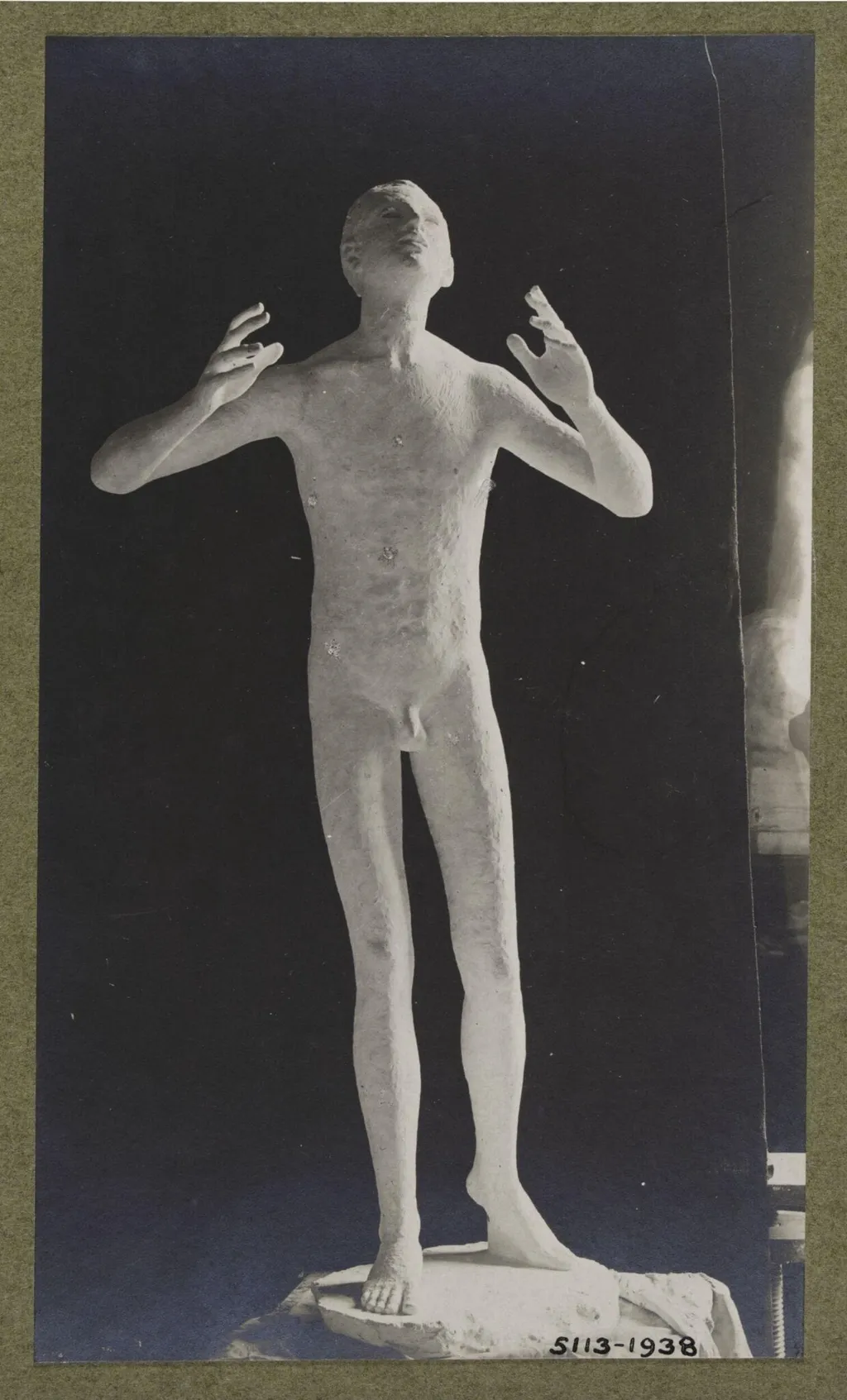
Untitled is a photographic photography by Jakob Hofmann. It dates from 1548 and is held in the collection of the Victoria and Albert Museum.
About this work
The photo itself is grainy, with a dark background that makes the figure stand out.
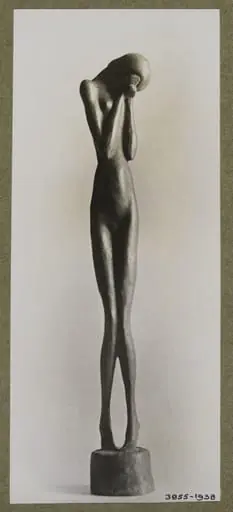
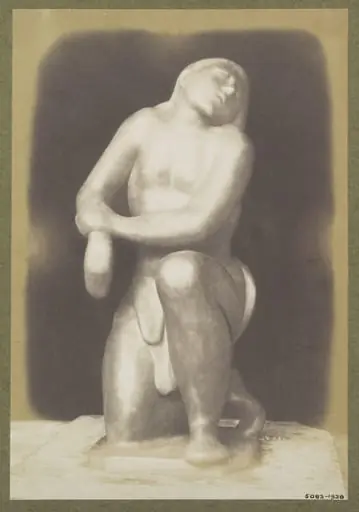
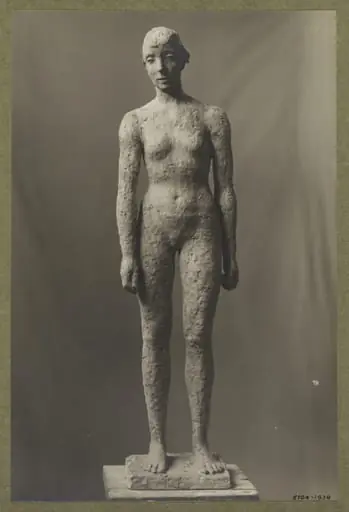
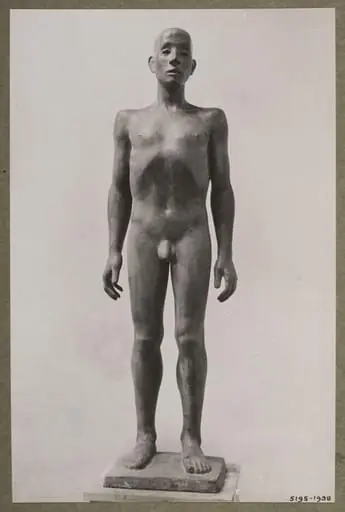
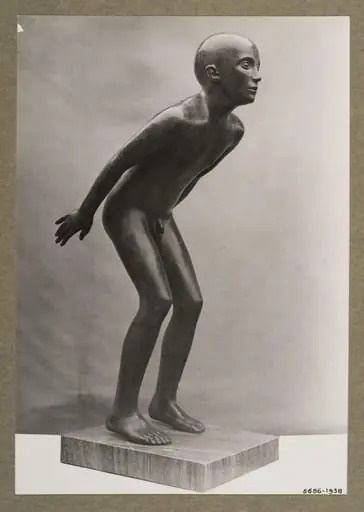
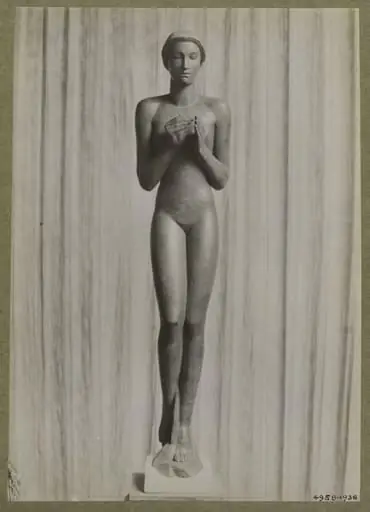
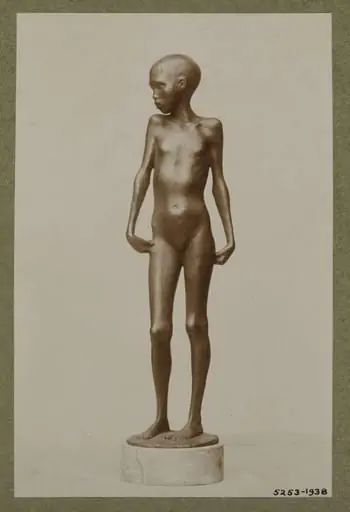
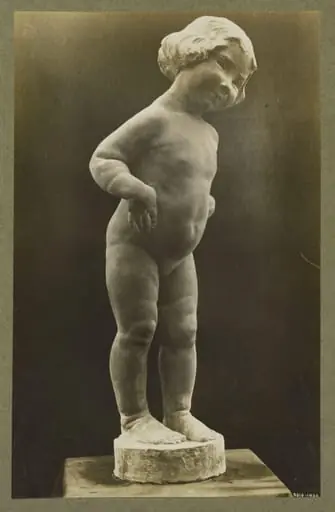
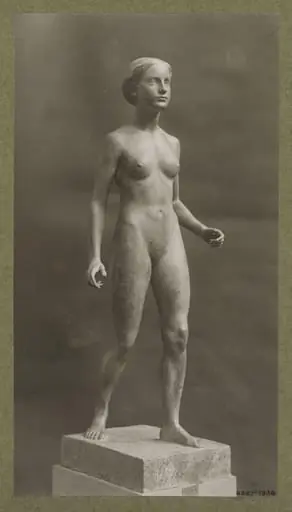
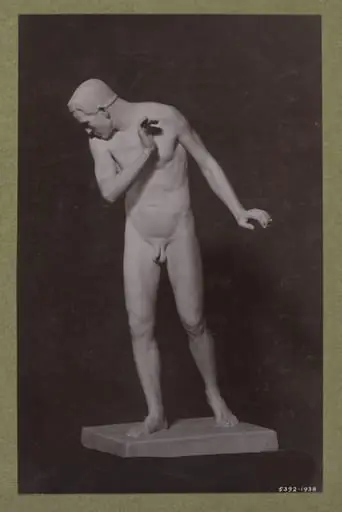
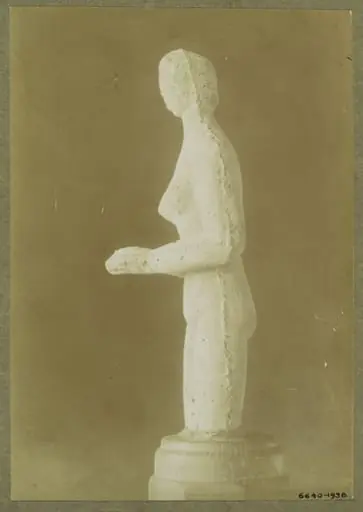
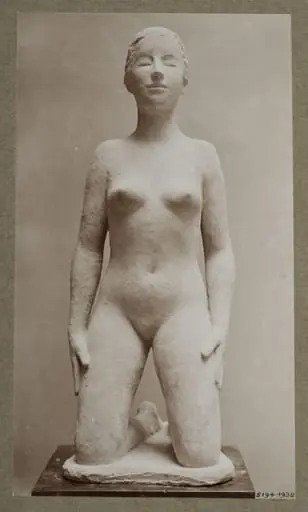
This is a black-and-white photo of a naked man standing on a small pedestal. His arms are raised, hands open as if holding something invisible. The surface looks rough, almost like clay or plaster, with a simple, blocky shape.
The photo itself is grainy, with a dark background that makes the figure stand out. The number "5113-1938" is stamped in the corner—likely a museum inventory tag.
Check out the Victoria and Albert Museum to see more works like this.
Overview
This black-and-white photograph, mounted on green card, was submitted in response to a 1920s questionnaire distributed by William Kineton Parkes, a collector and writer focused on sculpture. It forms part of a larger archive of visual materials gathered to document contemporary sculptural practice. The image was later bequeathed to the Archive of Art and Design in 1938, where it remains cataloged under the inventory number 5113-1938.
Subject & Meaning
The photograph depicts a nude male figure standing on a low pedestal, arms raised with palms open, as if cradling an unseen object. The form appears abstracted, with a rough, blocky texture suggesting clay or plaster. The pose evokes ritual or offering, though no explicit narrative is provided. The lack of context leaves interpretation open, emphasizing the figure as a study in form rather than a representation of a specific myth or person.
Technique & Style
The photograph is grainy and high-contrast, with a dark background isolating the figure. The subject’s surface texture is rendered with sharp detail, emphasizing its tactile, sculptural quality. The composition is straightforward, centered and unadorned, prioritizing documentation over artistic embellishment. The image’s simplicity reflects its function as a record of a three-dimensional work, likely intended for study or correspondence among artists and collectors.
History & Provenance
The photograph originated as part of a survey conducted by William Kineton Parkes in the 1920s, who sought visual documentation from sculptors across Britain. It was returned as a response to his questionnaire and eventually entered the Archive of Art and Design through his 1938 bequest. The inventory stamp confirms its institutional handling, linking it to broader efforts to systematize the study of modern sculpture in early 20th-century Britain.
Context
During the 1920s, artists and collectors increasingly used photography to circulate and analyze sculptural work, especially as modernist forms moved away from traditional representation. Parkes’s questionnaire was part of a wider movement to catalog and understand contemporary sculpture beyond academic institutions. This image reflects that shift—valued not for its aesthetic polish, but for its role in documenting evolving artistic practices.
Legacy
The photograph survives as a fragment of a once-active network of artistic exchange, preserving a moment when sculptors communicated through visual submissions rather than public exhibitions. Its archival status underscores its historical function over artistic fame. Today, it contributes to understanding how sculptural ideas were shared, recorded, and evaluated in early 20th-century Britain, offering insight into the material culture of artistic practice.
Artist & collection