Artwork
Sketch of a Cottage Yard
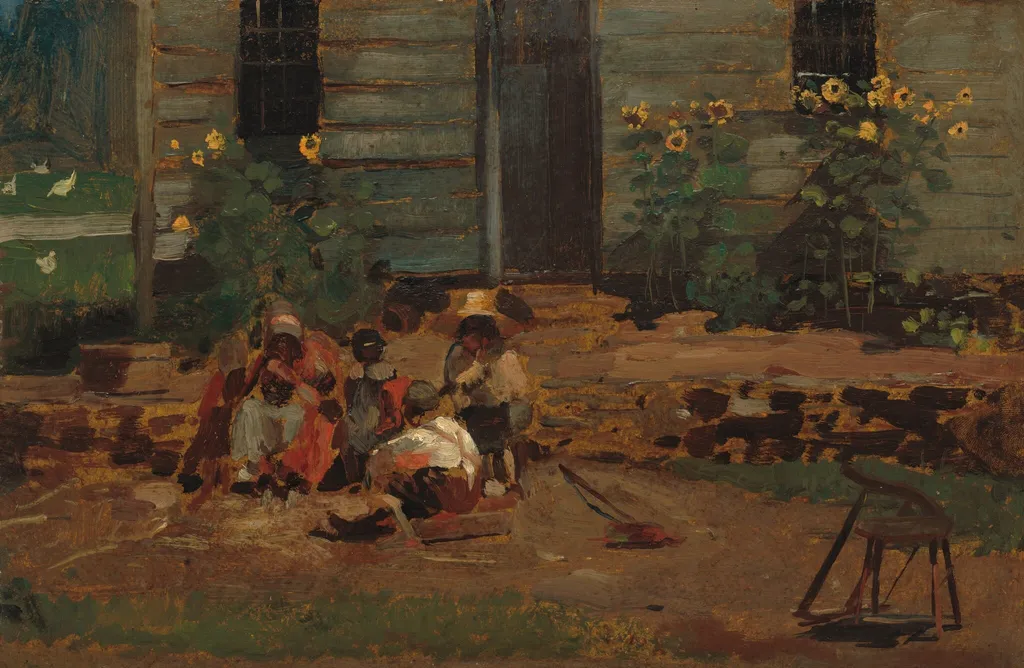
Sketch of a Cottage Yard is an oil painting by the American Impressionist artist Winslow Homer. It dates from 1876 and is held in the collection of the National Gallery of Art.
About this work
Overview
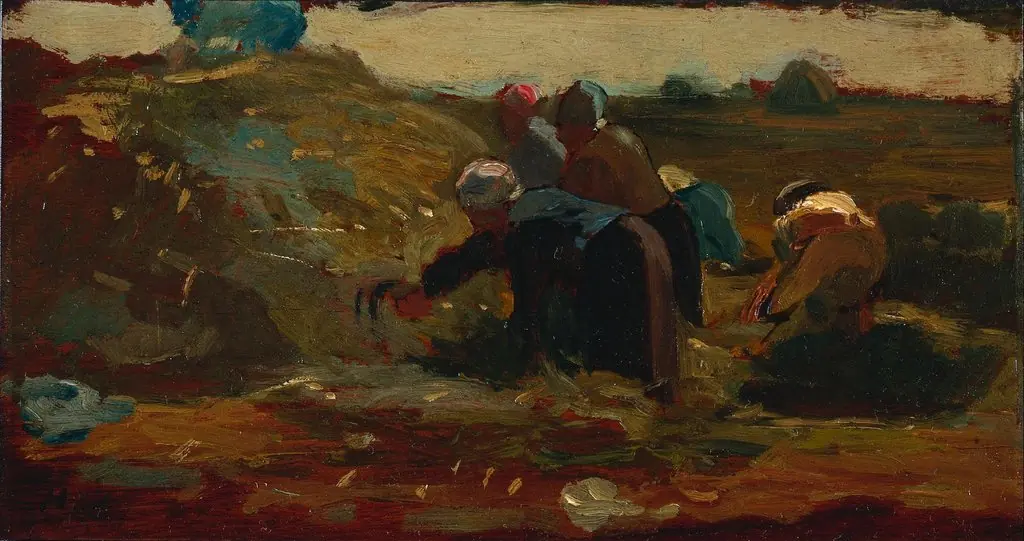
Winslow Homer produced the work titled Sketch of a Cottage Yard around 1876, employing oil on a board prepared for academic study. The composition captures a modest rural dwelling and its occupants in a moment of everyday life, rendered with a spontaneity that reflects the artist’s interest in observing ordinary scenes.
Subject & Meaning
The painting depicts three figures gathered on the yard of a weathered wooden cottage: a woman in a red dress, another individual in a dark coat, and a third person wearing a light hat. A baby lies on a blanket nearby, while a chair leans against the wall. The arrangement suggests a quiet domestic pause, emphasizing familial intimacy within a humble setting.
Technique & Style
The palette features vivid accents of red, green, and yellow set against the darker tones of the timber and earth, creating visual contrast.
Homer applies oil with brisk, thick brushstrokes that convey immediacy and texture. The palette features vivid accents of red, green, and yellow set against the darker tones of the timber and earth, creating visual contrast. This handling aligns with the loose, observational approach associated with Impressionist practices, though rendered on a modest academy board rather than a traditional canvas.
Context
Created during the mid‑1870s, the work reflects Homer’s shift from marine subjects to rural American life, a period when he explored the everyday experiences of ordinary people. The choice of a cottage yard as subject matter situates the painting within a broader interest among American artists of the era to document domestic scenes beyond the urban and maritime realms.
Own this work as a print
Artist & collection
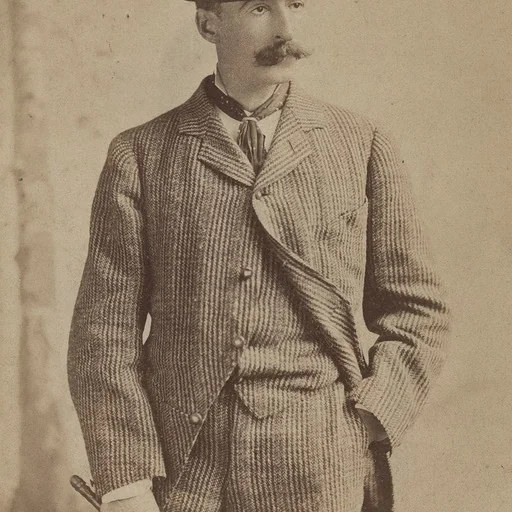
Artist
Winslow Homer (February 24, 1836 – September 29, 1910) was an American landscape painter and illustrator, best known for his marine subjects.