Artwork
Two Scouts
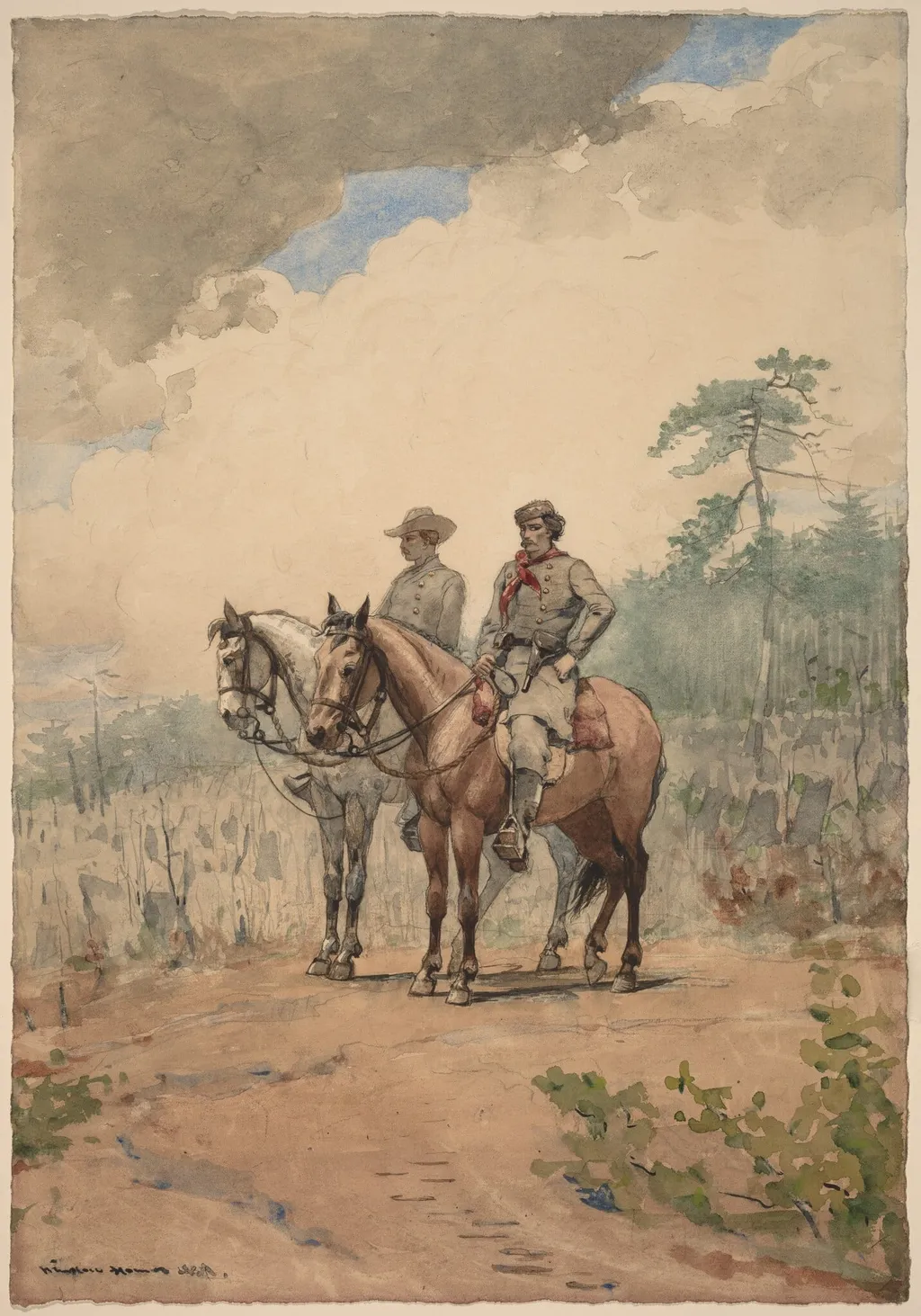
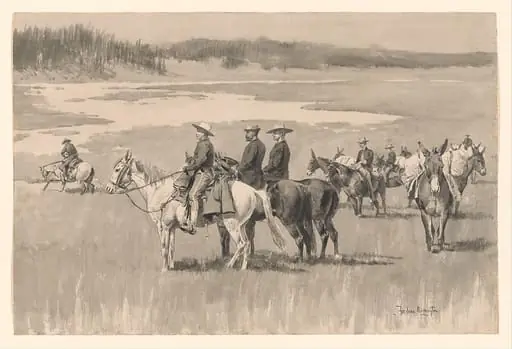
Two Scouts is a graphite drawing by the Impressionist artist Winslow Homer. It dates from 1887 and is held in the collection of the National Gallery of Art.
About this work
Overview
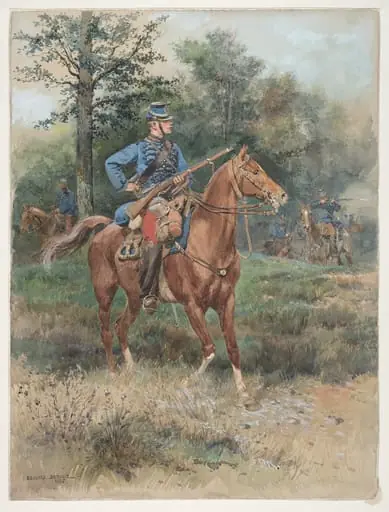
Created in 1887, Two Scouts is a watercolor drawing by Winslow Homer on wove paper, built over an initial graphite sketch. It depicts two mounted figures on a quiet rural path, rendered with a spontaneous, fluid hand. The work belongs to Homer’s series of outdoor scenes from the late 1880s, where he explored transient moments through light and movement, favoring immediacy over polish.
Subject & Meaning
The red scarf on one figure adds a subtle focal point, hinting at individual identity within a structured role.
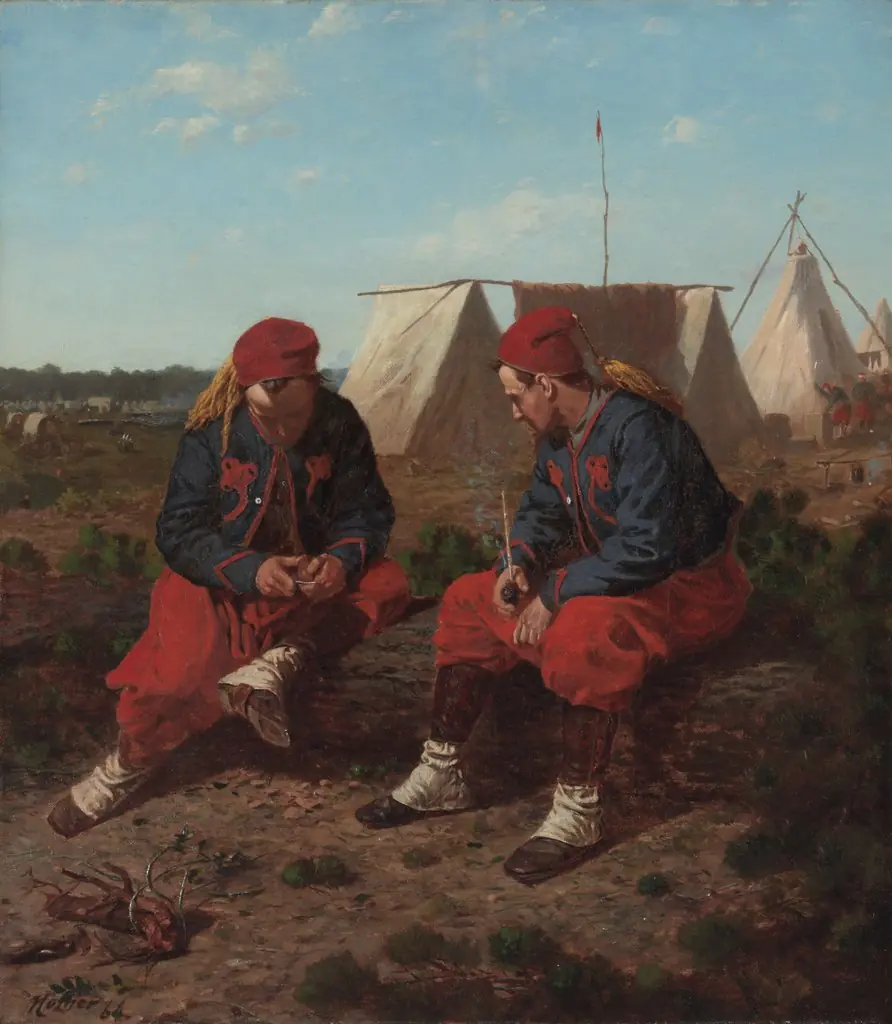
The two figures, dressed in military attire, appear as scouts or cavalrymen paused during a routine patrol. Their stillness contrasts with the wind-swept foliage, suggesting a moment of quiet vigilance. The red scarf on one figure adds a subtle focal point, hinting at individual identity within a structured role. The scene evokes observation rather than action, emphasizing the quiet tension of military life in nature.
Technique & Style
Homer employed loose, rapid watercolor strokes over light graphite lines to capture fleeting atmospheric effects. The pale green leaves and soft, clouded sky are built with diluted washes, allowing the paper’s white to suggest light. Brushwork remains visible and unrefined, rejecting detailed finish in favor of sensory impression—typical of his mature watercolor approach, where spontaneity conveys presence.
History & Provenance
Executed during Homer’s period of intense watercolor production in the northeastern United States, Two Scouts was likely painted en plein air. It entered a major public collection shortly after its creation and has remained in institutional hands since, reflecting its early recognition as a significant example of American watercolor practice.
Context
In the 1880s, American artists increasingly turned to watercolor as a serious medium, moving beyond its traditional role in topographical sketches. Homer, among others, elevated it through direct observation of nature and everyday life. Two Scouts aligns with this shift, reflecting a broader cultural interest in capturing the immediacy of the American landscape and its inhabitants.
Legacy
The work exemplifies Homer’s influence on the evolution of American watercolor, demonstrating how the medium could convey both emotional nuance and visual realism without reliance on oil painting conventions. Its unembellished realism and focus on transient moments helped redefine watercolor as a vehicle for modern artistic expression in the United States.
Own this work as a print
Artist & collection
Artist
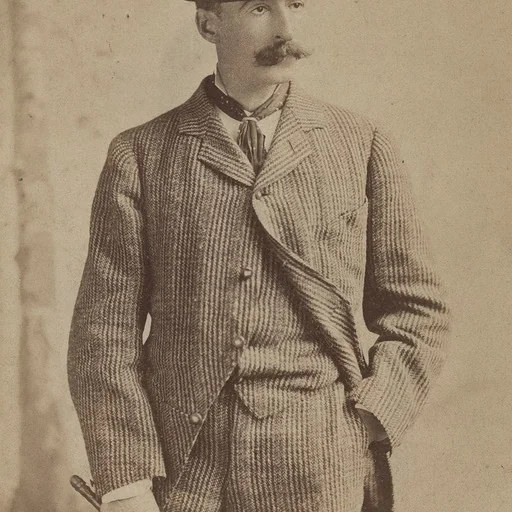
Winslow Homer (February 24, 1836 – September 29, 1910) was an American landscape painter and illustrator, best known for his marine subjects.