Artwork
Aphia Salisbury Rich and Baby Edward
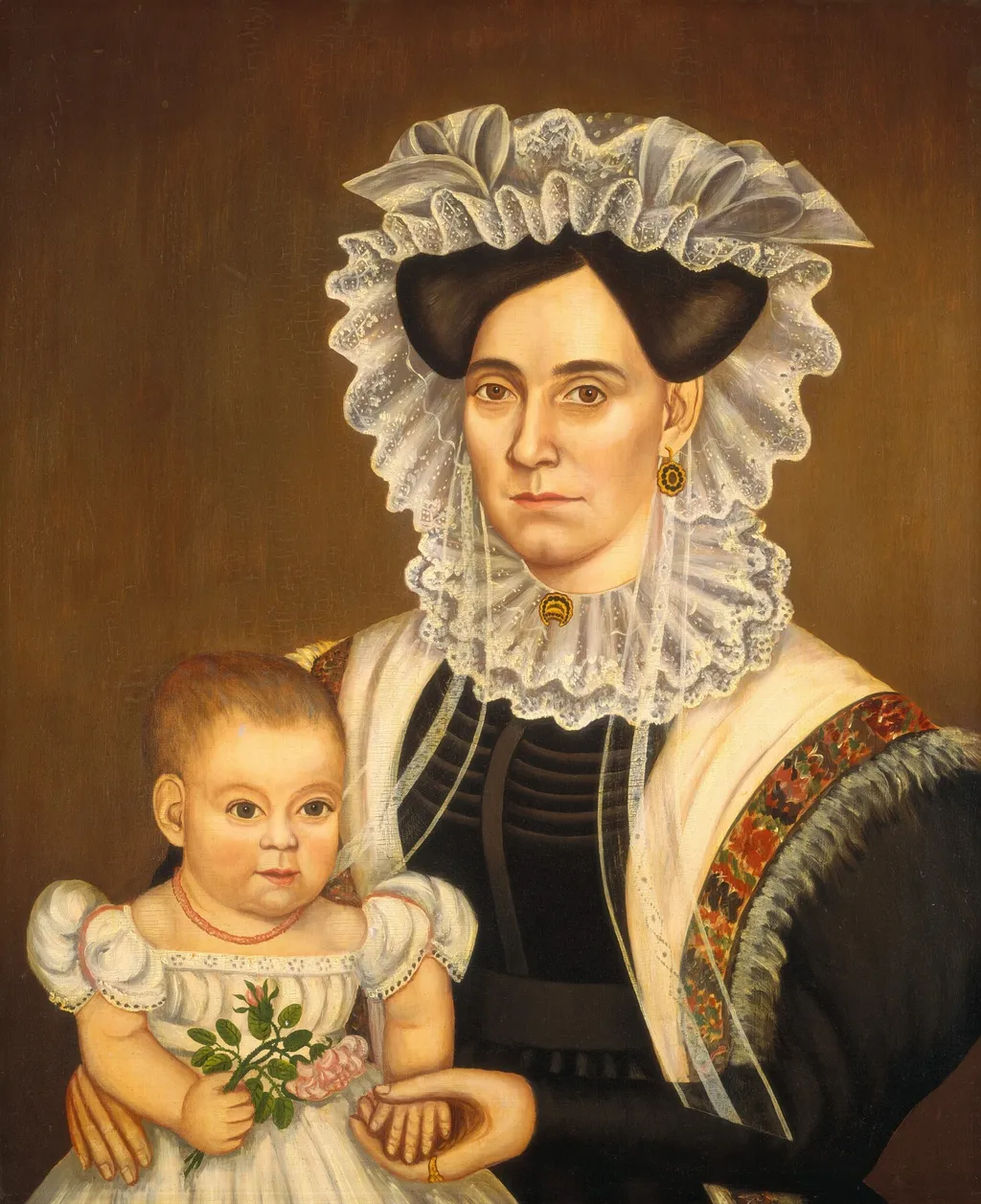
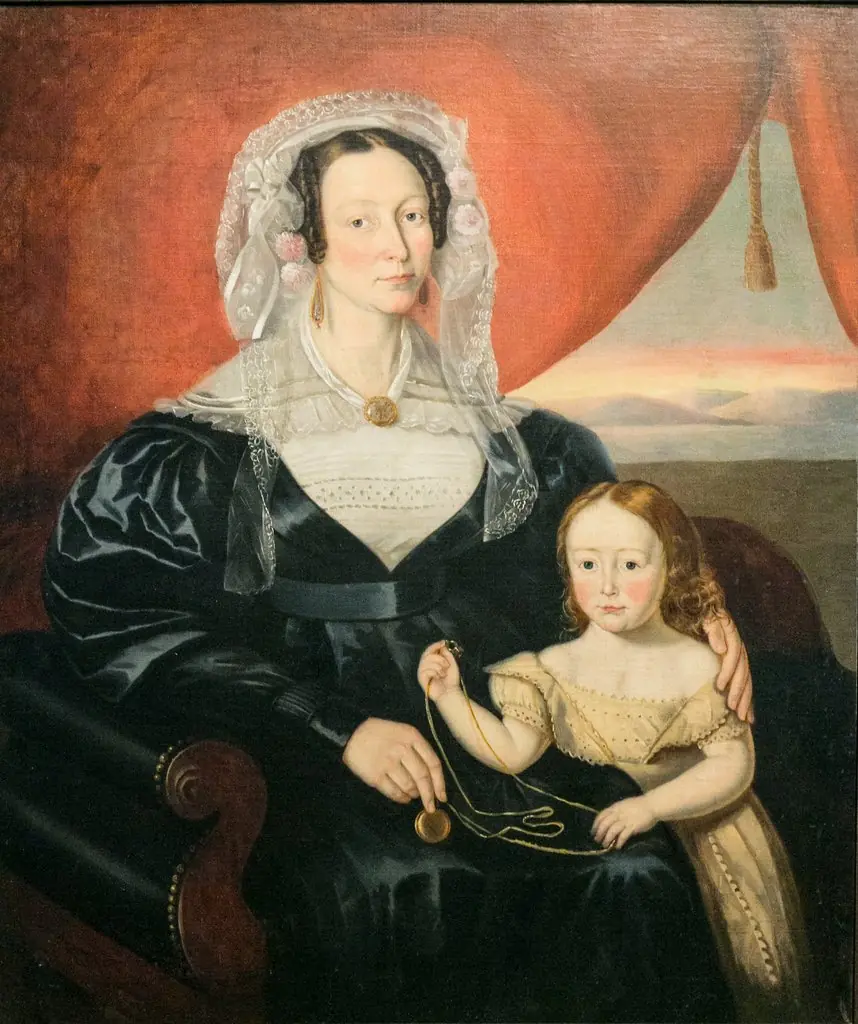
Aphia Salisbury Rich and Baby Edward is an oil painting by the Romanticist artist Milton W. Hopkins. It dates from 1833 and is held in the collection of the National Gallery of Art. Milton W.
About this work
Overview
Milton W. Hopkins painted Aphia Salisbury Rich and Baby Edward around 1833 using oil on wood. The work presents a seated woman in a dark dress with a high lace collar, holding an infant swaddled in white. The figures are set against an unadorned brown backdrop, creating a simple, focused composition.
Subject & Meaning
The portrait captures a domestic moment: the mother, adorned with a ruffled cap, patterned sleeve, and a prominent brooch, cradles her child, who gazes directly at the viewer while clutching a small bouquet and a pink sash. The intimate exchange suggests familial affection and the social importance of motherhood in the early nineteenth century.
Technique & Style
Executed in oil on a wooden panel, Hopkins employs a restrained palette of dark and light tones to emphasize the contrast between the woman's dark attire and the infant's white garments. The plain background eliminates distractions, allowing the delicate rendering of lace, jewelry, and the child's expression to dominate the visual narrative.
History & Provenance
Created circa 1833, the painting is attributed to the American folk portraitist Milton W. Hopkins, known for his regional commissions. While specific ownership records are limited, the work has been documented in collections of nineteenth‑century American portraiture and remains a representative example of Hopkins’s oeuvre.
Own this work as a print
Artist & collection


 Mrs. Mayer and Daughter
 Catherine A. May
 Mrs. Carp and her young Son
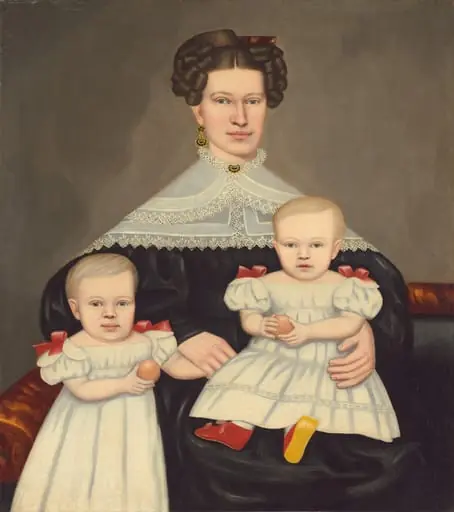 Mrs. Paul Smith Palmer and Her Twins
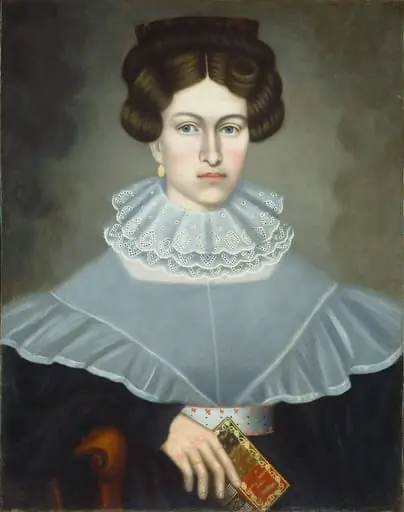 Woman Holding a Book
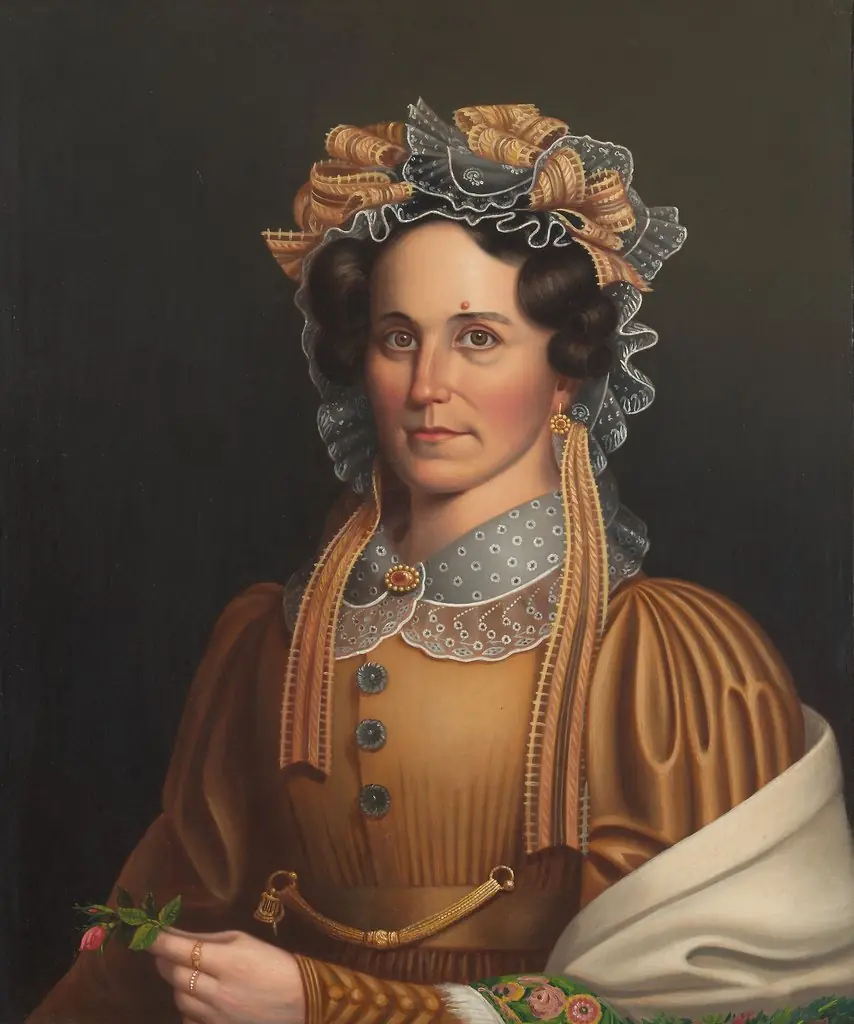 Lady in Brown
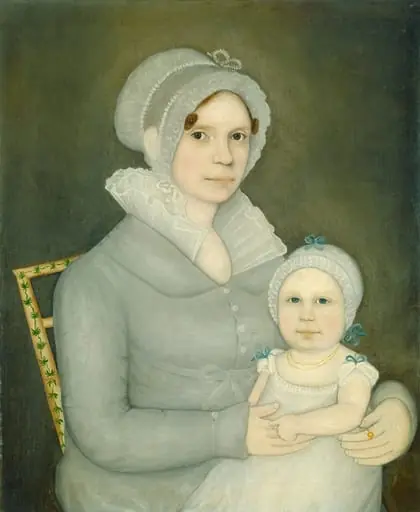 Mrs. John Harrisson and Daughter
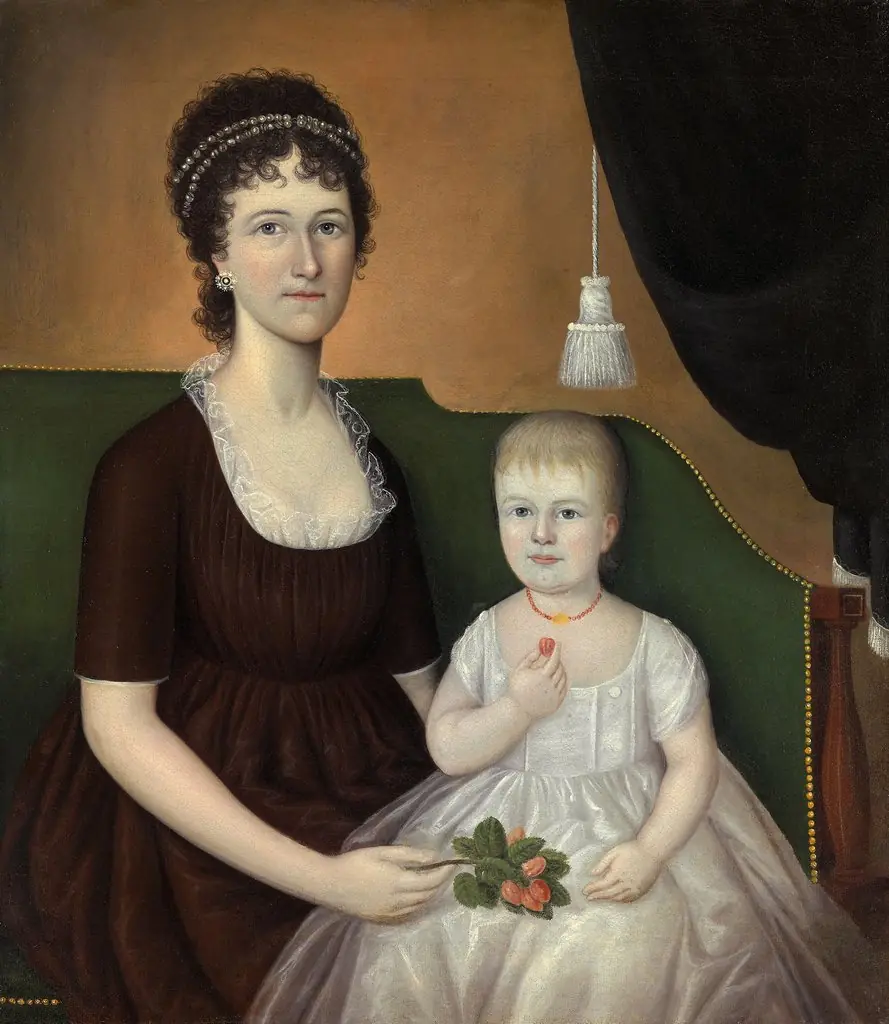 Mrs. Andrew Bedford Bankson and Son, Gunning Bedford Bankson
 Elizabeth Grant Bankson Beatty (Mrs. James Beatty) and Her Daughter Susan
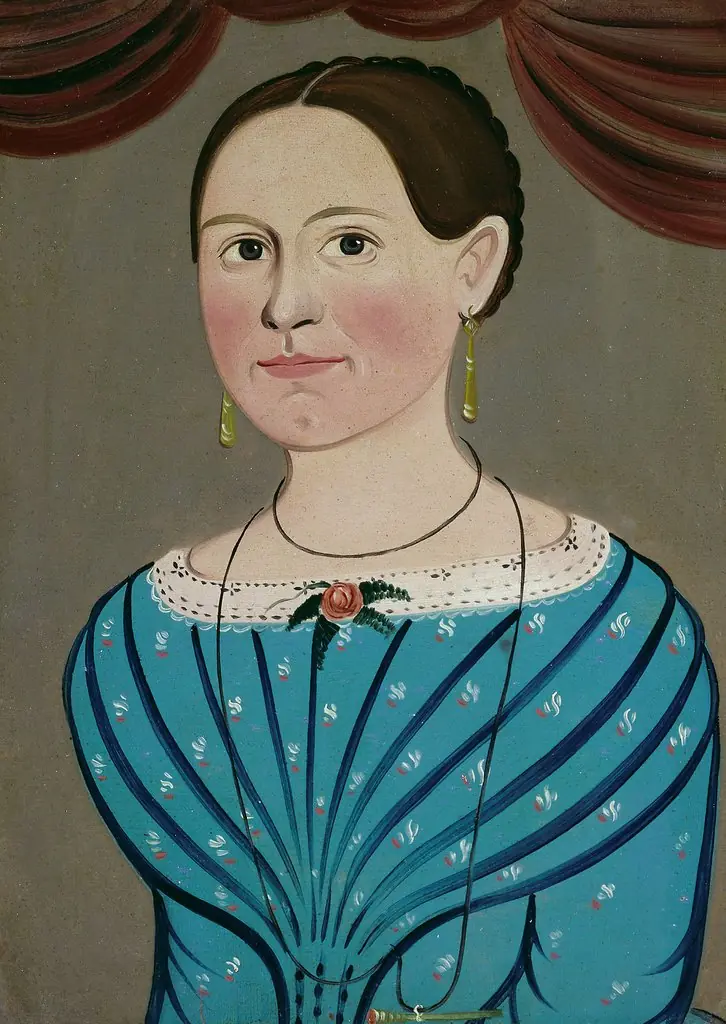 Woman in a Blue Dress
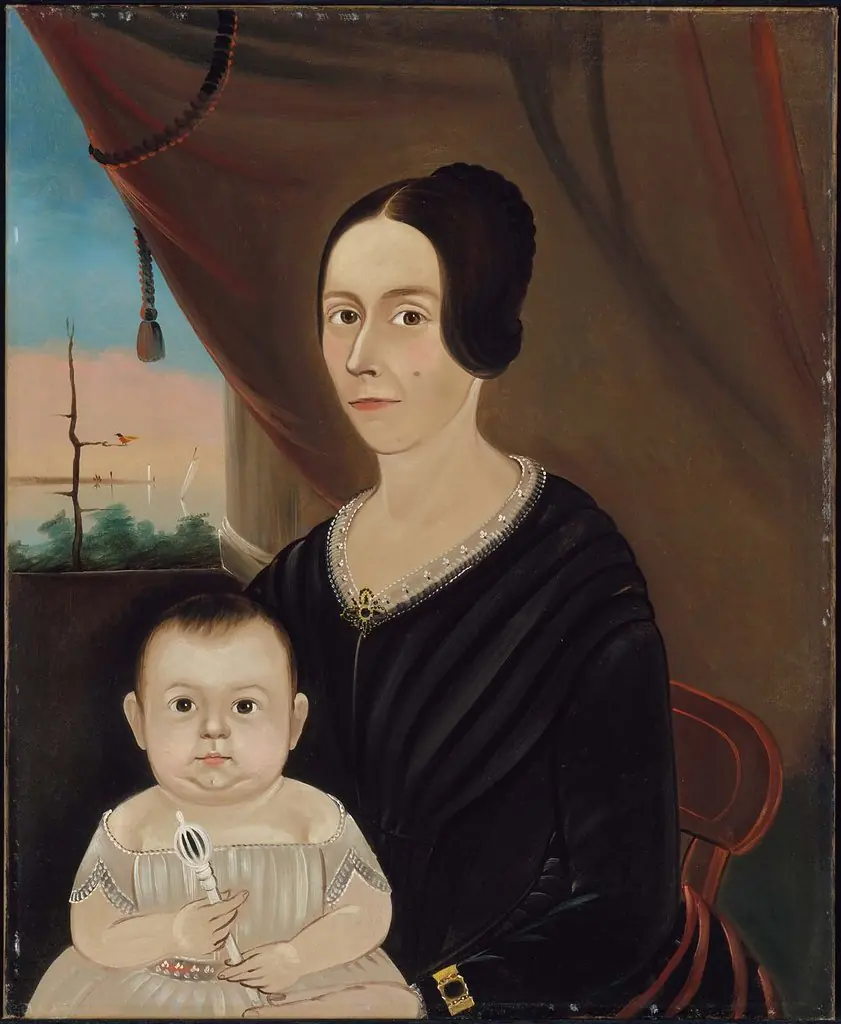 Mother and Child
 Madame Charles-Hilaire Têtu, née Elizabeth O'Brien, and Her Son Eugène