Artwork
Țărani din Abrud
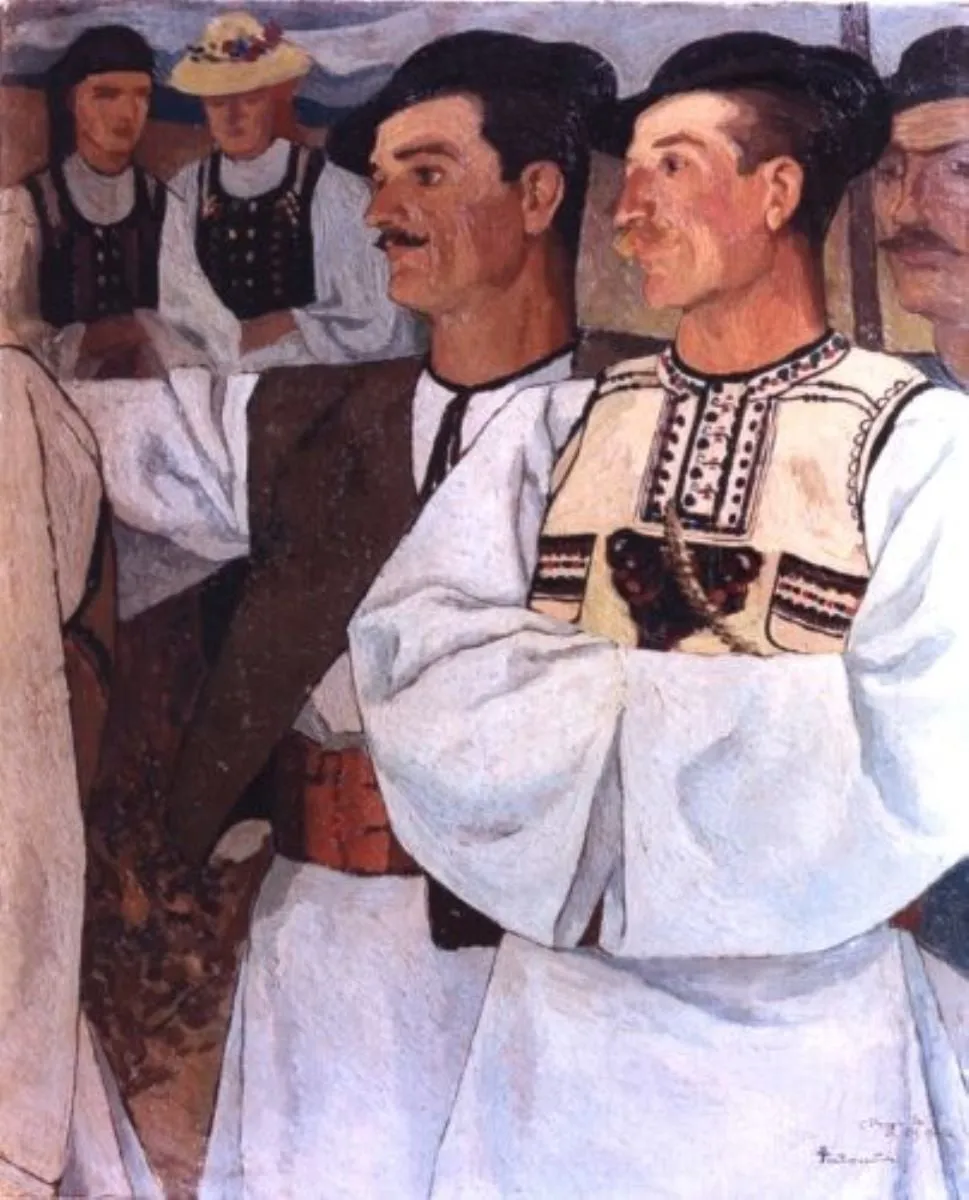
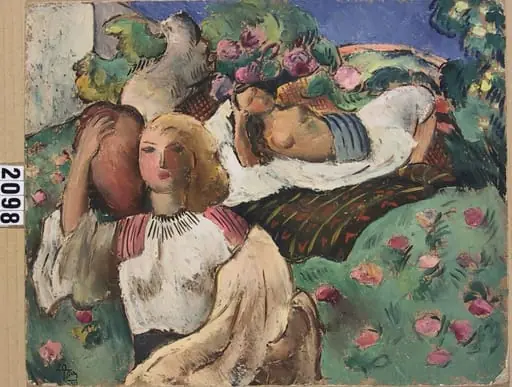
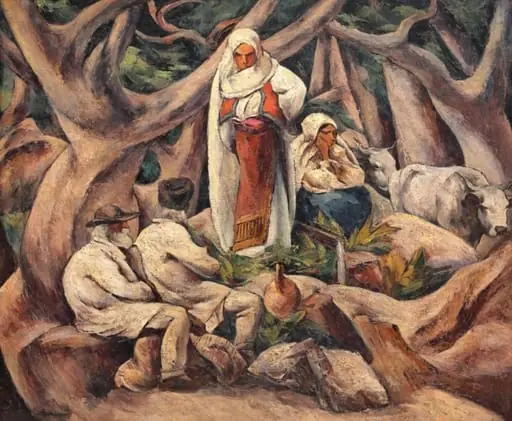
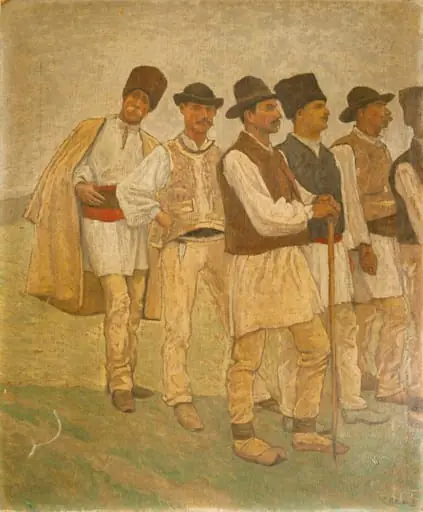
Țărani din Abrud is an unspecified painting by Ion Theodorescu-Sion. It is held in the collection of the National Museum of Art of Romania. This painting depicts a group of rural laborers from Abrud, rendered without idealization or ornament.
About this work
Overview
Thick, tactile brushwork gives the surface a rough, physical presence, reinforcing the earthbound character of the subjects.
This painting depicts a group of rural laborers from Abrud, rendered without idealization or ornament. The figures are arranged in a loose, naturalistic group, their expressions solemn and grounded. The artist avoids theatricality, focusing instead on the quiet dignity of ordinary lives. Thick, tactile brushwork gives the surface a rough, physical presence, reinforcing the earthbound character of the subjects.
Subject & Meaning
The men portrayed are peasants, dressed in modest, worn clothing typical of late 19th-century Transylvanian villagers. Their postures and expressions convey endurance rather than emotion, suggesting a life shaped by labor and austerity. The absence of narrative or symbolism directs attention to their presence as individuals, not types—emphasizing humanity over allegory.
Technique & Style
The artist employs strong chiaroscuro to model the figures, using sharp contrasts of light and shadow to define facial features and clothing folds. Brushstrokes are deliberate and textured, building form through impasto rather than smooth blending. This approach rejects academic polish, favoring a raw, tactile realism that aligns with regional artistic currents of the time.
History & Provenance
The work originates from the late 1800s, likely created during a period of growing interest in rural life among Romanian artists. It was probably painted in or near Abrud, a village in Transylvania, and may have been part of a broader movement documenting peasant culture. Its early ownership remains undocumented, but it was preserved within local collections before entering public hands.
Context
During the late 19th century, Romanian painters increasingly turned to rural subjects as national identity took shape after independence from Ottoman influence. Artists sought to capture authentic folk life, distancing themselves from European academic traditions. This painting reflects that shift—valuing observation over idealization, and local experience over imported aesthetics.
Legacy
The work contributes to a regional tradition of socially conscious realism in Romanian art. While not widely exhibited internationally, it remains significant within national collections as an early example of non-romanticized peasant portraiture. Its emphasis on texture and light influenced later generations focused on depicting everyday life with emotional honesty.
Artist & collection
Artist