Artwork
Bornéo
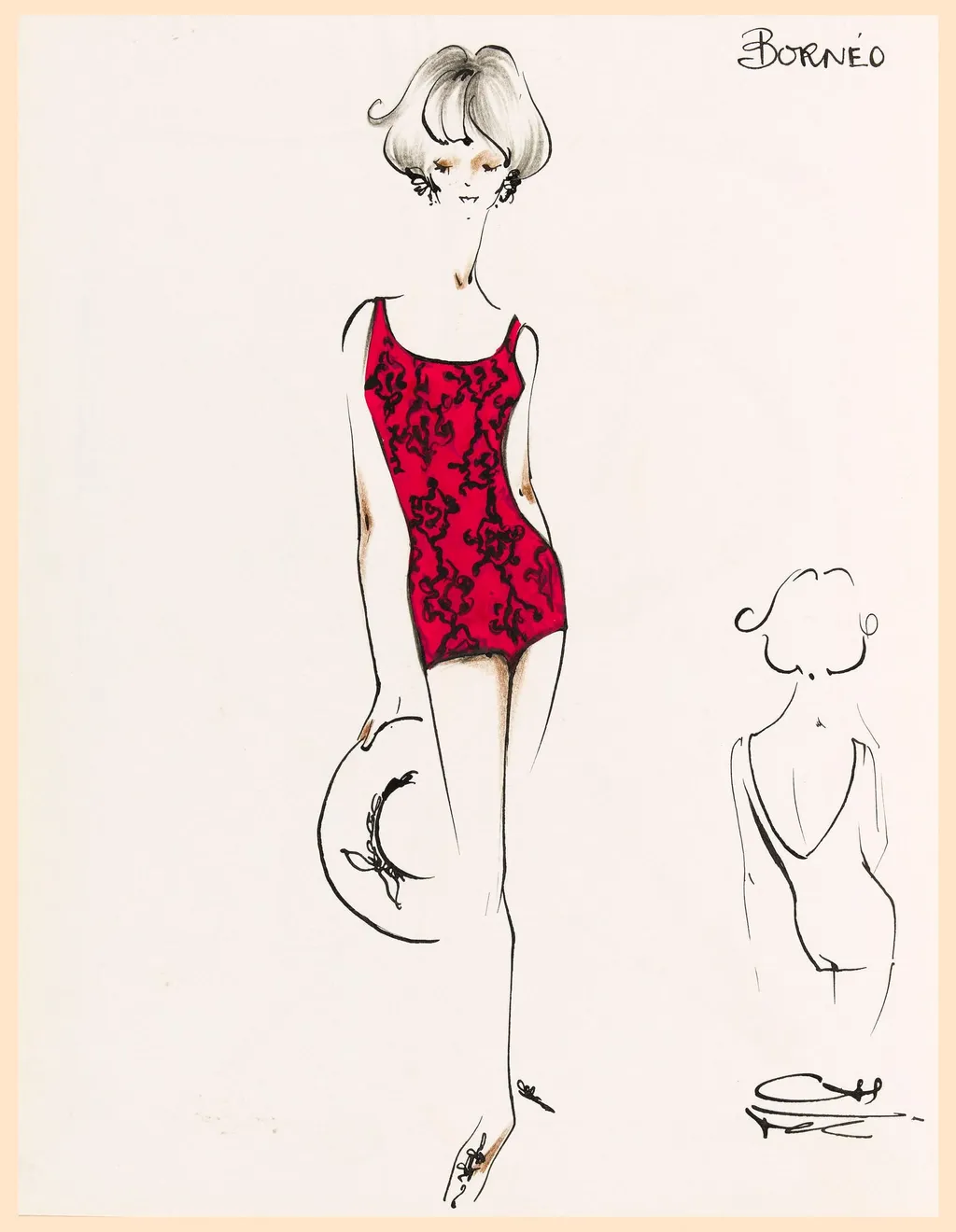
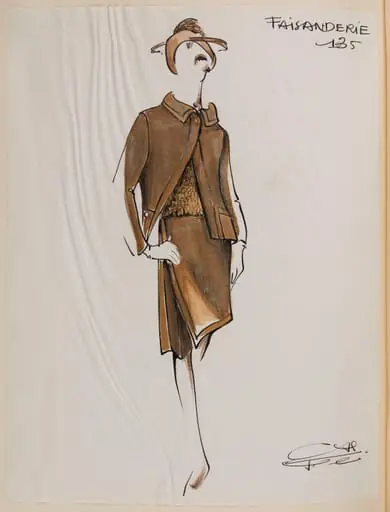
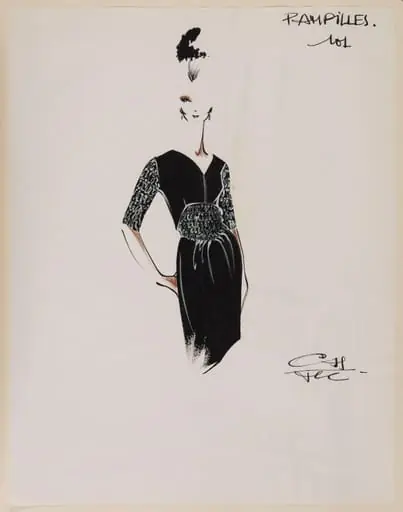
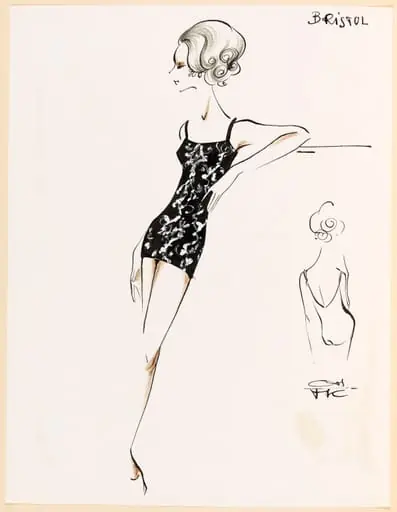
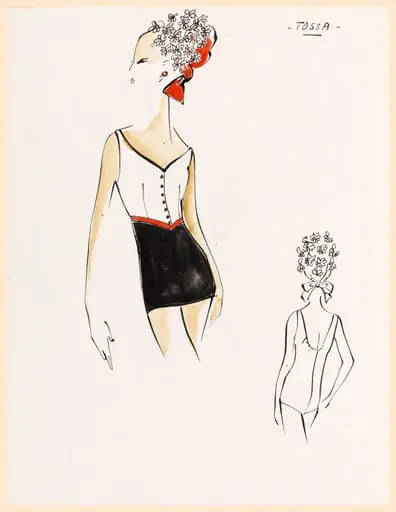
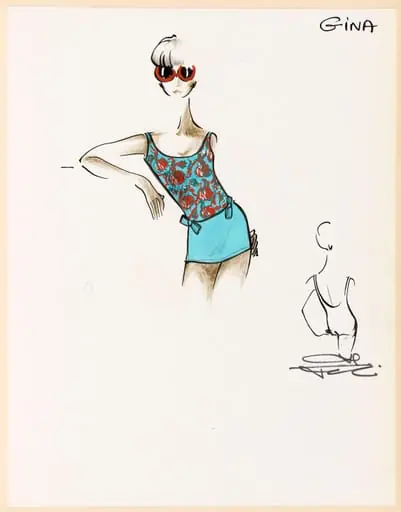
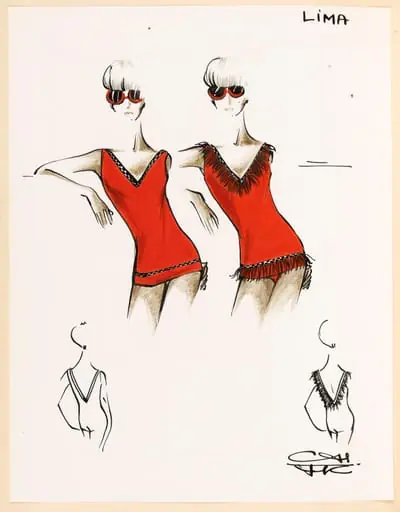
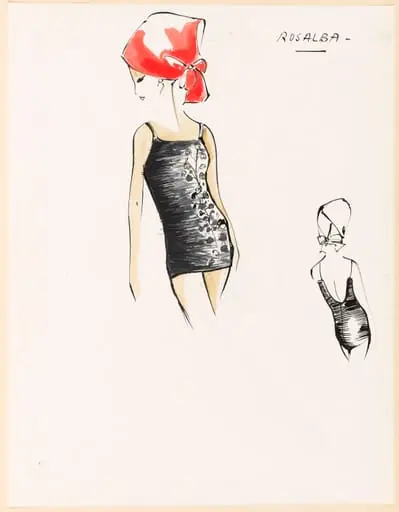
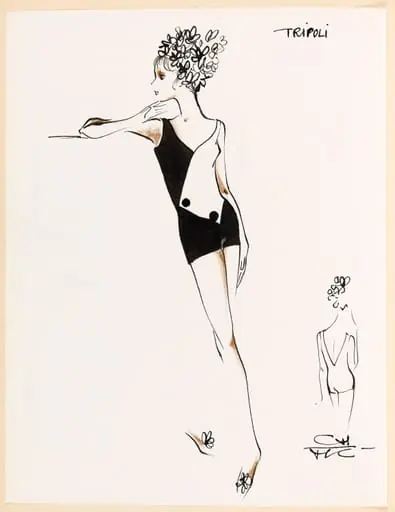
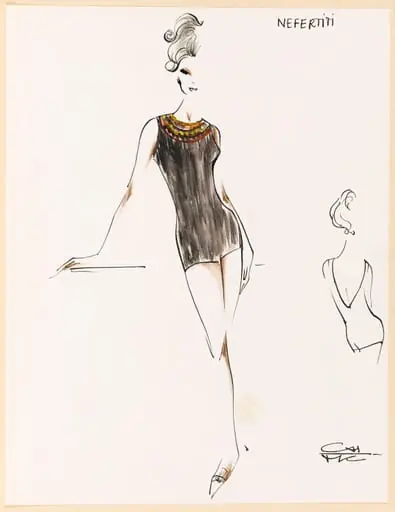
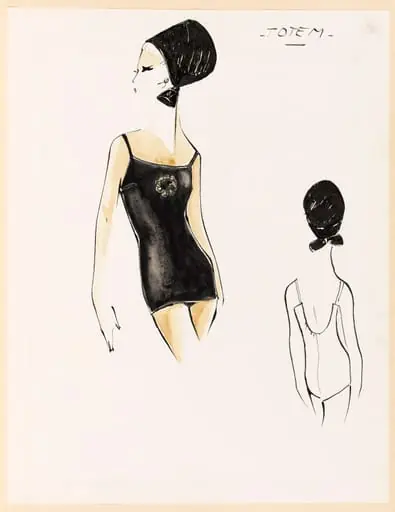
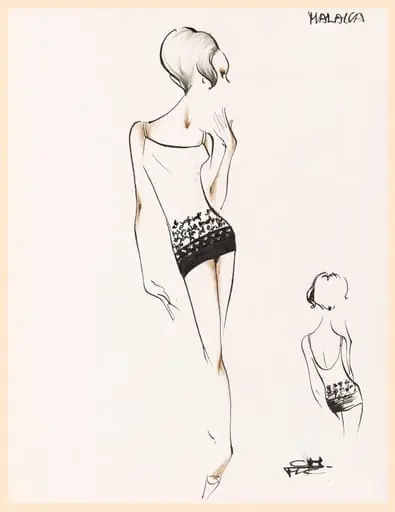
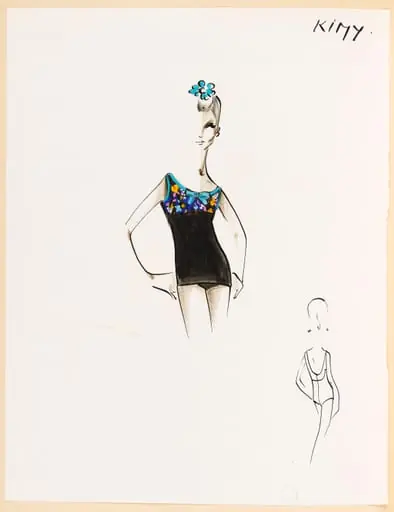
Bornéo is a drawing by Count of St. Germain. It dates from 1964 and is held in the collection of the Palais Galliera - Musée de la Mode de la Ville de Paris.
About this work
Overview
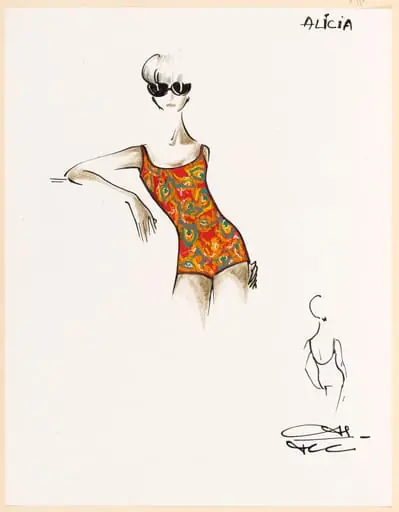
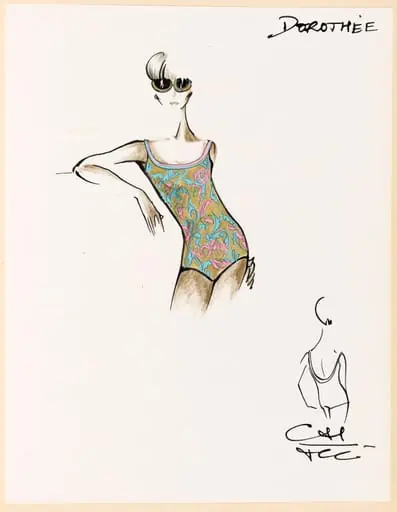
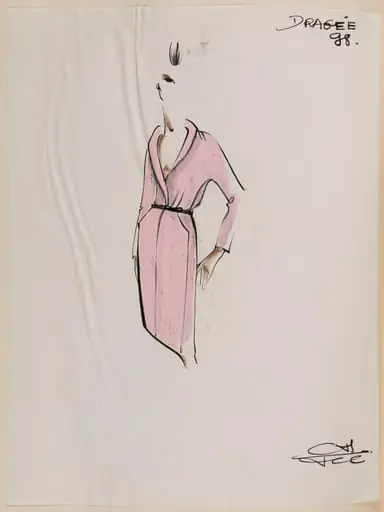
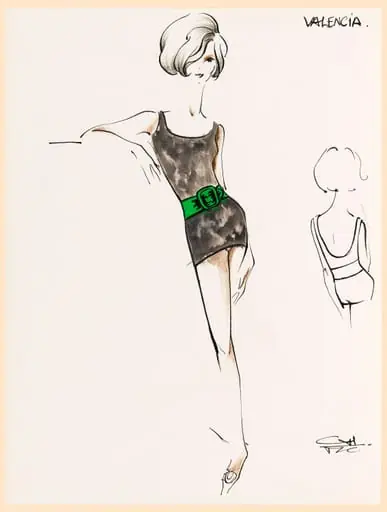
Bornéo is a pencil and ink drawing from around 1964, attributed to the figure known as the Count of St. Germain. It resides in the collection of the Museum of Ethnography. The work presents a stylized female figure in a swimsuit, rendered with clean lines and vivid color, evoking the aesthetic of mid-century fashion sketches rather than traditional fine art.
Subject & Meaning
The central figure is a woman in a red swimsuit adorned with black floral motifs, facing forward with one leg bent, suggesting movement or casual repose. Beside her, a simplified outline of a backside—also in swimwear—introduces a subtle, enigmatic companion. The pairing implies a narrative of presence and absence, or perhaps a reflection, though no explicit symbolism is documented.
Technique & Style
The drawing employs bold, confident linework and flat areas of bright color, characteristic of commercial fashion illustration from the 1960s. The white background isolates the figures, enhancing their graphic impact. Details are minimal, favoring clarity and rhythm over realism, aligning the piece with contemporary graphic design sensibilities of the era.
History & Provenance
The work entered the Museum of Ethnography’s collection in the late 20th century, though its acquisition history remains unrecorded. The attribution to the Count of St. Germain is based on internal documentation, as little is known about the artist’s identity or other works. The piece has not been publicly exhibited beyond institutional archives.
Context
Created during a period when fashion illustration was increasingly influential in popular culture, Bornéo reflects the era’s fascination with leisure, body imagery, and stylized femininity. Its placement in an ethnographic museum suggests an interest in visual representations of modern social rituals, though its cultural origins remain ambiguous.
Legacy
Bornéo has not been widely referenced in art historical literature. Its significance lies primarily in its unusual context within an ethnographic collection, prompting questions about how everyday visual culture is categorized and preserved. It remains a quiet, unresolved artifact of its time.
Artist & collection
Artist
Museum
Palais Galliera - Musée de la Mode de la Ville de Paris
Continue through works from the same source collection.