Artwork
Țărăncuță cu basma albă (Cap de țigancă)
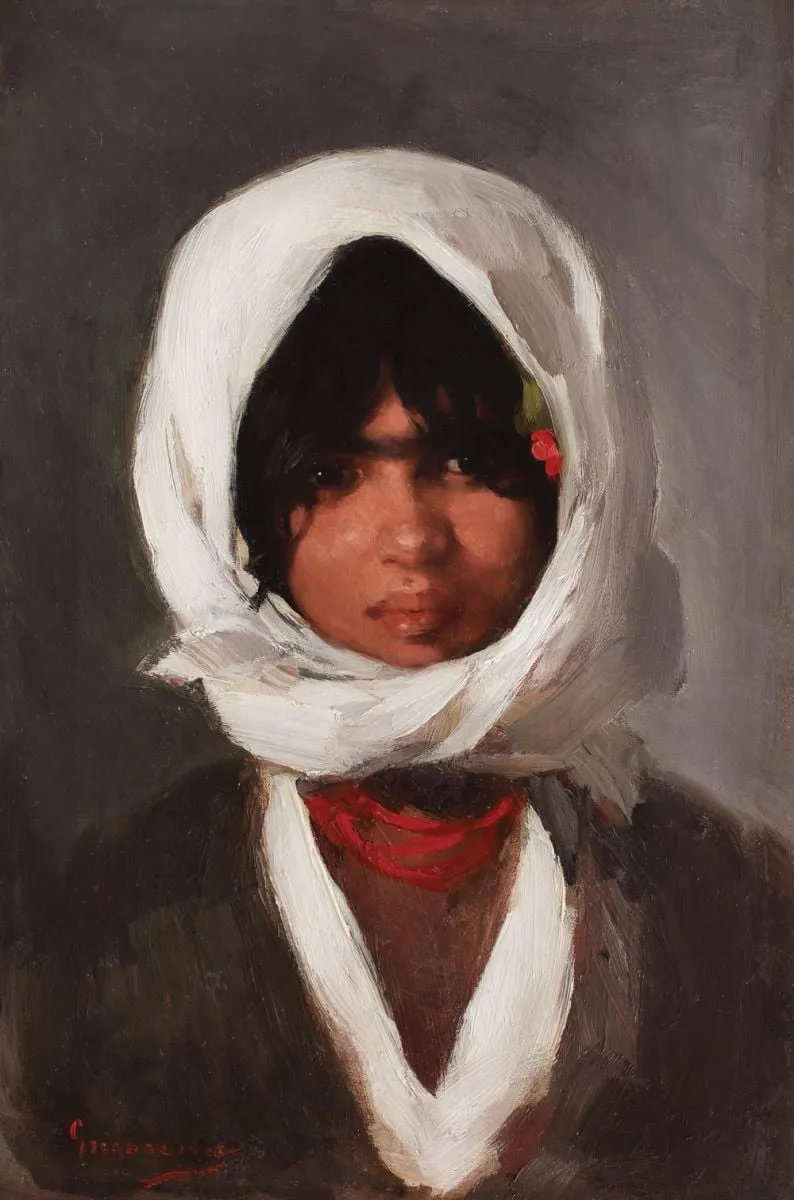
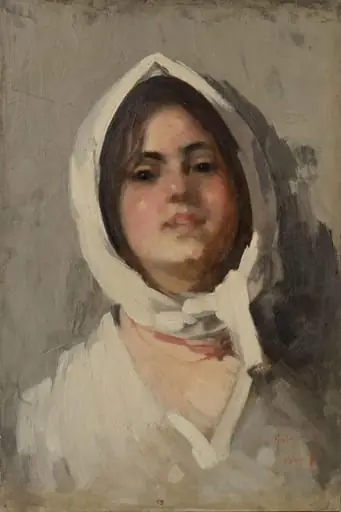
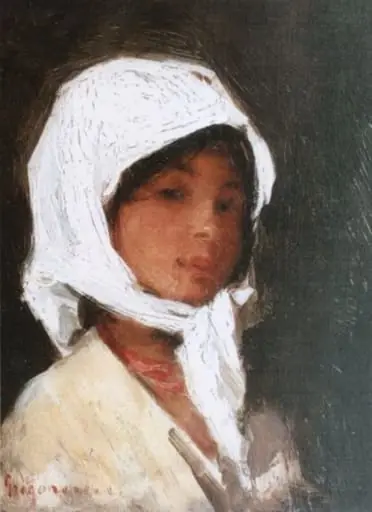
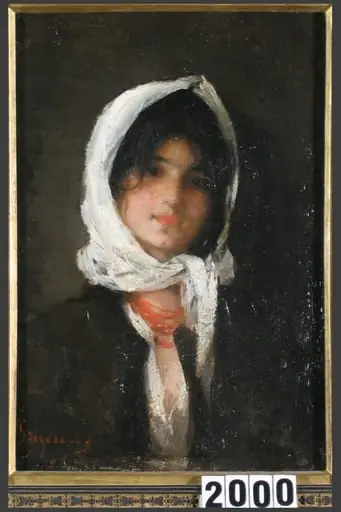
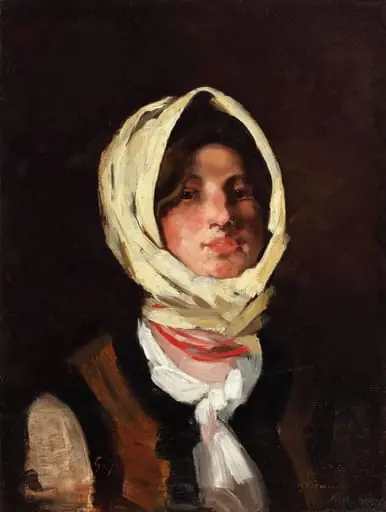
Țărăncuță cu basma albă (Cap de țigancă) is an unspecified painting by Nicolae Grigorescu. It is held in the collection of the Colecție particulară - București. This portrait depicts a woman wearing a white headscarf tied beneath the chin, with a red flower pinned to its side.
About this work
Overview
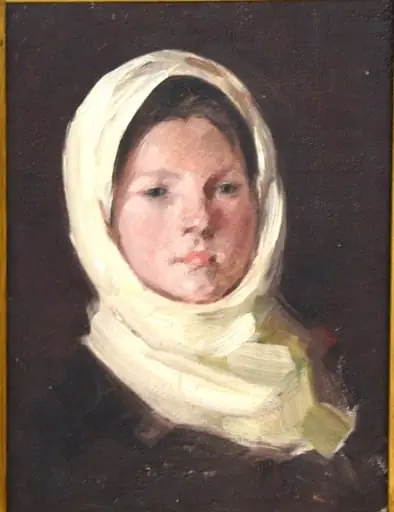
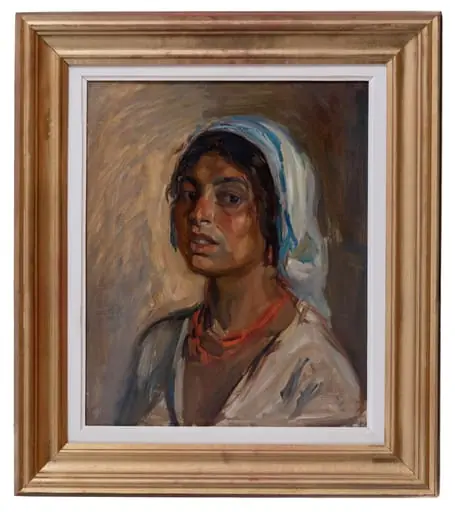
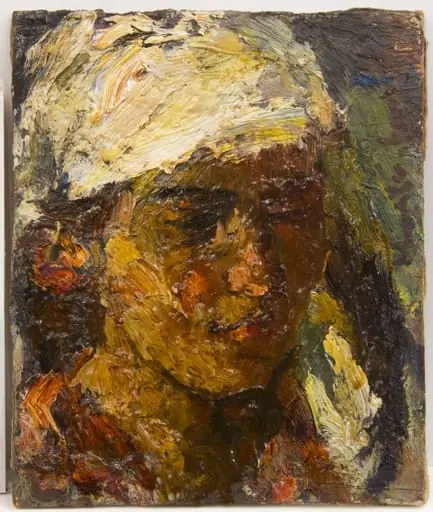
This portrait depicts a woman wearing a white headscarf tied beneath the chin, with a red flower pinned to its side. Her dark hair is partially visible beneath the fabric, and a red cloth encircles her neck. The background is deeply shadowed, drawing focus to her face and attire. Thick, textured brushwork characterizes the surface, emphasizing material presence over refined detail.
Subject & Meaning
The figure is likely a Romani woman, identified by traditional dress and the white headscarf, common in certain regional customs. The red flower and neckcloth suggest personal adornment, possibly for a ceremony or daily life. The direct gaze and unidealized features convey dignity rather than stereotype, grounding the subject in lived experience rather than romanticized trope.
Technique & Style
The artist employs impasto to build the scarf and skin with heavy, visible strokes, creating a tactile surface that catches light unevenly. Dark, muted tones in the background contrast sharply with the bright white of the headscarf and the red accents. The brushwork is deliberate and physical, prioritizing texture and presence over smooth modeling or idealized form.
History & Provenance
The painting originates from early 20th-century Romanian art, likely produced during a period of heightened interest in rural and ethnic subjects. It was likely created by a local artist engaged with folk traditions, though the exact date and original owner remain undocumented. Its survival suggests it was preserved within private or regional collections.
Context
During the early 1900s, Romanian artists increasingly turned to depictions of peasant and Romani communities, often as part of national identity projects. This work reflects that trend, portraying an individual with quiet realism rather than exoticism. The emphasis on textile and gesture aligns with broader European movements seeking authenticity in everyday life.
Legacy
The painting contributes to a modest but significant body of Romanian portraiture that elevated ordinary subjects through direct observation and expressive technique. While not widely exhibited internationally, it remains a reference point in regional art history for its unembellished treatment of identity and material culture.
Artist & collection
Artist
Romanian painter Nicolae Grigorescu made quiet, honest scenes of everyday life and country roads around 1900.