Artwork
Popas (Popas în timpul refugiului)
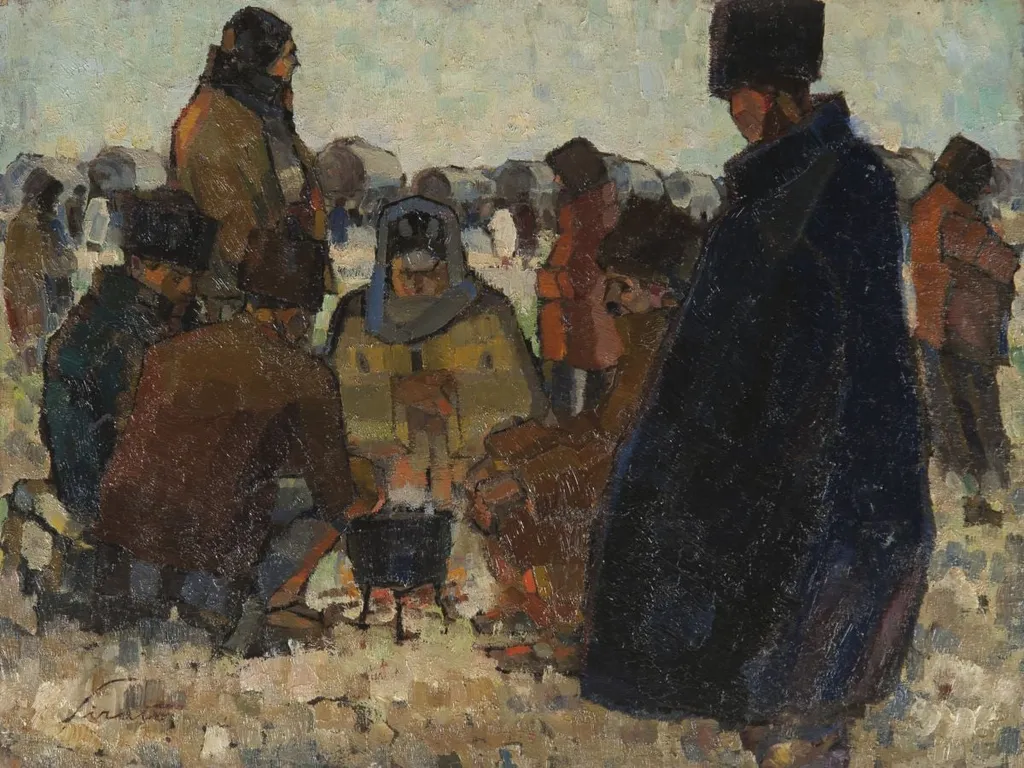
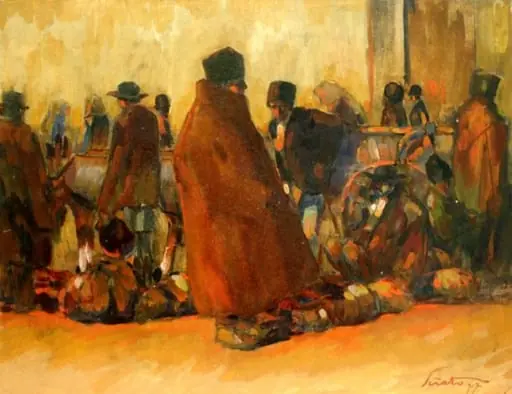
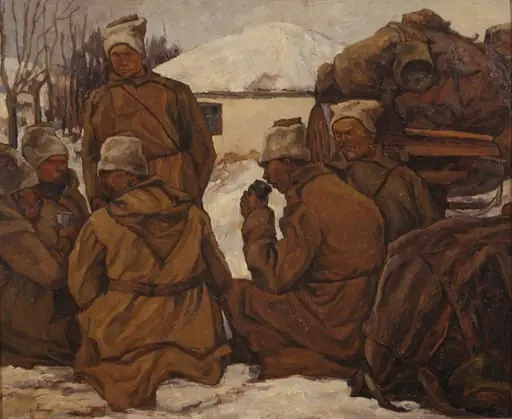
Popas (Popas în timpul refugiului) is an unspecified painting by Francisc Șirato. It dates from 1917 and is held in the collection of the National Museum of Art of Romania.
About this work
Overview
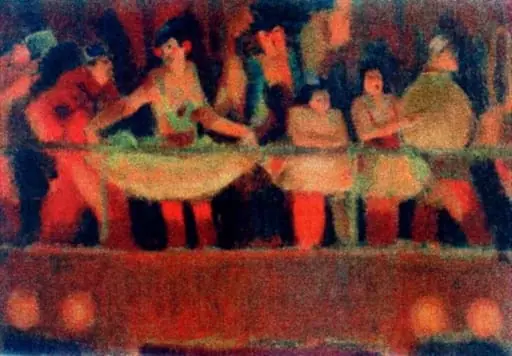
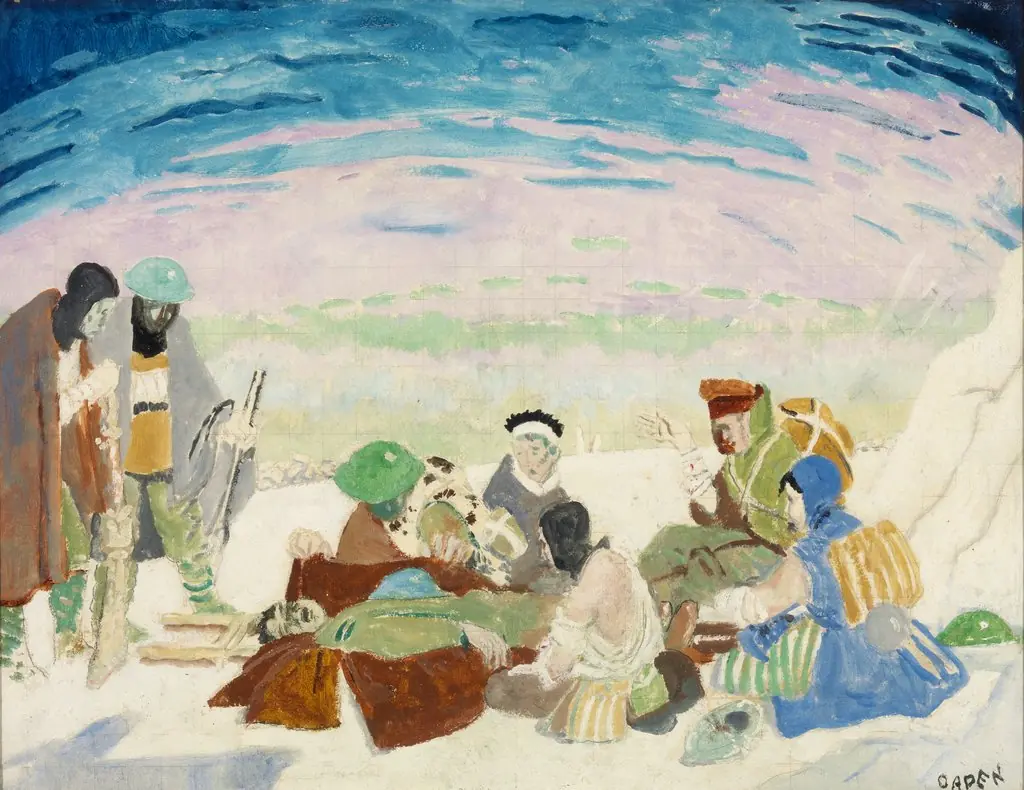
Created around 1917 by Francisc Șirato, this painting captures a moment of rest during displacement. A group of refugees huddle together against the cold, their forms rendered with energetic, layered brushwork. The composition emphasizes collective endurance rather than individual identity, using a restricted palette of dark tones to convey the gravity of their situation.
Subject & Meaning
The scene depicts civilians paused in transit, likely fleeing conflict or hardship. Their close grouping suggests mutual reliance amid uncertainty. Subtle accents of yellow and red draw attention to specific figures without disrupting the overall somber mood. The work conveys resilience through physical proximity, portraying warmth as an act of survival rather than comfort.
Technique & Style
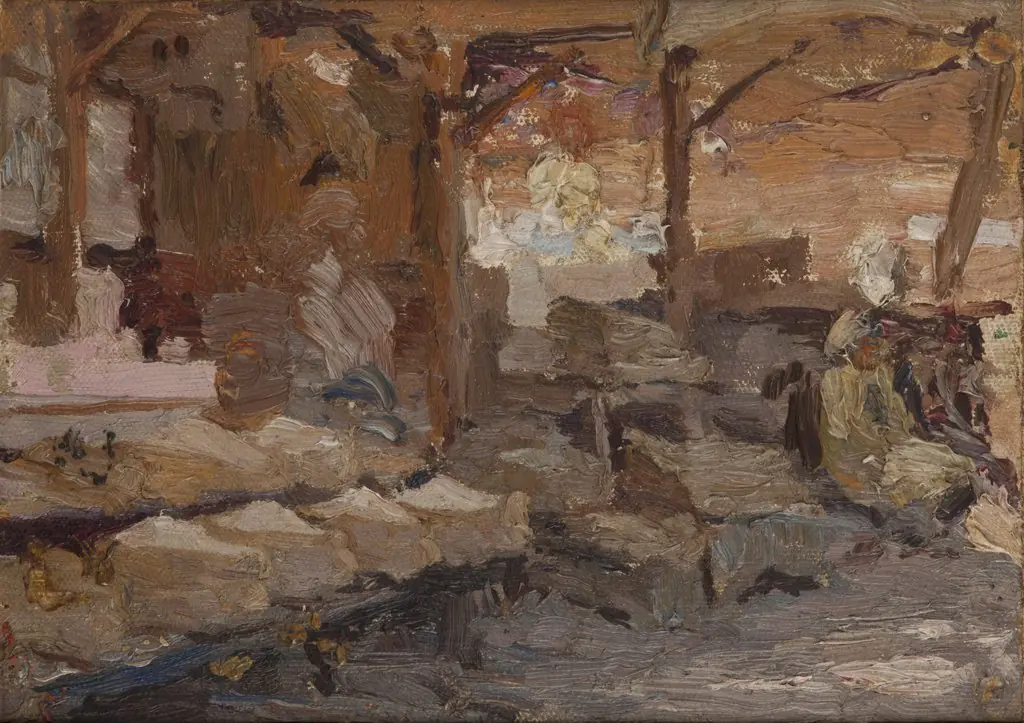
Șirato employed thick, textured brushstrokes to build form and atmosphere, a method aligned with impasto. Paint is applied unevenly, creating a tactile surface that mirrors the roughness of the subjects' circumstances. Facial features are intentionally softened, shifting focus from individual expression to the group’s shared presence and physical weight.
History & Provenance
The painting emerged during World War I, a period of widespread upheaval in Romania. Though specific ownership details are limited, its creation aligns with Șirato’s engagement with contemporary social realities. It reflects the artist’s interest in documenting civilian life amid national instability, rather than formal portraiture or idealized scenes.
Context
Romania entered World War I in 1916, leading to mass displacement and hardship. Șirato’s work responds to this climate, joining a broader trend among Eastern European artists who turned to everyday suffering as subject matter. The painting avoids political symbolism, instead grounding its impact in the quiet dignity of ordinary people enduring crisis.
Legacy
Though not widely exhibited internationally, the painting remains a significant example of early 20th-century Romanian realism. It contributes to a visual record of civilian resilience during wartime, influencing later artists who prioritized emotional authenticity over aesthetic polish. Its raw technique continues to resonate in studies of war’s human toll.
Artist & collection
Artist
Francisc Șirato painted quiet scenes of people and places, often with soft light and gentle colors.