Artwork
Natură statică cu căldărușă de aramă
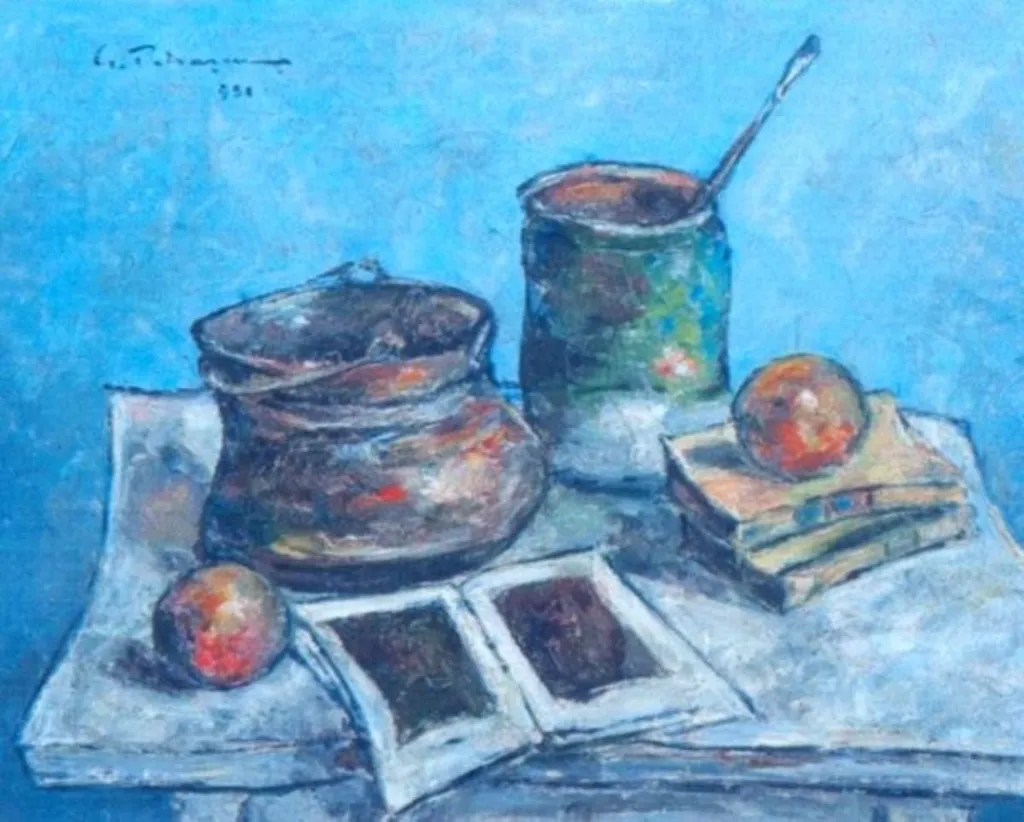
Natură statică cu căldărușă de aramă is an unspecified painting by Gheorghe Petrașcu. It dates from 1931 and is held in the collection of the National Museum of Art of Romania.
About this work
Overview
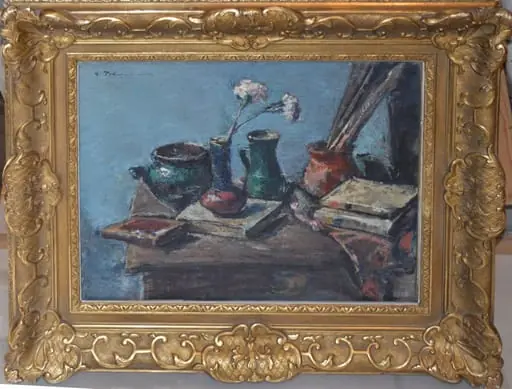
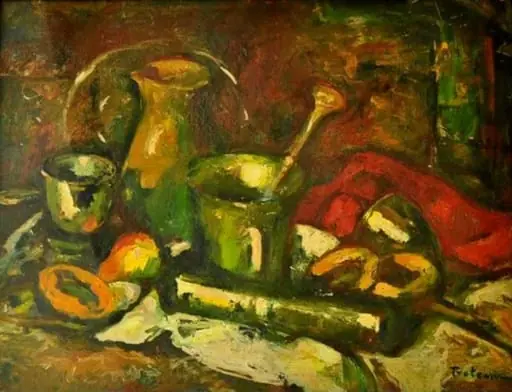
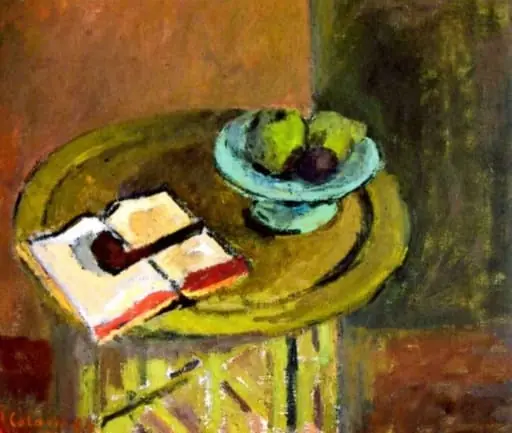
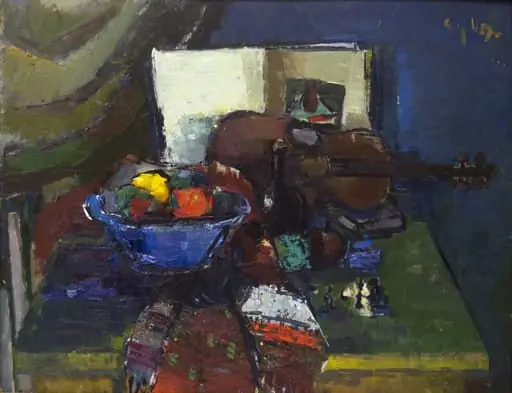
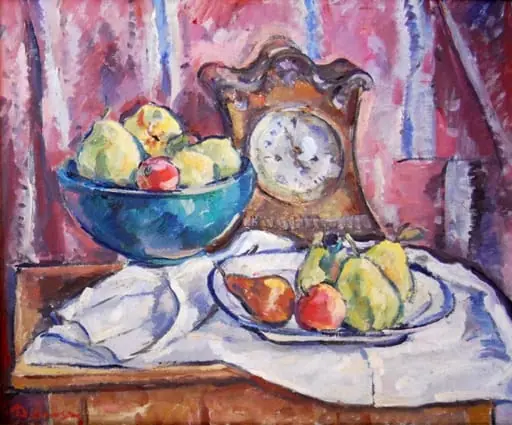
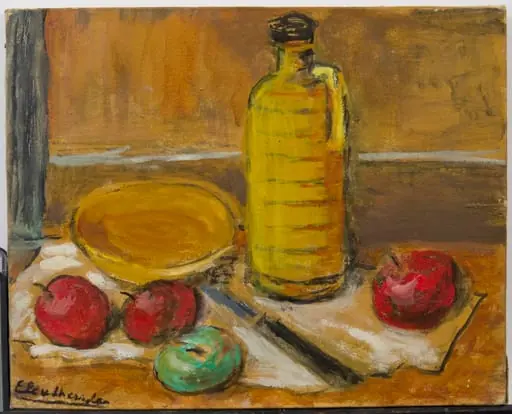
Painted in 1931 by Gheorghe Petrașcu, this still life presents a modest arrangement of domestic items on a plain table. The composition is restrained, focusing on a dented copper pot, a ceramic jar with a spoon, an apple, and an open book. The scene avoids theatricality, instead emphasizing quiet presence and material substance through careful observation and deliberate brushwork.
Subject & Meaning
The objects depicted—common, worn, and functional—suggest a life of quiet routine. The dented pot and open book hint at use and thought, while the apple, slightly imperfect, grounds the scene in natural impermanence. There is no overt symbolism; meaning arises from the dignity of ordinary things, rendered with attention to their physical reality rather than narrative or allegory.
Technique & Style
Petrașcu employed thick, textured brushwork, particularly on the metal pot and jar, using impasto to convey surface irregularities and weight.
Petrașcu employed thick, textured brushwork, particularly on the metal pot and jar, using impasto to convey surface irregularities and weight. The paint is applied with palpable density, creating a tactile quality that mimics the actual materials. The cool blue background contrasts with the warm, earthy tones of the objects, enhancing their physical presence without drawing attention to the technique itself.
History & Provenance
Created in 1931, the painting belongs to Petrașcu’s mature period, when he increasingly favored subdued palettes and tactile realism. It remained in Romanian collections after its completion, reflecting the artist’s sustained engagement with domestic still life during the interwar years. No public record of early exhibitions or ownership changes is widely documented.
Context
In early 20th-century Romanian art, still life was often used to explore materiality and quiet introspection, diverging from grand historical themes. Petrașcu’s approach aligned with broader European trends that valued sensory truth over idealization. His work stood apart from both academic convention and avant-garde abstraction, favoring a grounded, observational realism.
Legacy
The painting exemplifies Petrașcu’s commitment to conveying the physical essence of everyday objects through paint. While not widely reproduced, it remains a key example of Romanian interwar still life that prioritizes texture and quiet presence over spectacle. Its influence is seen in later Romanian artists who sought to elevate the mundane through material honesty.
Artist & collection
Artist
Gheorghe Petrașcu painted quiet scenes of buildings, streets, and still lifes in the 1920s and ’30s Romania.