Artwork
Peisaj cu cai
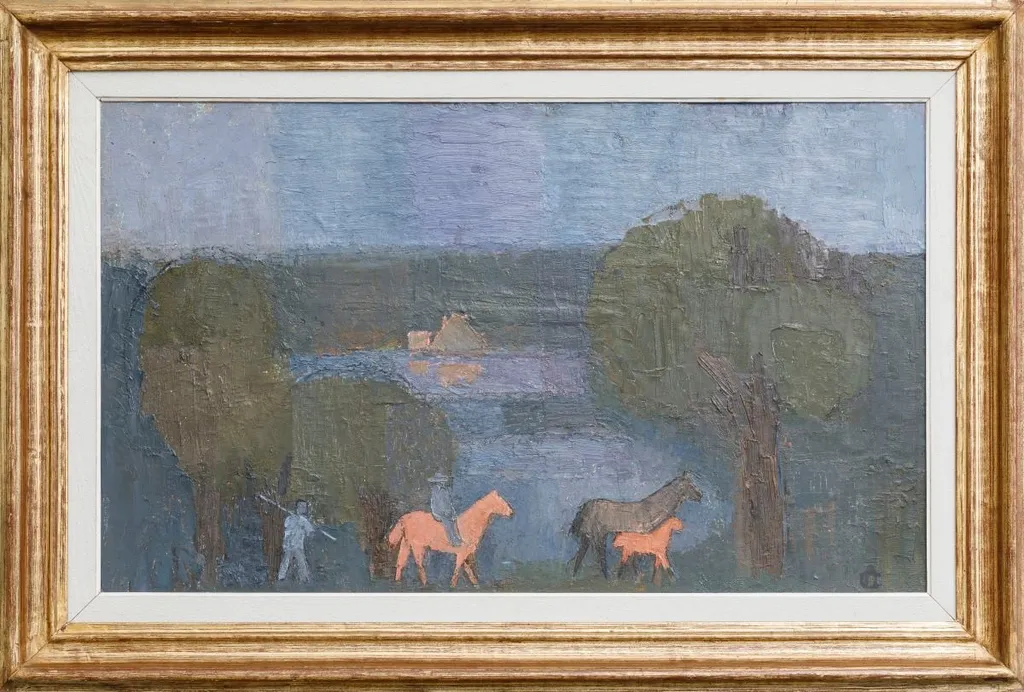
Peisaj cu cai is an unspecified painting by Alexandru Ciucurencu. It dates from 1927 and is held in the collection of the National Museum of Art of Romania.
About this work
Overview
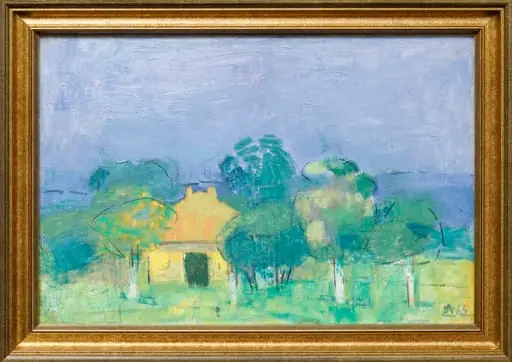
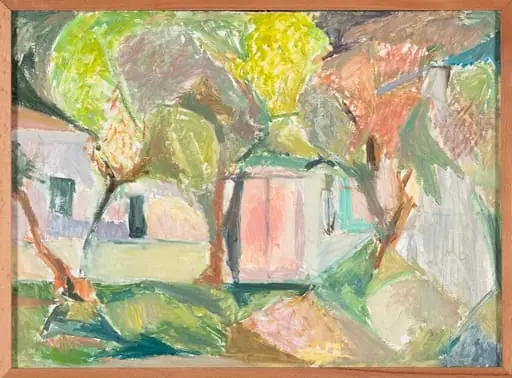
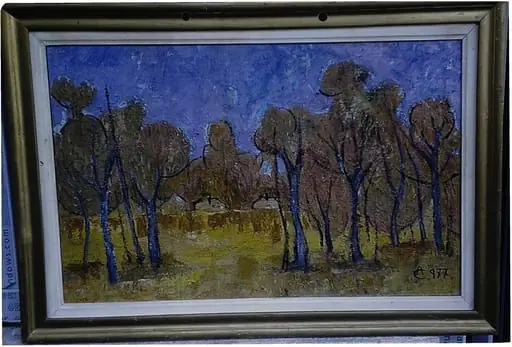
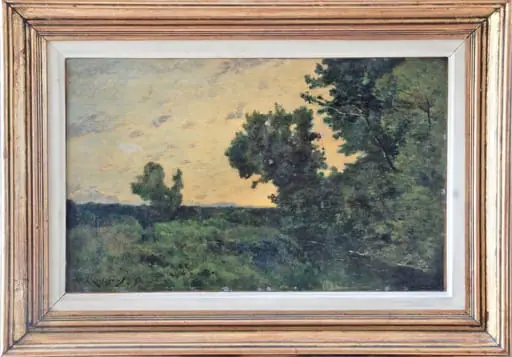
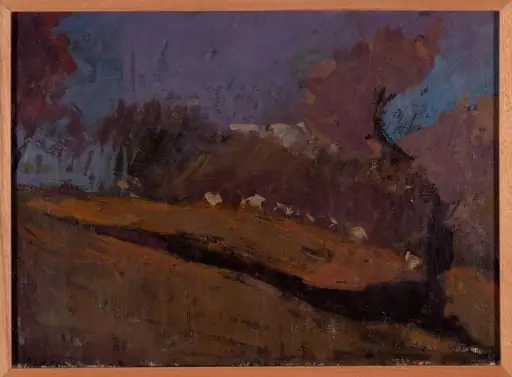
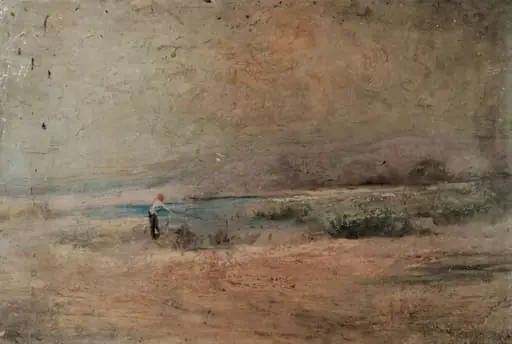
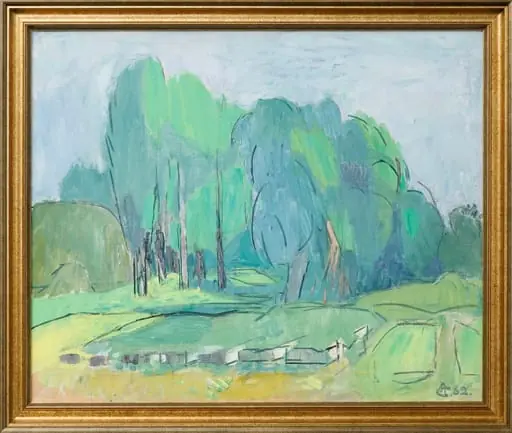
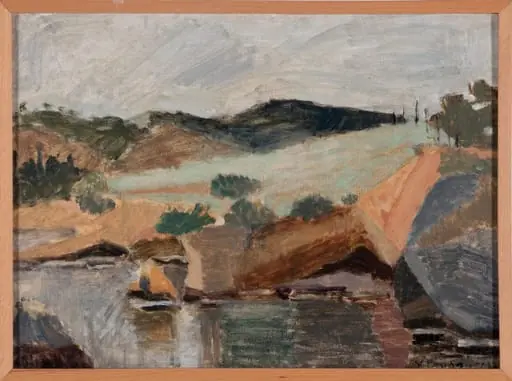
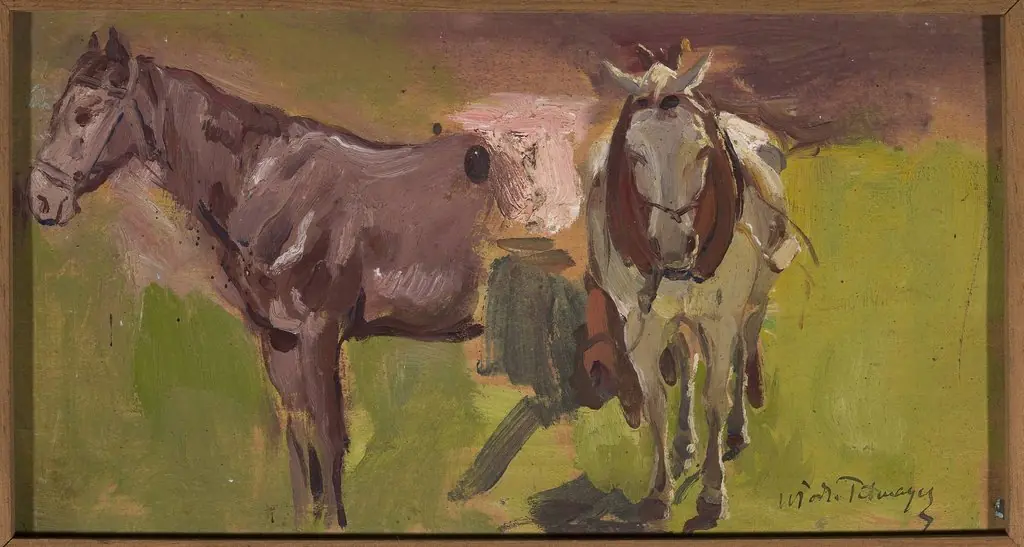
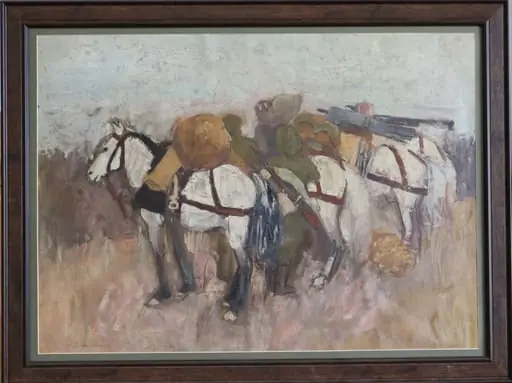
Created around 1927, Alexandru Ciucurencu’s painting Peisaj cu cai captures a tranquil rural tableau. The composition centers on two horses calmly feeding beside a covered wagon, while a solitary figure with a long staff watches nearby. A muted sky stretches above, punctuated by dark, rounded trees and a faint suggestion of water or open terrain in the distance.
Subject & Meaning
The work portrays a moment of everyday life in the countryside, emphasizing the harmonious coexistence of humans, animals, and the landscape. The presence of the grazing horses and the stationary wagon suggests a pause in agricultural activity, while the lone observer may symbolize contemplation of the natural world’s quiet rhythms.
Technique & Style
Ciucurencu employs a pronounced impasto technique, applying paint in thick, tactile layers that give the surface a sculptural quality. The palette is restrained, dominated by soft blues, muted greens, and earthy browns, which accentuate the vivid orange of the horses’ coats. Broad, textured brushstrokes convey a sense of immediacy and physicality.
History & Provenance
Peisaj cu cai dates to the late 1920s, a period when Ciucurencu was exploring a synthesis of Romanian folk motifs and modernist sensibilities. The painting’s provenance traces back to the artist’s personal collection before entering public holdings, where it has been exhibited as a representative example of interwar Romanian landscape painting.
Artist & collection
Artist
Alexandru Ciucurencu painted scenes from everyday life and the human body in the mid-20th century.