Artwork
Pădure desfrunzită
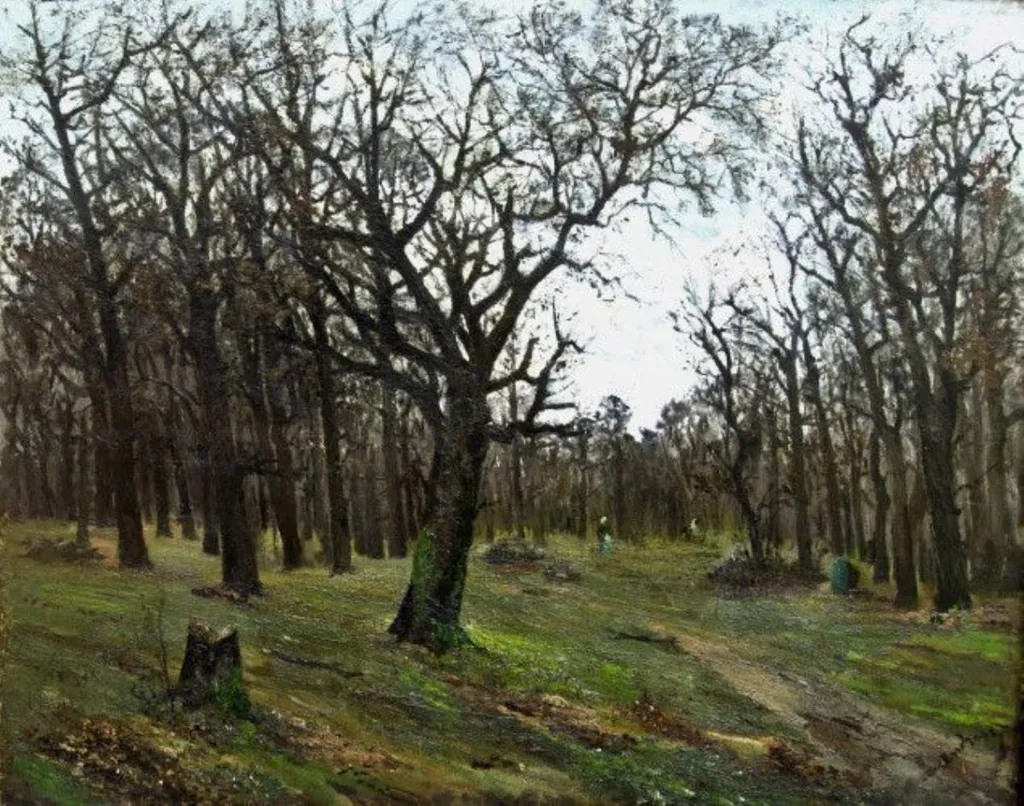
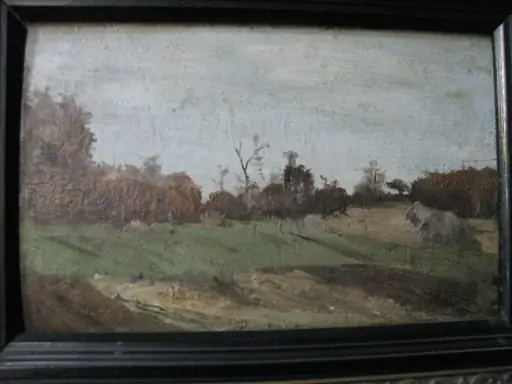
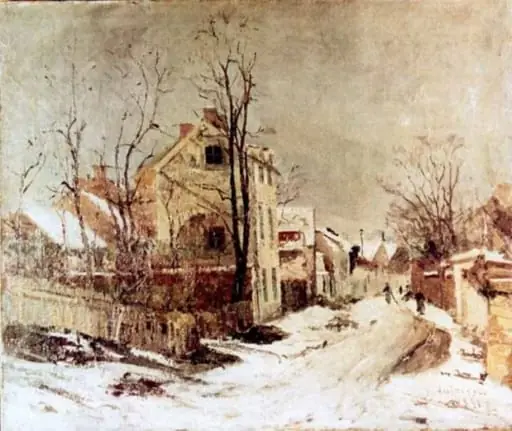
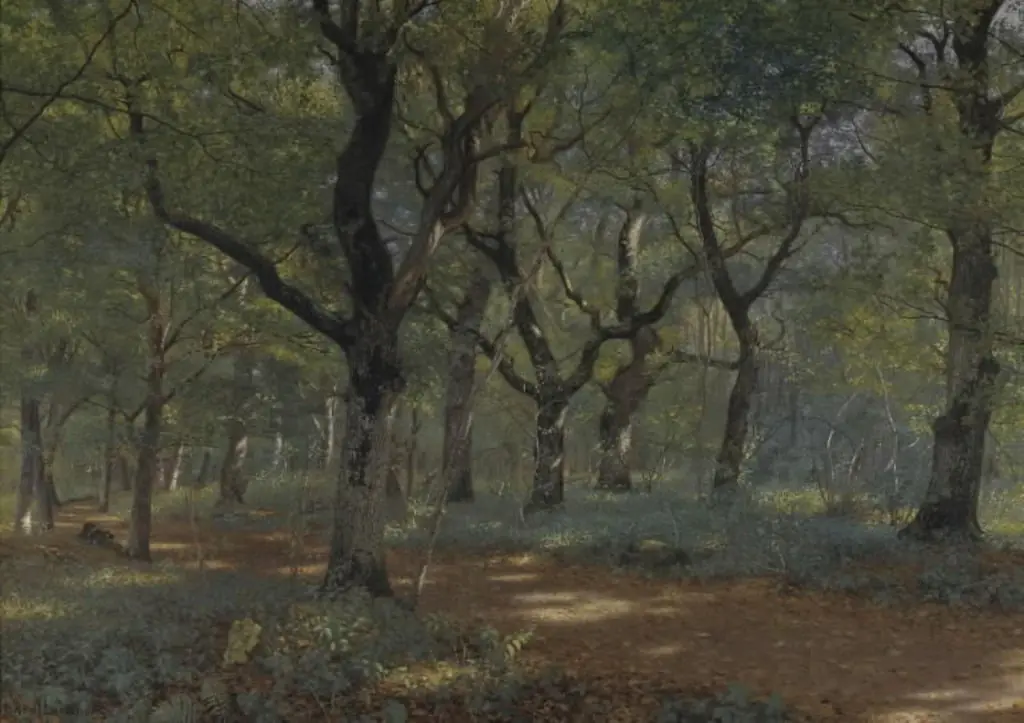
Pădure desfrunzită is an unspecified painting by Ion Andreescu. It is held in the collection of the National Museum of Art of Romania. This artwork presents a quiet woodland scene dominated by a single, sturdy tree at its center.
About this work
Overview
The ground is layered with fallen foliage, and the muted palette of browns, grays, and dull greens reinforces a still, introspective mood.
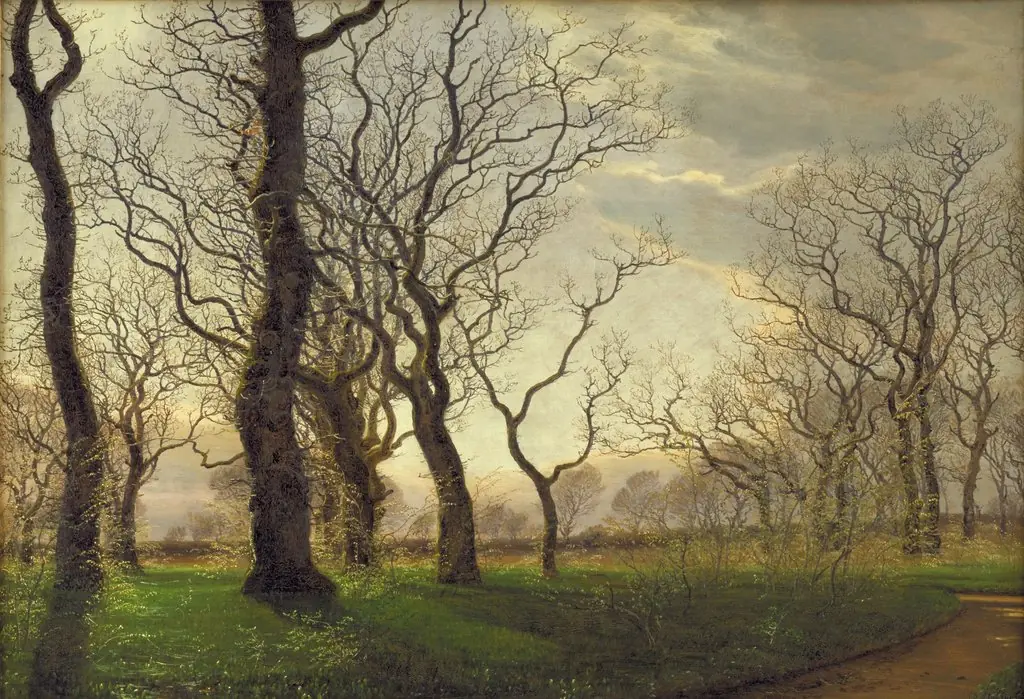
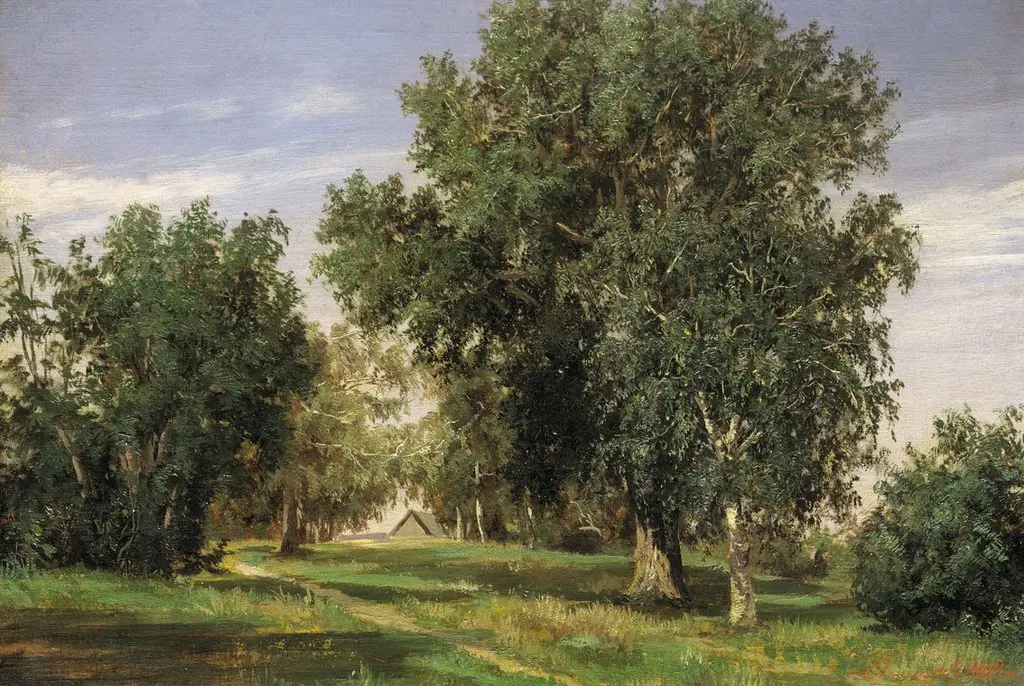
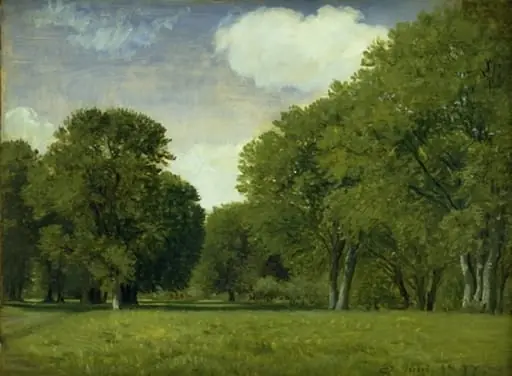
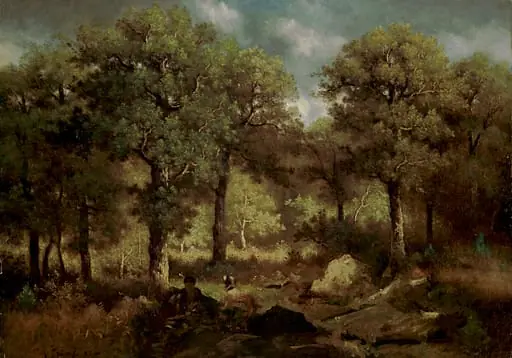
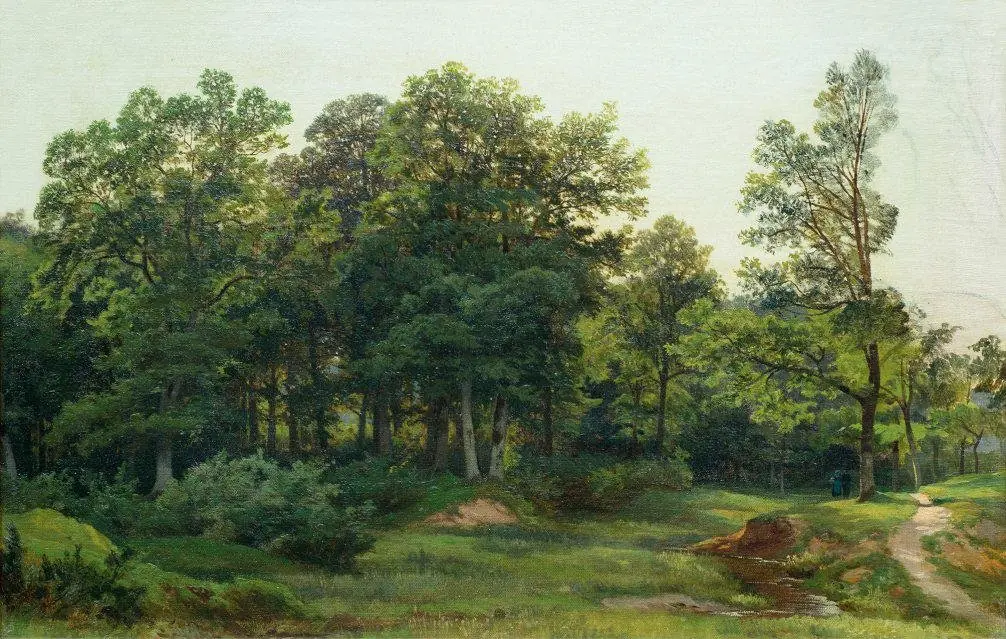
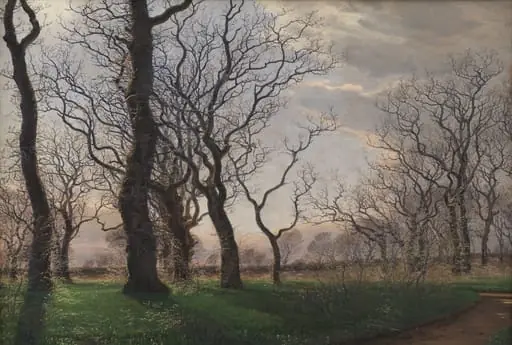
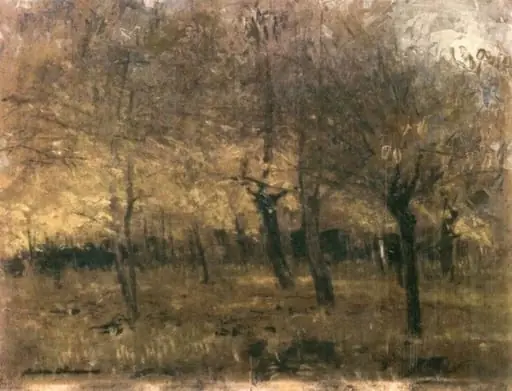
This artwork presents a quiet woodland scene dominated by a single, sturdy tree at its center. Surrounding trees are sparser and stripped of many leaves, suggesting seasonal transition. The ground is layered with fallen foliage, and the muted palette of browns, grays, and dull greens reinforces a still, introspective mood. No human figures or structural elements interrupt the natural setting, emphasizing solitude and the quiet rhythms of the forest.
Subject & Meaning
The central tree, robust and upright, stands as a silent witness amid the decay of its neighbors. The bare branches and scattered leaves imply autumn’s end or early winter’s approach, evoking themes of endurance and impermanence. The absence of movement or life beyond the trees invites reflection on time, resilience, and the subdued beauty of nature in repose.
Technique & Style
The artist employs soft, blended brushwork to render the tree trunks and leaf litter, avoiding sharp outlines. Color transitions are subtle, with earth tones layered to suggest depth without contrast. Light appears diffused, as if filtered through thinning canopies, enhancing the hushed atmosphere. The composition directs attention inward, toward the central trunk, reinforcing the painting’s meditative tone.
History & Provenance
No documented exhibition history or ownership trail is available for this work. It is cataloged as an image without attribution to a known artist or date. Its origins remain unverified, though its stylistic elements align with late 19th- to early 20th-century landscape traditions in Eastern Europe, particularly those favoring naturalism over romanticism.
Context
Created during a period when many European artists turned to rural and forested subjects as industrialization advanced, this piece reflects a broader cultural interest in nature as a space of retreat and quiet observation. Unlike dramatic Romantic landscapes, it avoids grandeur, instead focusing on understated, everyday woodland conditions.
Legacy
Though not widely exhibited or reproduced, the work contributes to a quieter strand of landscape art that values stillness over spectacle. Its restrained palette and focus on seasonal change resonate with later environmental art and minimalist naturalism, offering a contemplative counterpoint to more dynamic depictions of the wild.
Artist & collection
Artist
Ion Andreescu painted quiet scenes of everyday life and landscapes in the late 1800s.