Artwork
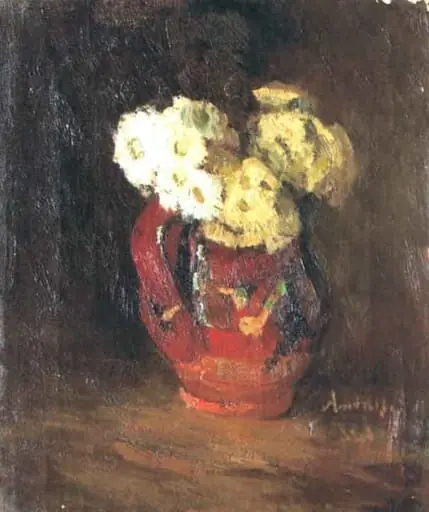
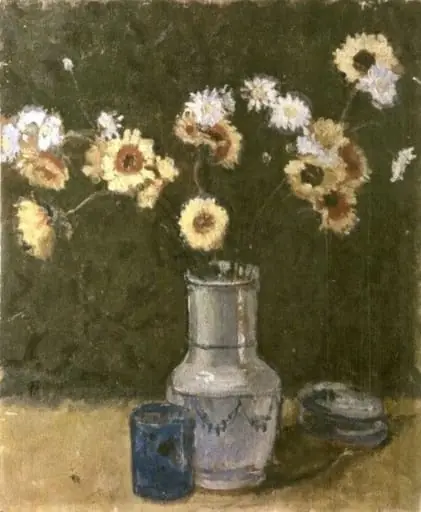
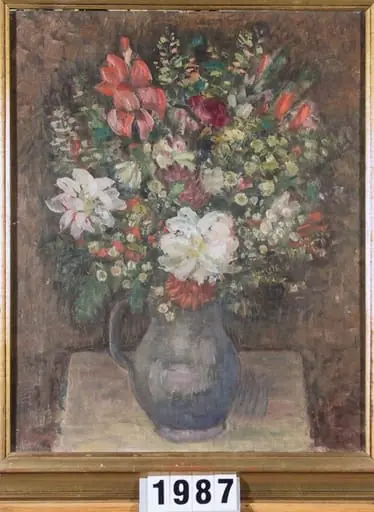
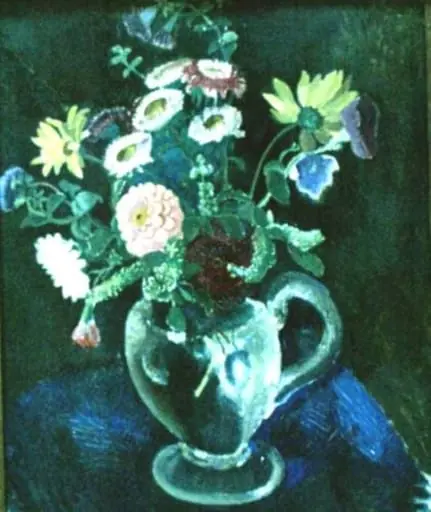
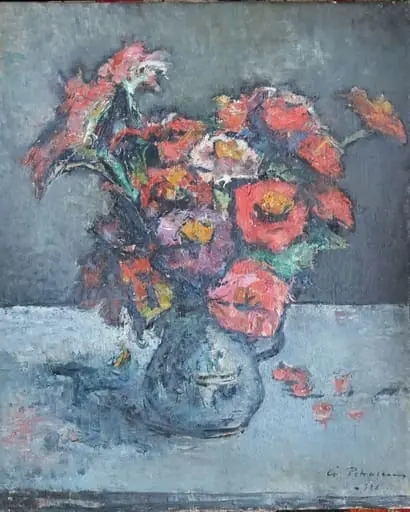
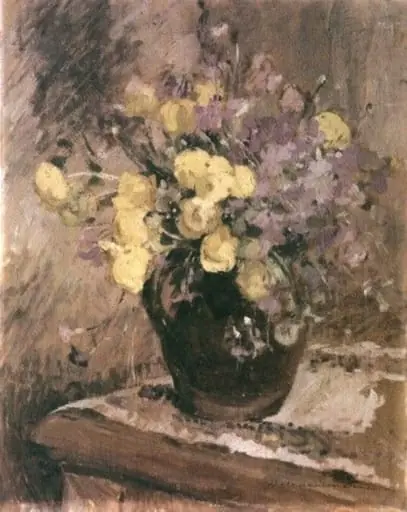
Vas cu flori (Oală cu flori galbene)
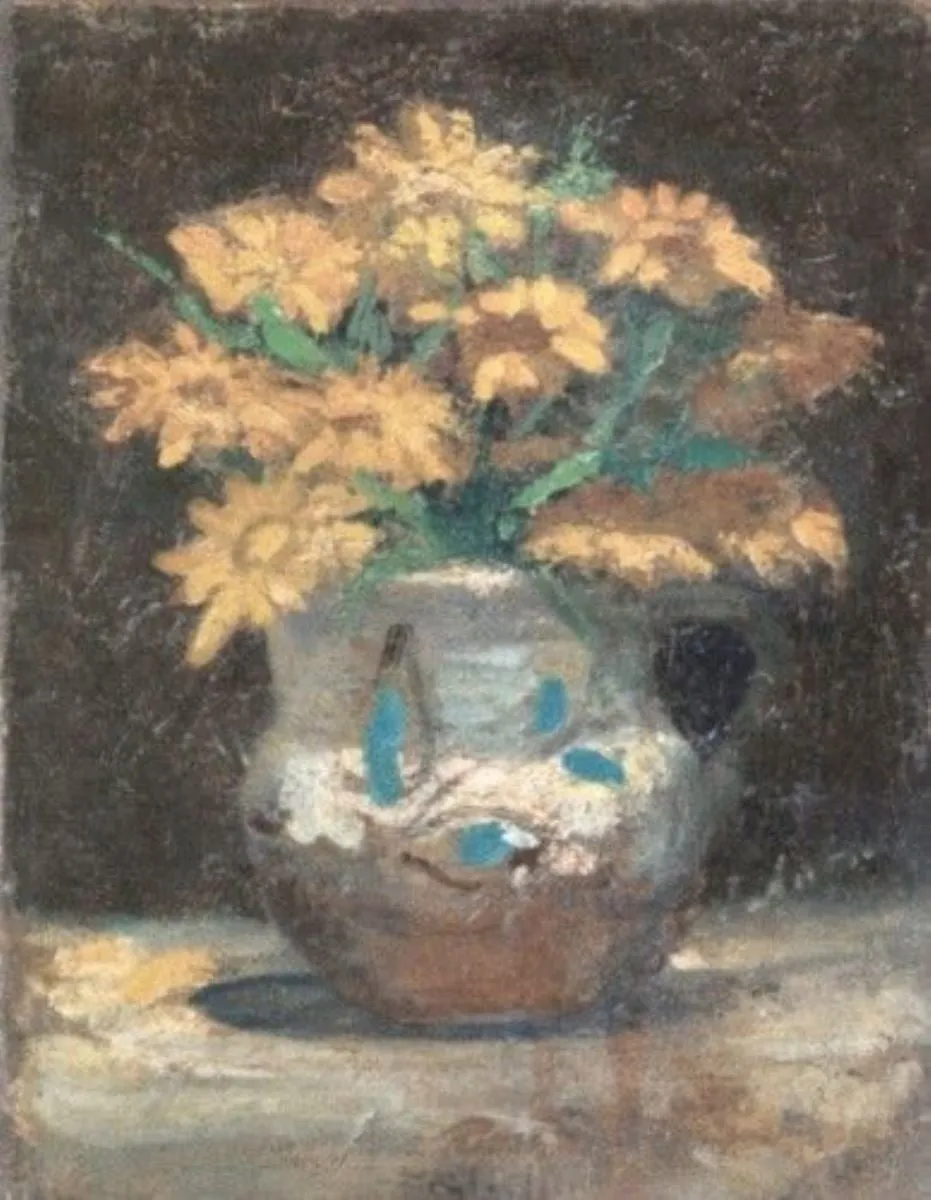
Vas cu flori (Oală cu flori galbene) is an unspecified painting by Ion Andreescu. It dates from 1850 and is held in the collection of the National Museum of Art of Romania.
About this work
Overview
Painted around 1850 by Ion Andreescu, this still life depicts a simple ceramic vessel filled with yellow blooms. The composition centers the vase against a deep, muted background, allowing the flowers to emerge with quiet prominence. The work reflects an early Romanian engagement with domestic still life, prioritizing natural form over elaborate decoration.
Subject & Meaning
The subject is a humble arrangement of yellow flowers in a plain pot, devoid of symbolic or narrative context. Rather than conveying allegory, the painting emphasizes the quiet beauty of everyday objects. The choice of yellow blossoms suggests seasonal vitality, while their casual spill from the vessel conveys a sense of organic growth rather than rigid order.
Technique & Style
Andreescu employed loose, visible brushwork to render the petals and leaves, capturing movement and texture without fine detail. The vase, marked by subtle blue decorative lines, contrasts gently with the warm tones of the flowers. The dark background enhances the luminosity of the blooms, creating depth through tonal contrast rather than perspective or shading.
History & Provenance
The painting originates from the early phase of Romanian academic art, predating the formal establishment of national art institutions. Its survival and attribution to Andreescu rely on limited documentation, as many works from this period were privately held or lost. It remains one of the few surviving still lifes attributed to the artist from this time.
Context
In mid-19th century Romania, still life was not a dominant genre compared to portraiture or historical scenes. Andreescu’s focus on domestic flora reflects a personal, introspective turn within a broader artistic environment still shaped by European academic traditions. This work hints at a nascent interest in local, intimate subjects before the rise of national romanticism.
Legacy
Though Andreescu is better known for landscapes and figure studies, this still life stands as an early example of his sensitivity to light and natural form. It contributed to a quiet shift in Romanian painting toward observing ordinary life with sincerity. The work is now recognized as a precursor to later generations who embraced everyday subjects with greater emotional depth.
Artist & collection
Artist
Ion Andreescu painted quiet scenes of everyday life and landscapes in the late 1800s.