Artwork
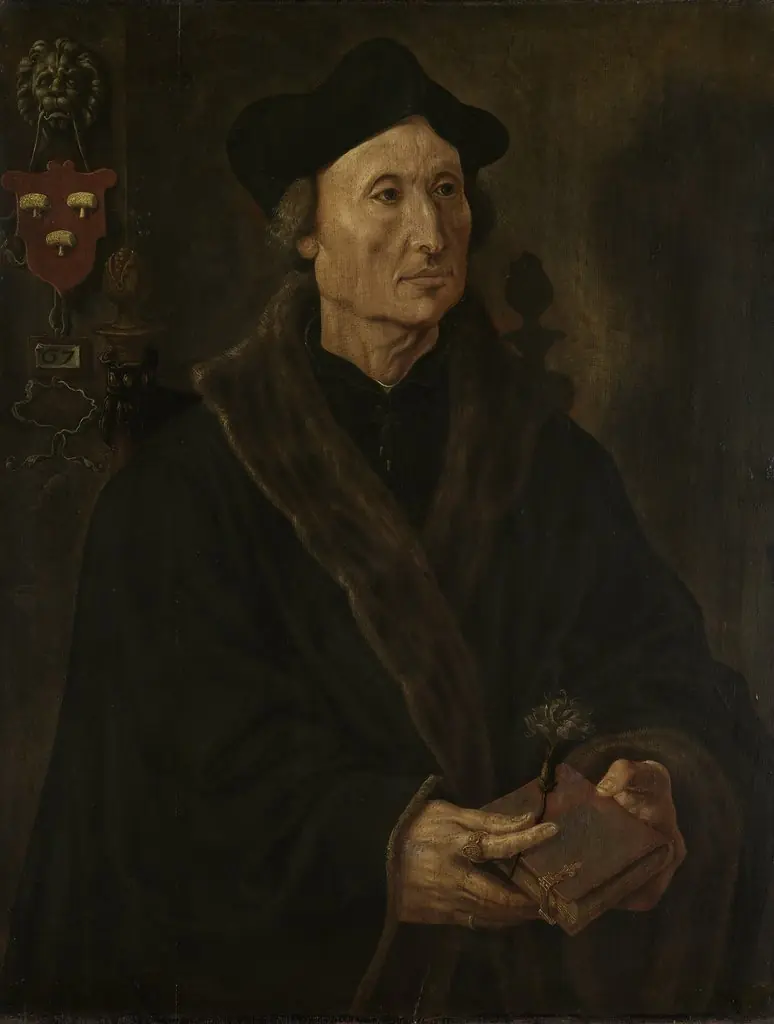
Portrait of Cornelis Aerentsz van der Dussen (1481-1556)
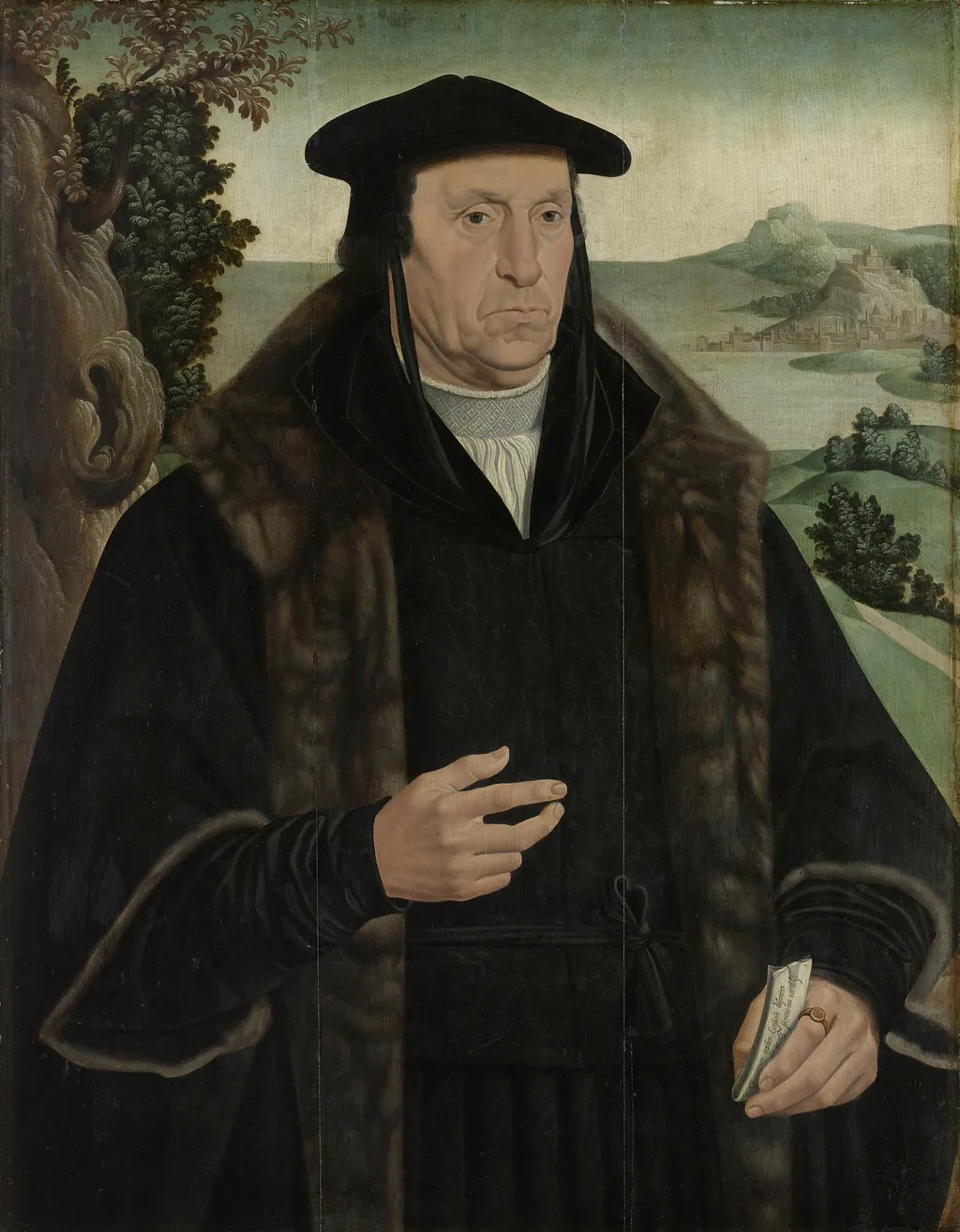
Portrait of Cornelis Aerentsz van der Dussen (1481-1556) is an oil painting. It dates from 1562 and is held in the collection of the Rijksmuseum. The work is an oil painting portraying a solemn figure dressed in a black hat and a dark fur-lined coat.
About this work
Overview
The work is an oil painting portraying a solemn figure dressed in a black hat and a dark fur-lined coat. He holds a small folded paper in his right hand, while his left hand rests on his chest. Behind him stretches a tranquil landscape of trees, a river and distant structures, rendered in muted tones that recede into the distance.
Subject & Meaning
The sitter, identified as Cornelis Aerentsz van der Dussen (1481‑1556), is presented with a dignified bearing. The folded paper may allude to a document or personal testament, suggesting his status or a specific role. The composed pose and direct lighting emphasize his individuality and seriousness, reflecting the period’s interest in personal portraiture as a record of identity.
Technique & Style
Executed in oil on panel, the painting employs strong chiaroscuro to model the figure’s features, with frontal illumination contrasting against the dark garments. The texture of the fur coat and the delicate rendering of the fingers demonstrate meticulous brushwork. The background landscape is treated with softer, atmospheric tones, providing depth without competing with the central portrait.
History & Provenance
The portrait dates from the early sixteenth century, a time when Dutch portraiture began to emphasize realistic likeness and individual character. Although specific ownership records are limited, the work has been associated with collections of Dutch civic patrons and later entered museum holdings, where it serves as a representative example of Northern Renaissance portraiture.
Context
Created during a period of growing mercantile prosperity in the Low Countries, the painting reflects the emerging middle‑class desire for personal representation. Its realistic treatment aligns with contemporary developments in Netherlandish art, where artists increasingly focused on capturing the materiality of clothing and the psychological presence of the sitter.
Artist & collection