Artwork
Christ and the Woman Taken in Adultery
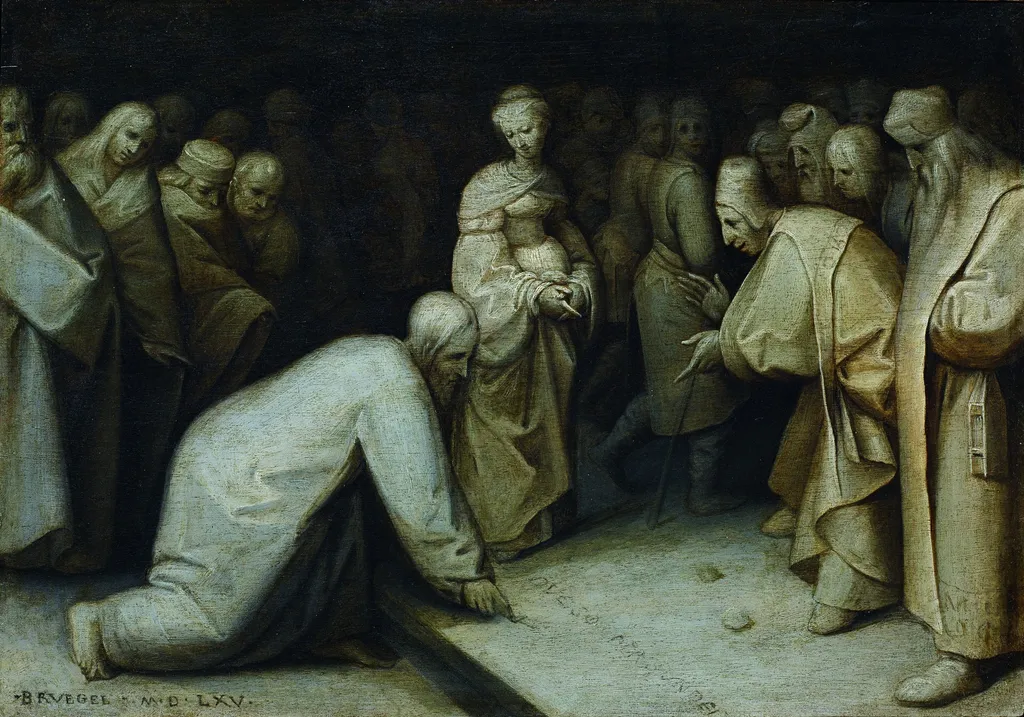
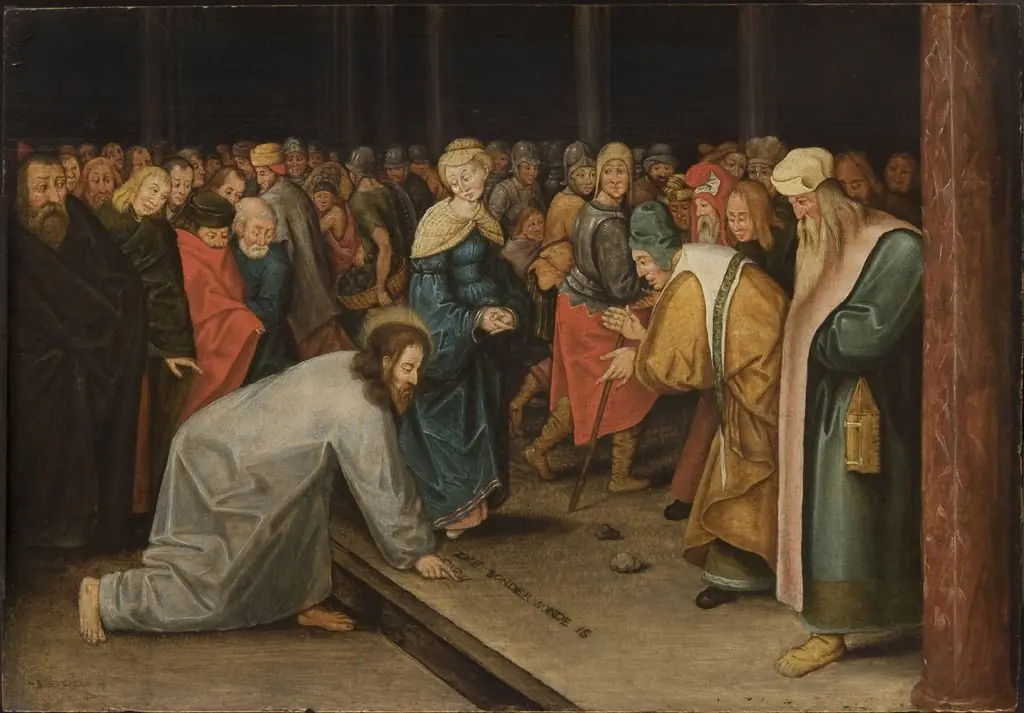
Christ and the Woman Taken in Adultery is an oil painting by the Flemish Baroque painting artist Unknown. It dates from 1625 and is held in the collection of the Accademia Carrara. The oil painting portrays the biblical episode of the woman caught in adultery.
About this work
Overview
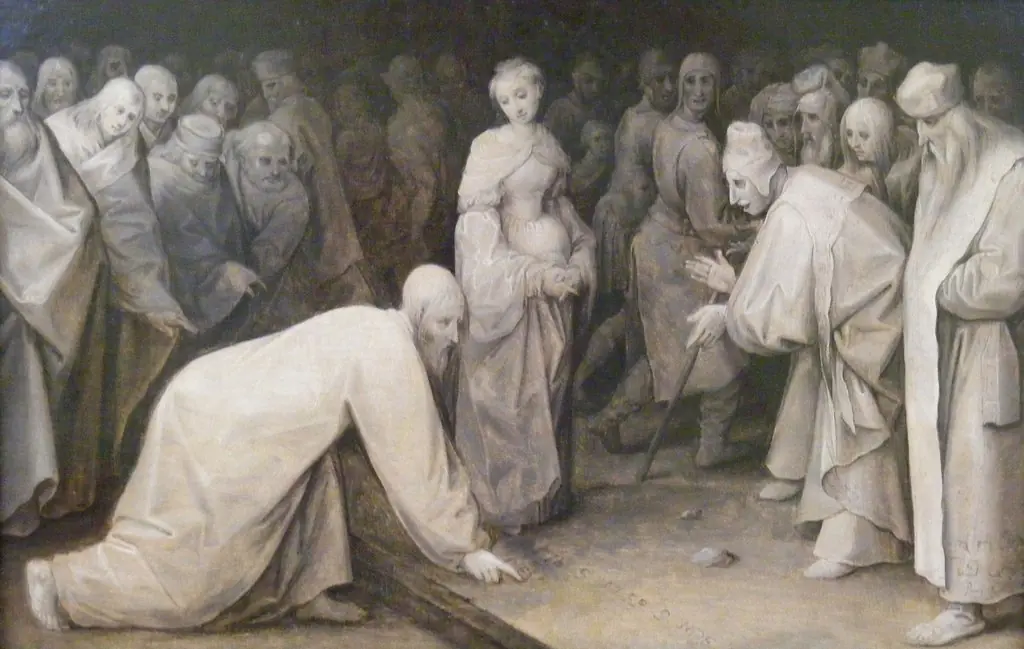
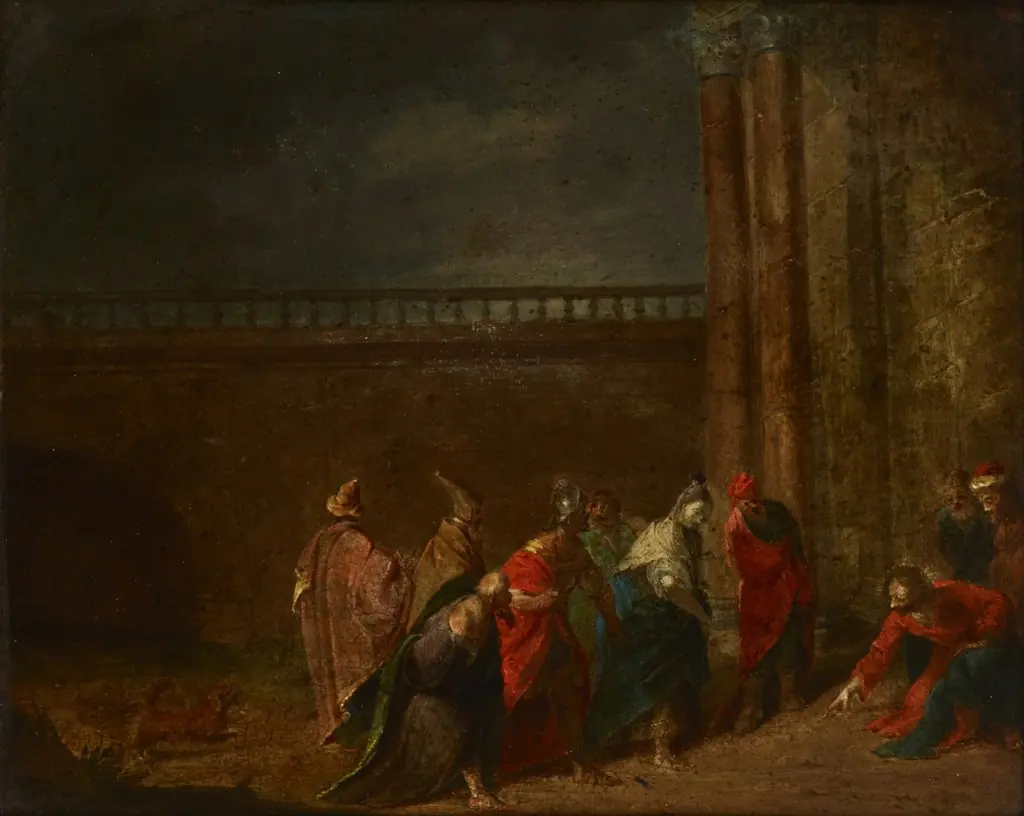
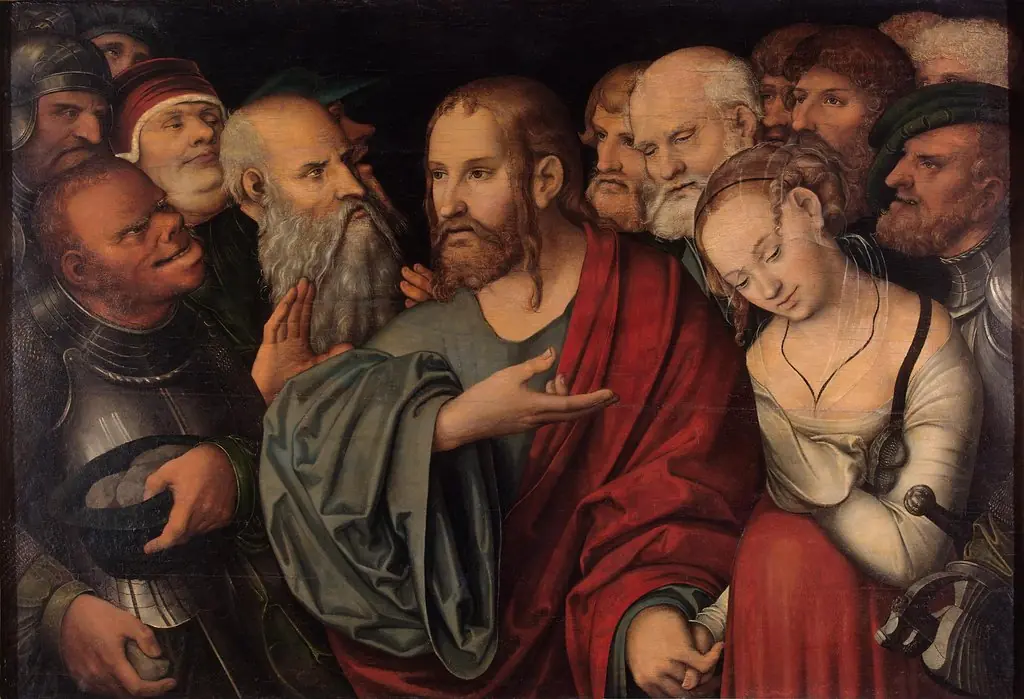
The oil painting portrays the biblical episode of the woman caught in adultery. Central to the composition is the accused woman, her head lowered in shame, encircled by onlookers in period attire. A kneeling figure in the foreground writes in the dust, while a darkened backdrop heightens the dramatic tension of the scene.
Subject & Meaning
The work visualizes the New Testament narrative in which Jesus confronts those accusing a woman of adultery, emphasizing themes of judgment, mercy, and societal condemnation. The woman's bowed posture and the pointing gestures of the crowd underscore her vulnerability, while the act of writing in the dust alludes to the scriptural reference to "let him who is without sin cast the first stone."
Technique & Style
Employing strong chiaroscuro, the artist creates stark contrasts between illuminated figures and a shadowy background, lending depth and focus to the central drama. Thick impasto layers combined with translucent glazes give the surface a tactile quality, enhancing the textures of fabric and flesh and reinforcing the emotional intensity of the moment.
History & Provenance
The painting is executed in oil on canvas, a medium favored for its versatility in rendering light and texture. While specific details of its commission or ownership are not recorded in the provided data, its subject aligns with a long tradition of religious narrative works popular in European art from the Renaissance onward.
Context
Set within a broader iconographic tradition, the scene reflects the Counter‑Reformation emphasis on moral instruction through vivid biblical storytelling. The composition’s focus on individual expression and collective judgment mirrors contemporary concerns about sin, repentance, and the role of ecclesiastical authority in adjudicating moral transgressions.
Artist & collection

 Domestic Scene
 Giacomo and Cardinal Marco, investing Andrea, Abbot of San Zeno, with his Benefice
 The Nymph of Fontainebleau
 Portrait of a Woman
 Madonna and Child with Saints in the Enclosed Garden
 Venus and Minerva
 Family Group of Four on Sofa
 Wall painting from Room H of the Villa of P. Fannius Synistor at Boscoreale