Artwork
Portrait of a man
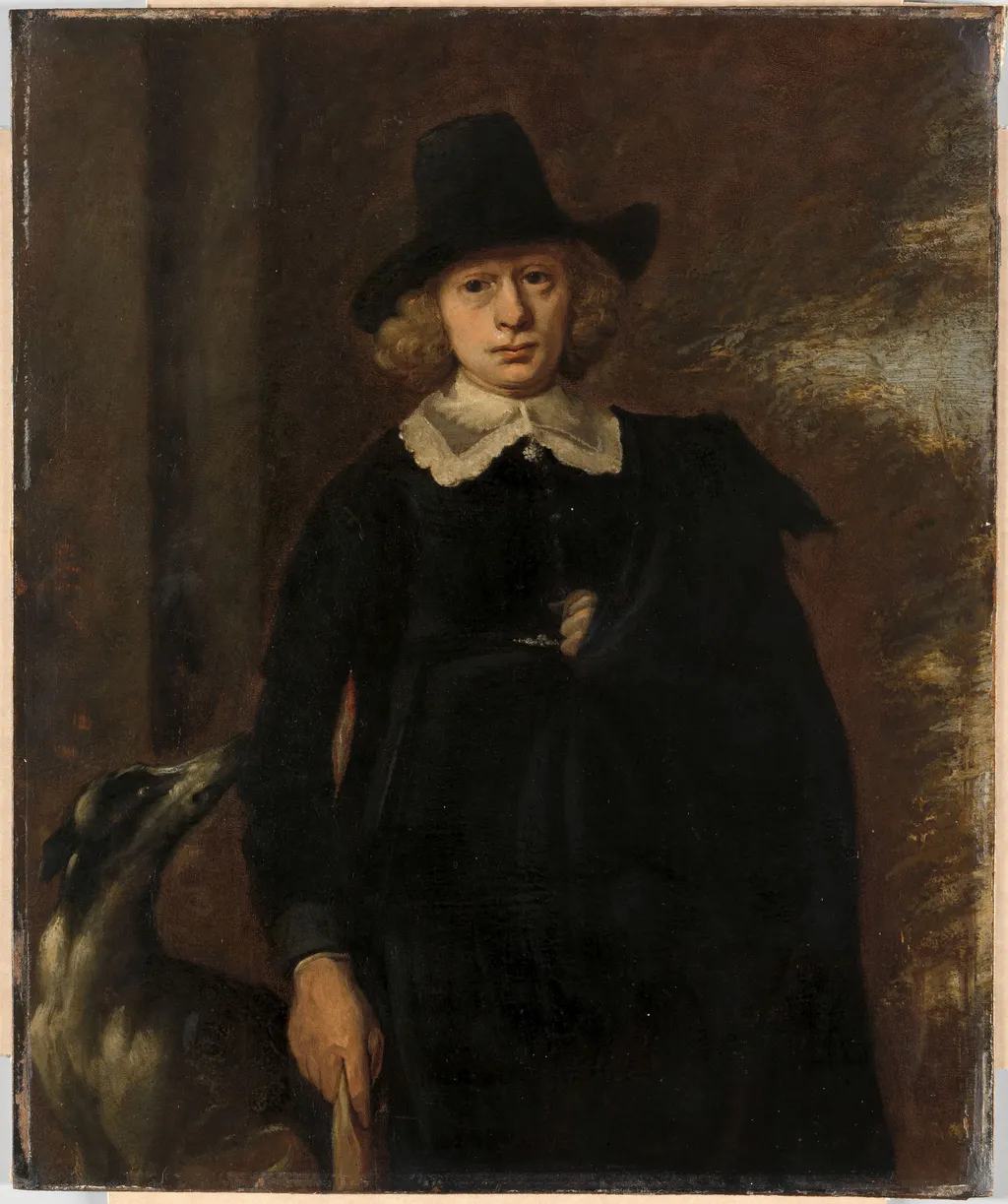
Portrait of a man is an oil painting. It dates from 1650 and is held in the collection of the Rijksmuseum. The work is a painted portrait executed on a copper support, depicting a solitary male figure.
About this work
Overview
He is dressed in a dark coat and a wide-brimmed hat, his white, lace-trimmed collar contrasting sharply with the surrounding darkness.
The work is a painted portrait executed on a copper support, depicting a solitary male figure. He is dressed in a dark coat and a wide-brimmed hat, his white, lace-trimmed collar contrasting sharply with the surrounding darkness. In his left hand he grasps a small, unidentified object, while the background recedes into an almost black space with a faint suggestion of a curtain or wall on the right.
Subject & Meaning
The sitter’s attire—formal coat, hat, and lace collar—indicates a person of some social standing, possibly a merchant or gentleman of the period. The small object he holds may be a token of his profession or a personal emblem, though its exact nature remains unclear. The stark isolation of the figure against a dark backdrop invites contemplation of identity and status, emphasizing the individual’s presence over any narrative setting.
Technique & Style
The artist employed a pronounced chiaroscuro effect, using deep shadows to isolate the figure and draw the eye to the illuminated clothing and facial features. Thick applications of pigment are evident on the coat and hat, creating a tactile surface that catches light differently from the smoother areas. The copper substrate contributes to the painting’s luminosity, allowing the dark tones to appear richer and the highlights more incisive.
Context
Portraits on copper were popular in the 16th and 17th centuries, valued for the smooth surface that facilitated fine detail and a luminous finish. The choice of a dark, almost monochrome background aligns with contemporary trends that favored dramatic lighting to convey psychological depth. While the artist’s identity is not recorded, the work reflects the period’s interest in individualized representation and the technical possibilities offered by metal supports.
Artist & collection