Artwork
The Arhat Gopaka
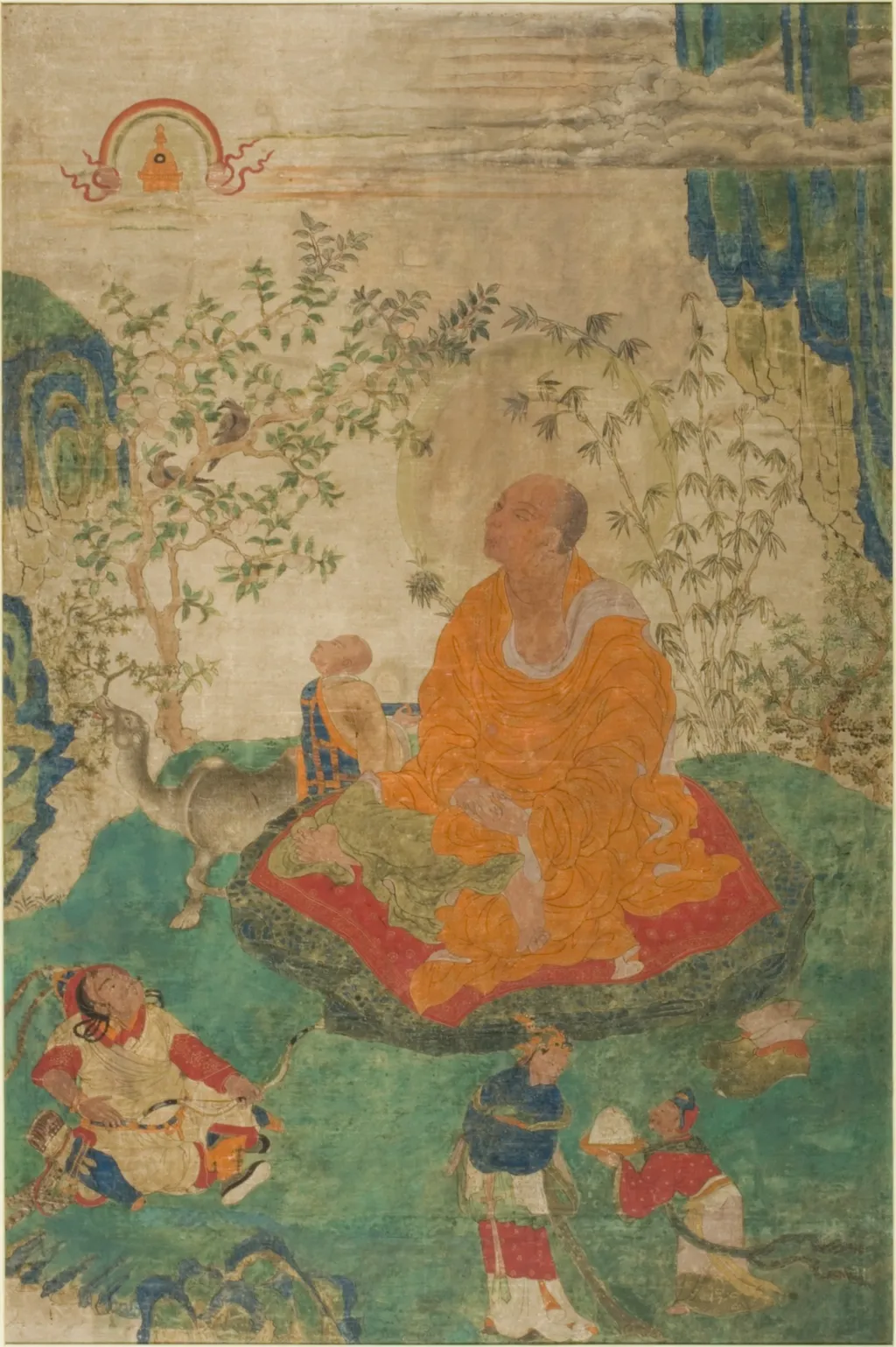
The Arhat Gopaka is an unspecified painting by the Mughal Painting artist Unknown. It dates from 1650 and is held in the collection of the Los Angeles County Museum of Art.
About this work
Overview
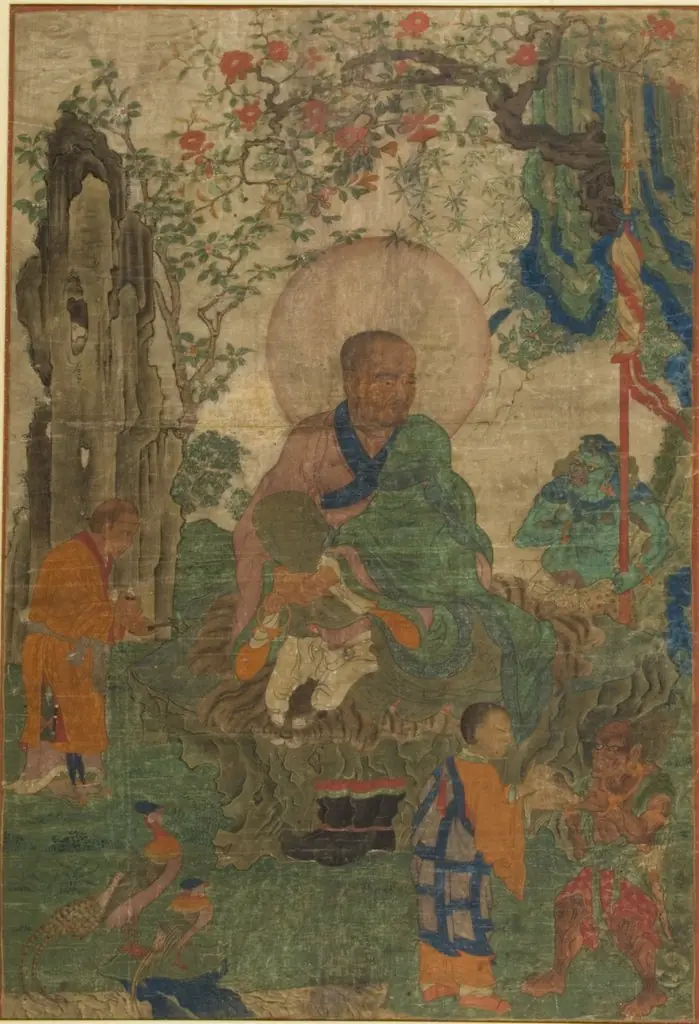
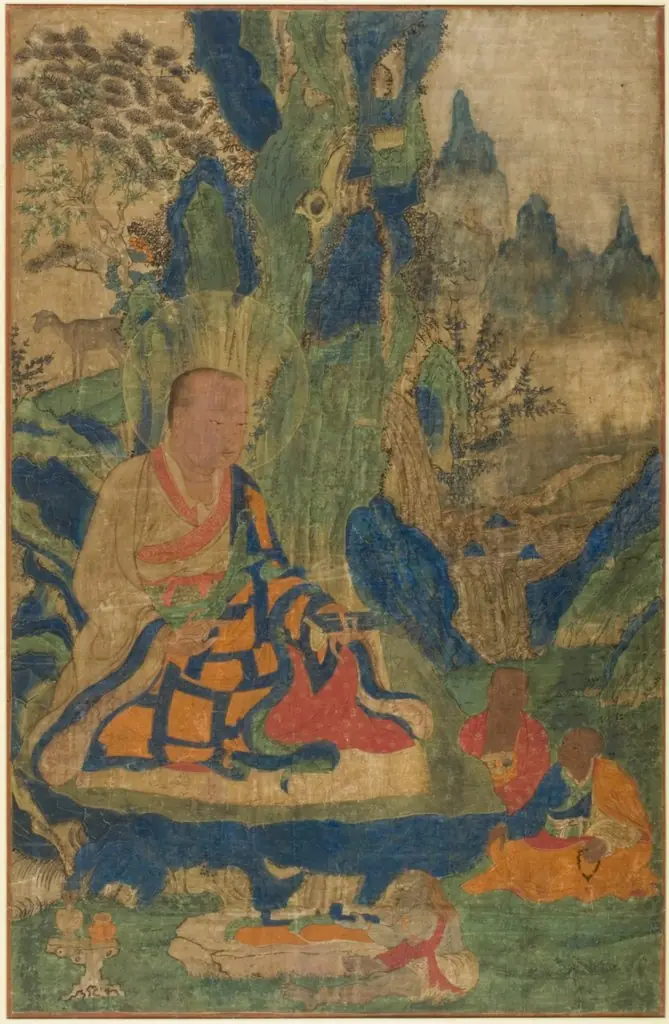
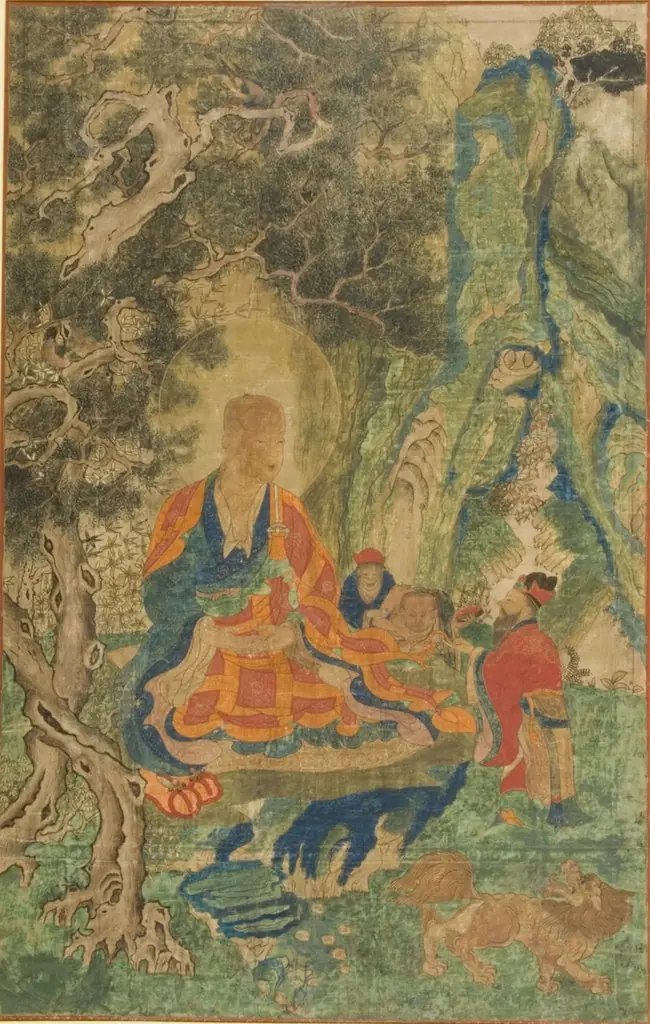
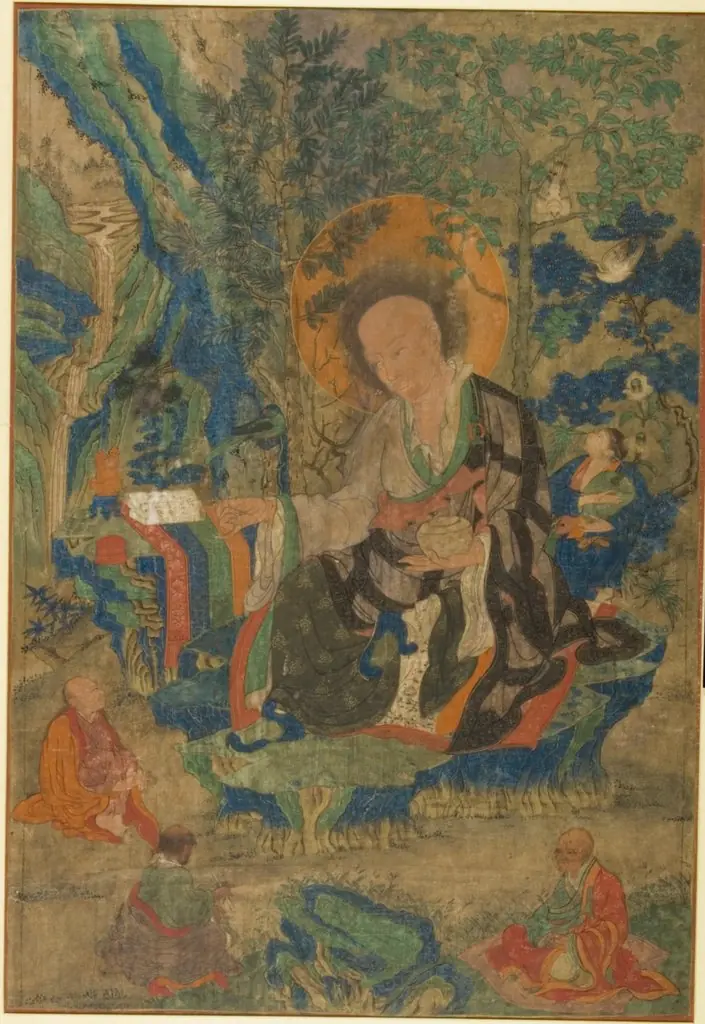
This painting depicts a Buddhist arhat, identified by his orange robe and white collar, seated on a patterned blanket in a quiet natural setting.
This painting depicts a Buddhist arhat, identified by his orange robe and white collar, seated on a patterned blanket in a quiet natural setting. Surrounding him are figures and animals—possibly disciples, devotees, a deer, and a dog—engaged in subtle, unclarified interactions. The composition centers the monk as a calm focal point, with the vividness of his garment contrasting against the subdued tones of the landscape, suggesting spiritual presence amid ordinary surroundings.
Subject & Meaning
The arhat represents an enlightened disciple of the Buddha, often portrayed in meditative or teaching postures. The presence of animals like the deer and dog may symbolize harmony between spiritual wisdom and the natural world, or serve as quiet witnesses to his enlightenment. The ambiguous actions of the human figures suggest a moment of quiet communion rather than formal instruction, emphasizing inner stillness over doctrinal display.
Technique & Style
The artist employs flat, decorative patterning on the blanket and a restrained palette for the background, allowing the arhat’s orange robe to dominate visually. Brushwork is deliberate but not overly detailed, favoring clarity of form over realism. The natural elements—trees, rocks—are rendered with simplified contours, reinforcing a meditative, symbolic atmosphere rather than a topographical one.
History & Provenance
The painting belongs to a tradition of South or Southeast Asian Buddhist art, likely produced between the 15th and 18th centuries. Its style aligns with regional monastic painting practices, where arhats were depicted in devotional contexts. Exact origin and early ownership remain undocumented, though similar works were used in temple settings or private meditation spaces to inspire contemplation.
Context
In Buddhist communities, arhat imagery served both devotional and didactic purposes, reinforcing ideals of renunciation and inner peace. This scene reflects a common motif: the enlightened sage in nature, removed from urban life yet surrounded by beings drawn to his presence. The inclusion of animals, common in such depictions, underscores the arhat’s nonviolent harmony with all living things.
Legacy
Works like this contributed to the visual language of Buddhist spirituality across Asia, influencing later iconography in both religious and secular art. Though not widely known outside specialized collections, such paintings preserved regional interpretations of enlightenment, offering enduring models of quiet authority and spiritual presence in natural settings.
Artist & collection

 Domestic Scene
 Giacomo and Cardinal Marco, investing Andrea, Abbot of San Zeno, with his Benefice
 The Nymph of Fontainebleau
 Portrait of a Woman
 Madonna and Child with Saints in the Enclosed Garden
 Venus and Minerva
 Family Group of Four on Sofa
 Wall painting from Room H of the Villa of P. Fannius Synistor at Boscoreale