Artwork
Balthazar, one of the three Magi, with a servant
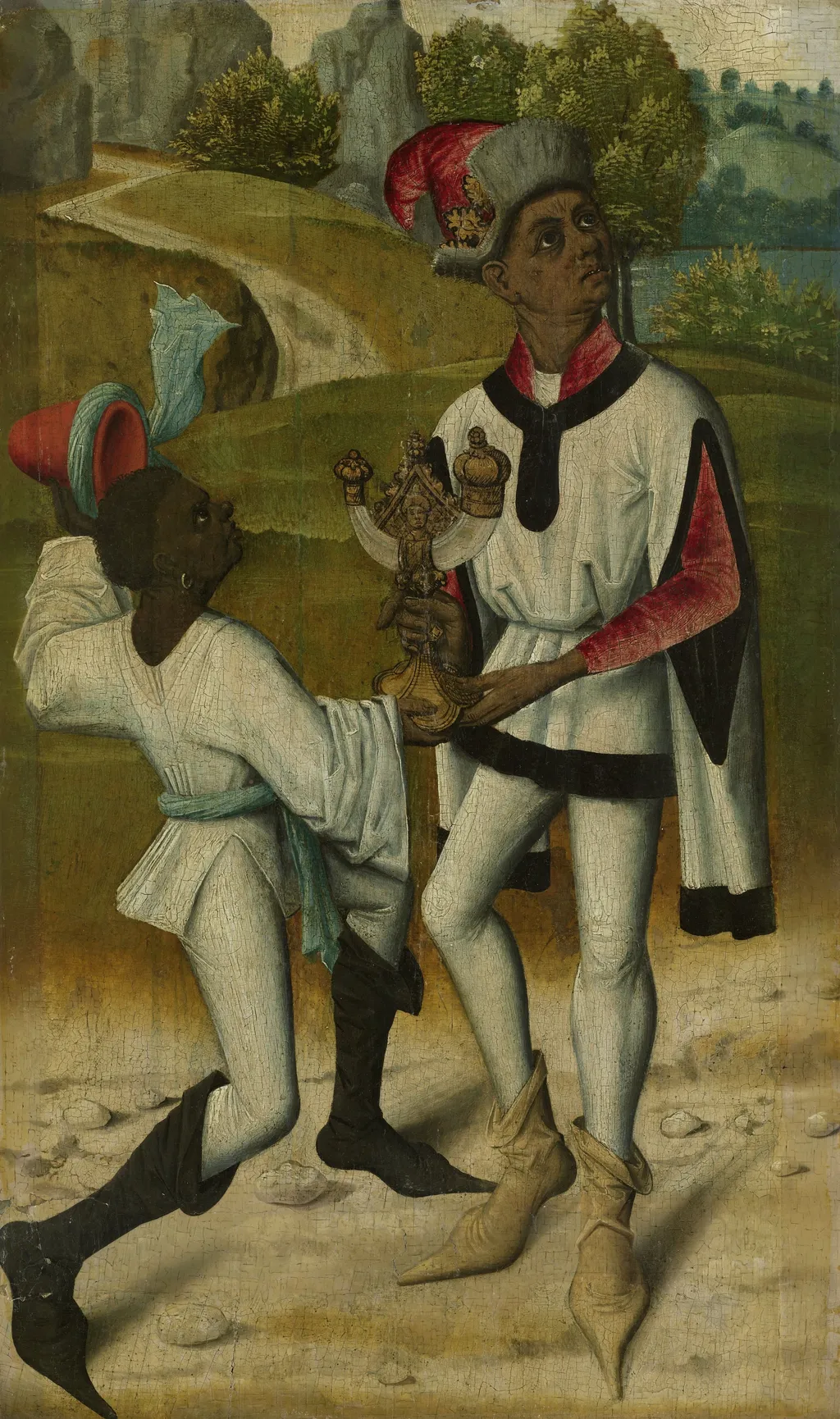
Balthazar, one of the three Magi, with a servant is an oil painting. It dates from 1490 and is held in the collection of the Rijksmuseum. The oil painting depicts two figures standing in an open landscape.
About this work
Overview
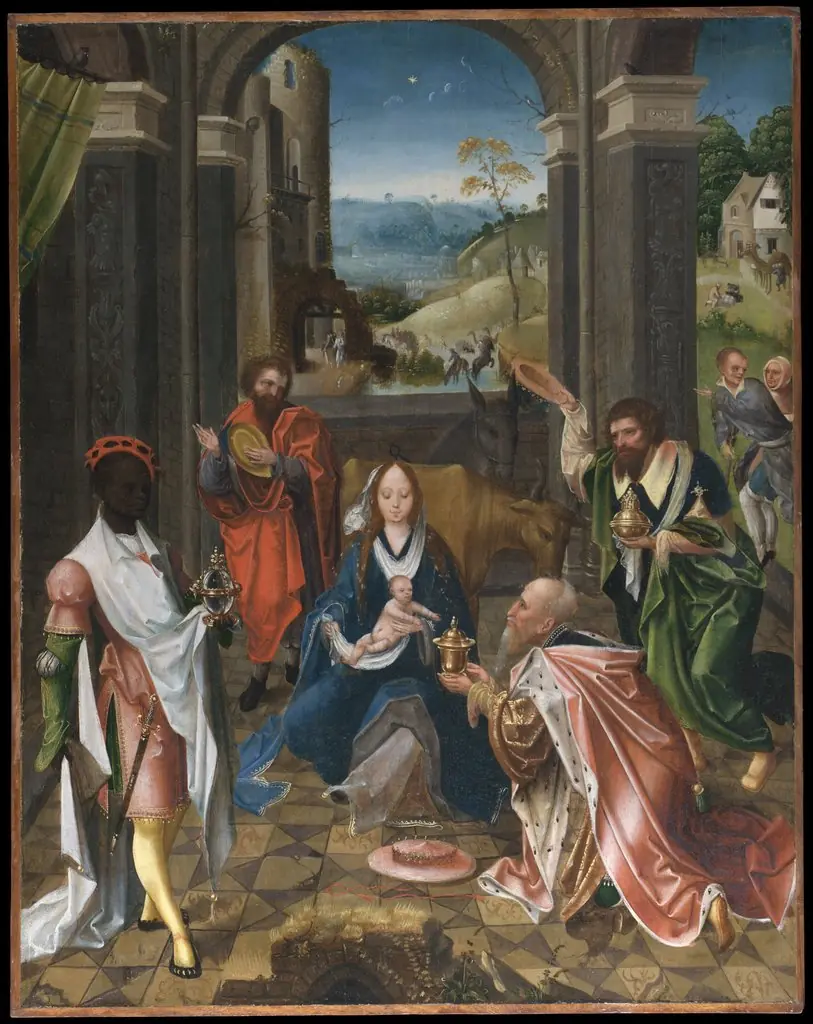
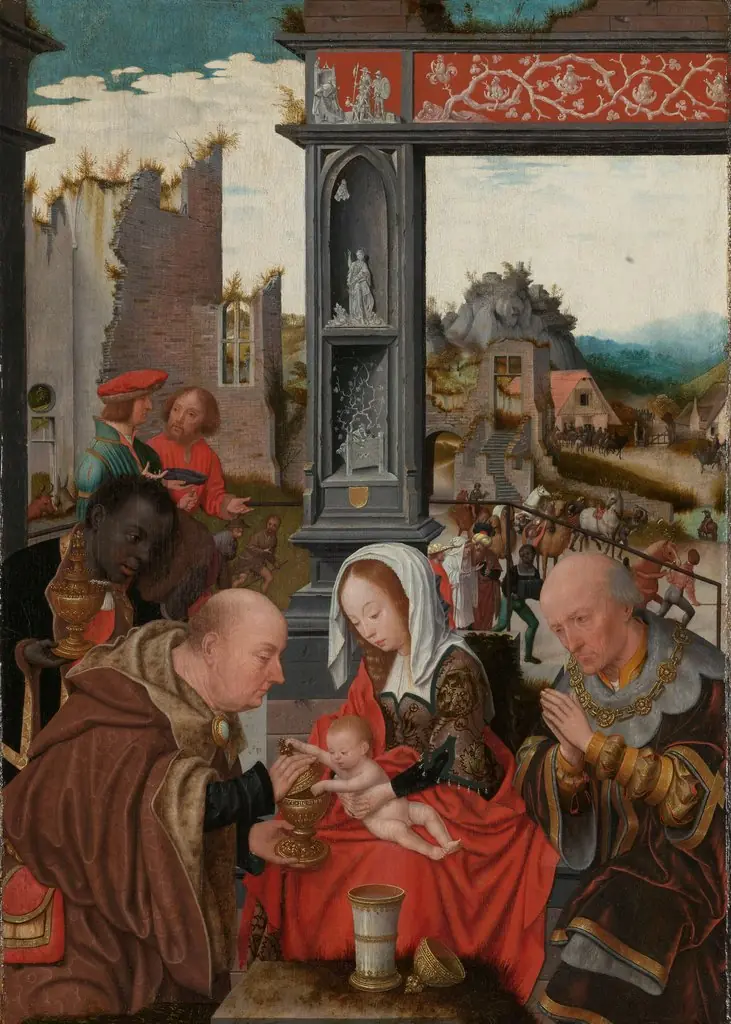
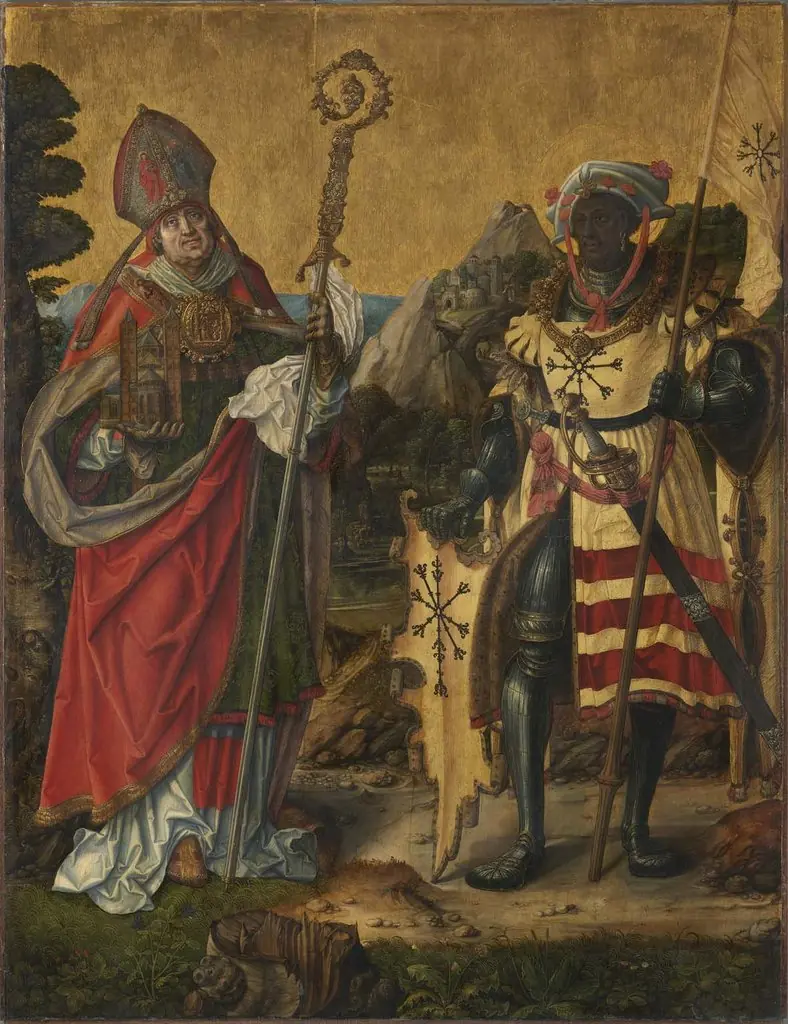
The oil painting depicts two figures standing in an open landscape. The principal figure, identified as Balthazar—one of the three Magi—wears a tall, elaborately decorated hat of red and gold, a white and red robe, and holds a golden chalice topped with two smaller vessels. To his left, a servant in a simple white tunic and a modest red cap leans forward, suggesting deference.
Subject & Meaning
The work illustrates the biblical episode of the Magi’s journey, focusing on Balthazar and his attendant. The inclusion of the servant emphasizes the hierarchical status of the Magi and highlights themes of wealth and service within the narrative of the Epiphany.
Technique & Style
Rendered in oil, the composition employs chiaroscuro to model the figures, with the servant’s face and hands rendered in deeper tones than the Magus, a convention of the period to convey differing skin tones and social distinction. The landscape background, featuring trees, rolling hills, and a distant water body, is treated with softer brushwork, creating atmospheric depth.
History & Provenance
The painting’s origins, date, and ownership record are not specified in the supplied data, limiting the ability to trace its historical trajectory or previous collections.
Context
During the era when European artists frequently depicted the Magi, such scenes served both devotional and decorative purposes. The portrayal of Balthazar with opulent attire and a servant reflects contemporary interests in exoticism and the display of material wealth associated with the biblical visitors.
Artist & collection