Artwork
A page from a Punishment series: Punishment for murder
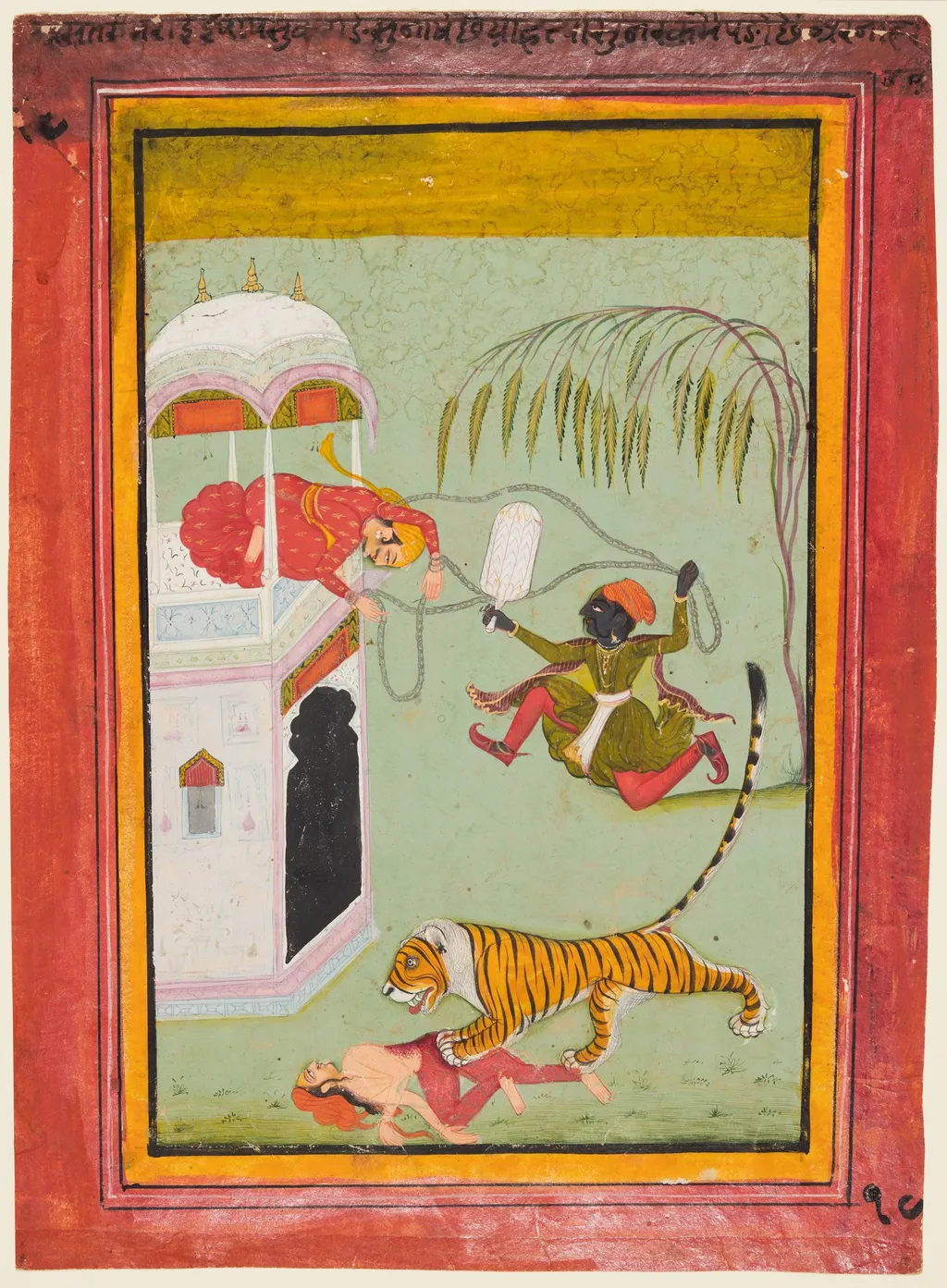
A page from a Punishment series: Punishment for murder is an unspecified painting. It dates from 1740 and is held in the collection of the Cleveland Museum of Art.
About this work
Overview
A second figure, clad in green and red, swings on the rope, striking at the animal, while a pink‑clad individual lies on the ground below, appearing frightened.
The work, titled “A page from a Punishment series: Punishment for murder,” is a painted composition that depicts a vivid, action‑filled tableau. Central to the scene is a white pavilion from which a man dressed in red extends a rope attached to a tiger. A second figure, clad in green and red, swings on the rope, striking at the animal, while a pink‑clad individual lies on the ground below, appearing frightened. The background features a green field, palm trees and a red‑roofed building.
Subject & Meaning
The painting illustrates a punitive episode, likely drawn from a narrative of retributive justice, where a tiger is employed as an instrument of punishment. The juxtaposition of the aggressive tiger, the active assailant, and the terrified victim suggests a dramatization of violence and its consequences, reflecting cultural attitudes toward crime and retribution.
Technique & Style
Executed with a bright palette, the artist employs saturated reds, greens, yellows and pinks to heighten the drama. The figures are rendered with bold outlines and dynamic poses, while the tiger’s striped coat is depicted with energetic brushwork that conveys movement. The contrast between the vivid foreground and the more muted, verdant background creates visual tension and emphasizes the central action.
History & Provenance
The piece belongs to a series titled “Punishment,” focusing on themes of criminal penalty. While specific details of its creation date, artist, and ownership trail are not provided, the work is currently catalogued within the collection of the Cleveland Museum of Art, where it is accessible for public viewing and scholarly reference.
Context
The painting reflects a tradition of narrative art that visualizes moral or legal stories, a practice common in various Asian artistic schools. By integrating a tiger—a symbol of power and danger—into a scene of judicial retribution, the work aligns with visual conventions that use animal motifs to underscore human ethical dilemmas.
Artist & collection

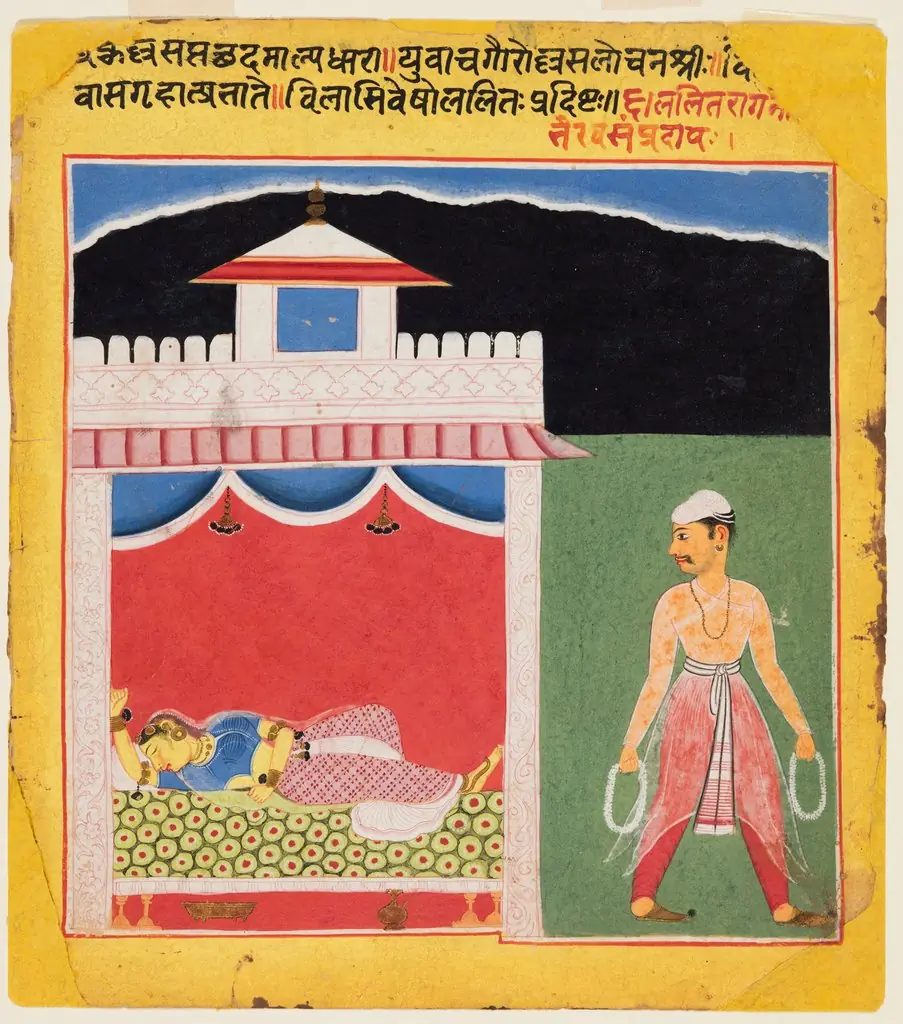 The Lover Leaves Wistfully in the Morning after a Passionate Tryst: Lalit Ragini, from a Ragamala
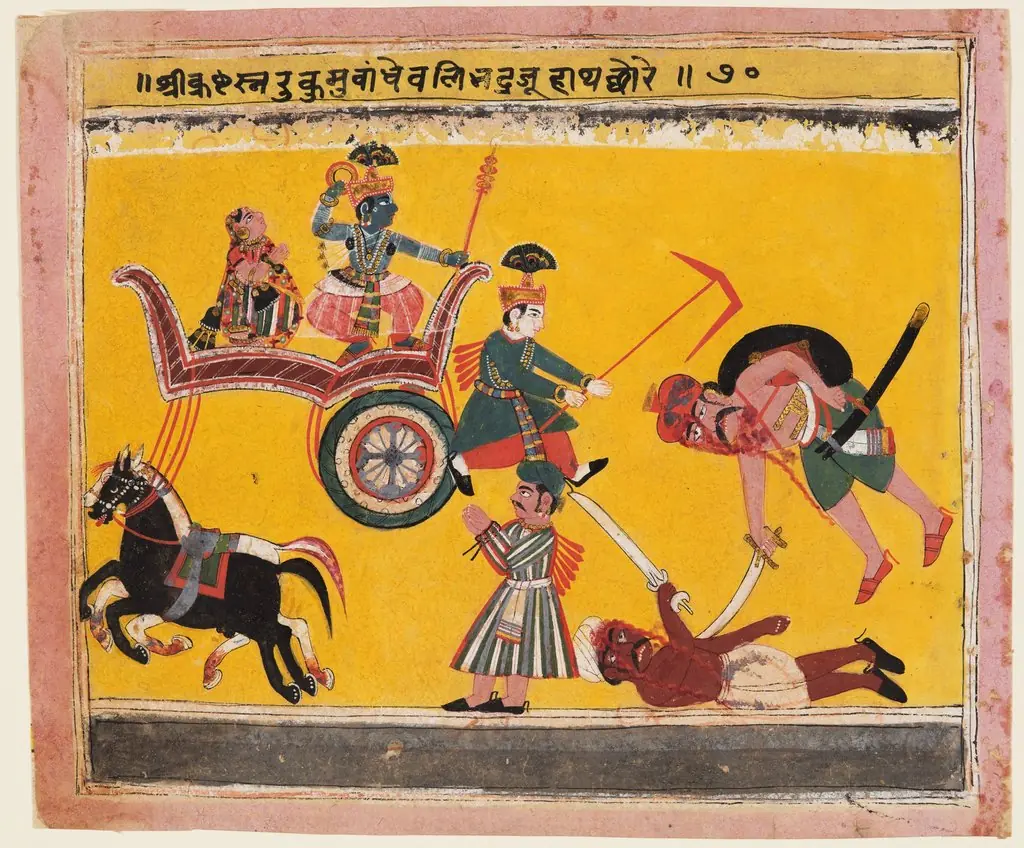 Abduction of Rukmini: Krishna Tied the Hands of Rukma, from a Bhagavata Purana
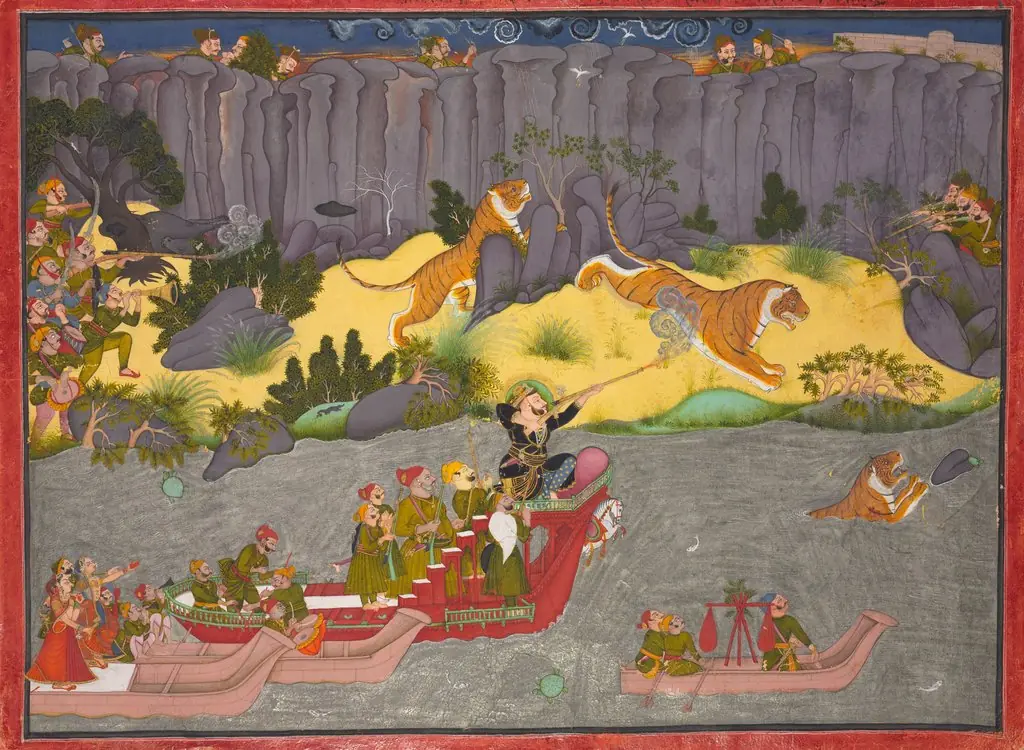 Tiger Hunt of Raja Ram Singh II
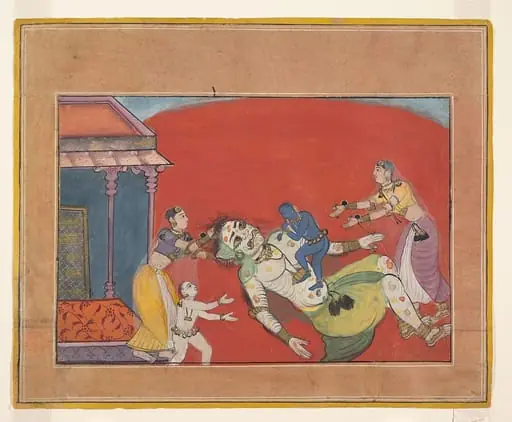 Untitled
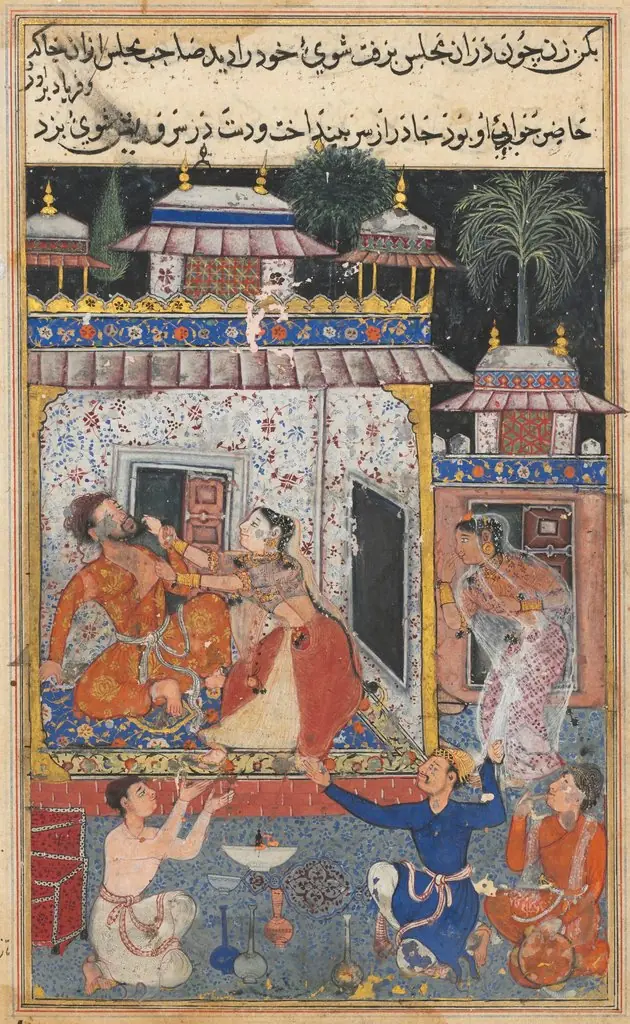 The deceitful wife assaults her erring husband, from a Tuti-nama (Tales of a Parrot): Eighth Night
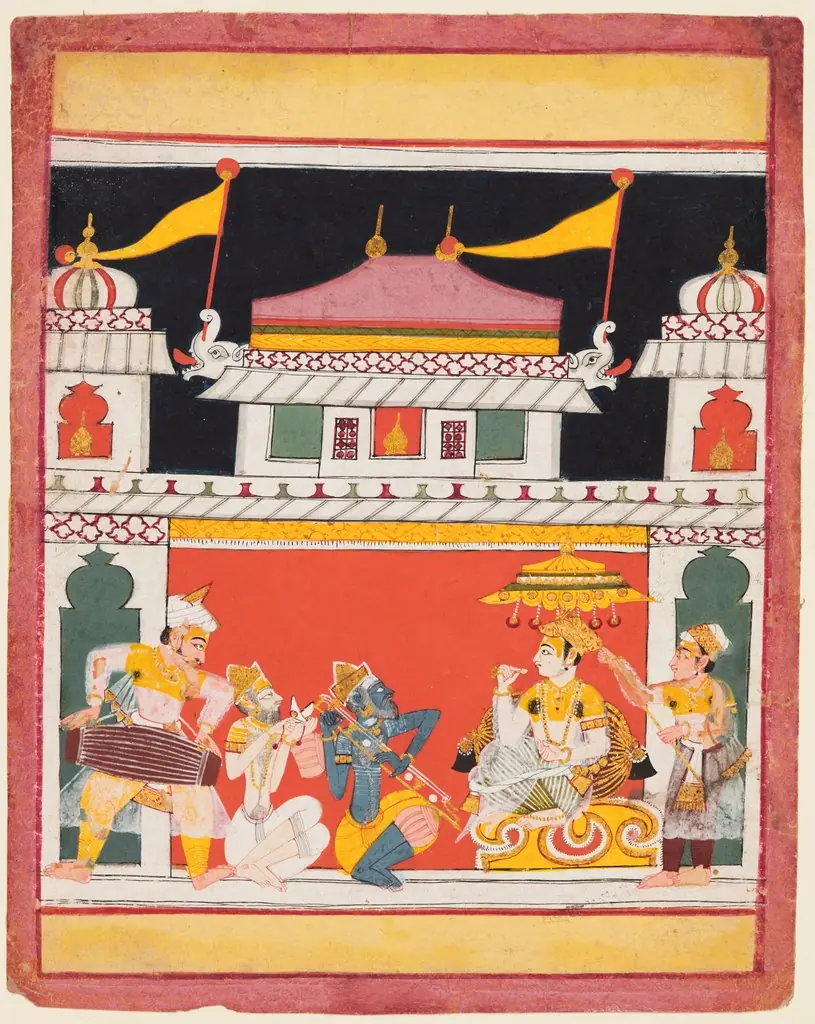 Three Musicians Perform Before a King: Shri Raga, from a Ragamala