Artwork
St. Cecilia
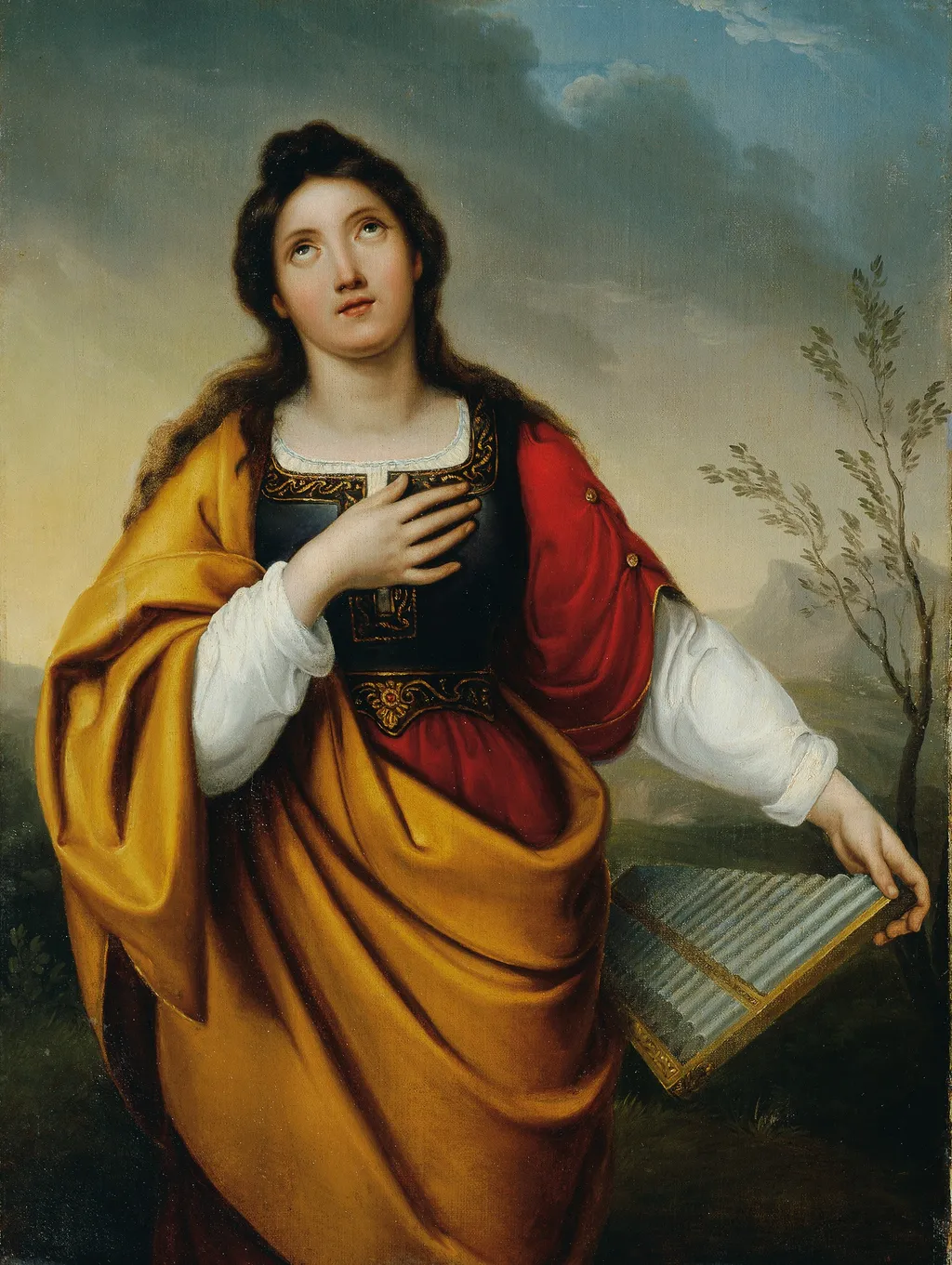
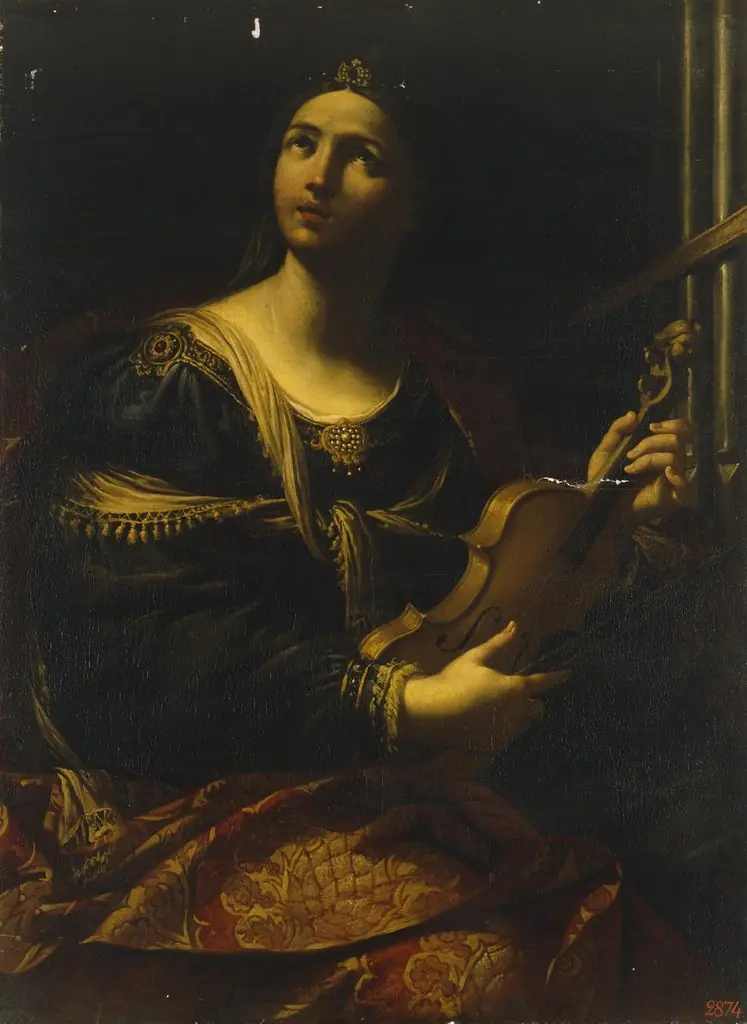
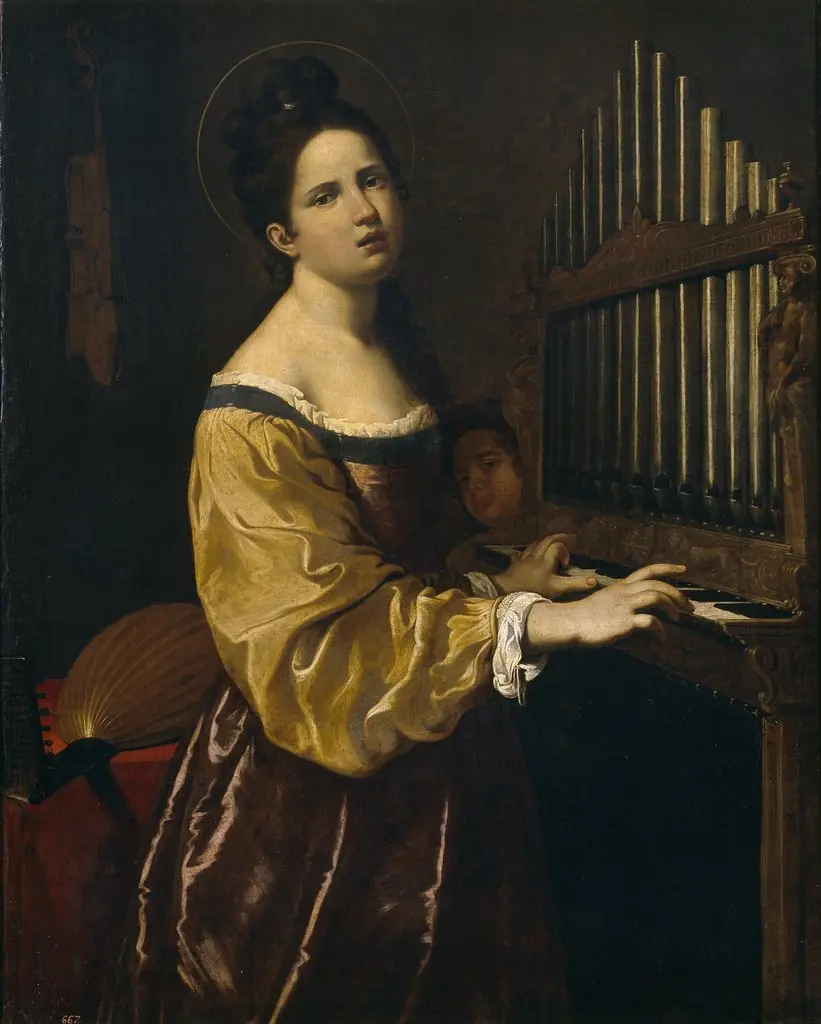
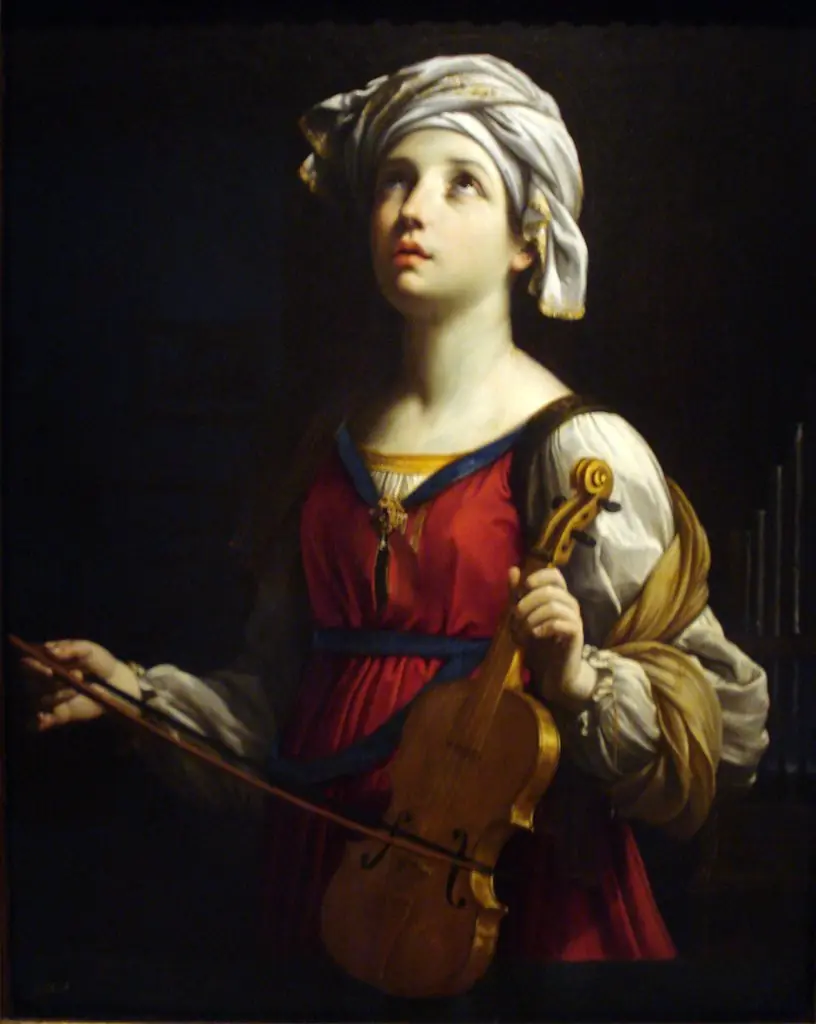
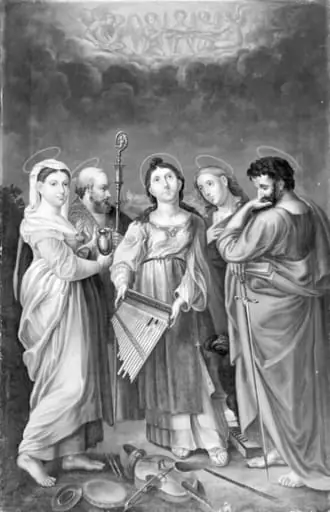
St. Cecilia is an oil painting by Unknown. It dates from 1830 and is held in the collection of the Belvedere. The work titled *St.
About this work
Overview
The background presents a tranquil landscape with a solitary tree and distant mountains, under a sky that suggests an elevated, contemplative atmosphere.
The work titled *St. Cecilia* is an oil painting that depicts a seated woman dressed in a vibrant ensemble. She wears a yellow robe layered over a red and black gown, her long brown hair cascading over her shoulders. In her left hand she holds a musical instrument, while an open book rests on her lap, and her right hand rests gently on her chest. The background presents a tranquil landscape with a solitary tree and distant mountains, under a sky that suggests an elevated, contemplative atmosphere.
Subject & Meaning
The figure is identified as Saint Cecilia, the patron saint of music, traditionally portrayed with a book and an instrument to symbolize her devotion to sacred song. Her calm expression and upward gaze convey a sense of spiritual reverence, while the open book may allude to liturgical texts or the divine inspiration of music. The juxtaposition of the lush attire with the natural setting underscores the harmony between earthly beauty and heavenly devotion.
Technique & Style
Executed in oil on canvas, the painting employs a rich palette that emphasizes the contrast between the bright yellow robe and the darker tones of the dress beneath. The artist renders the fabric with soft modeling, suggesting a tactile quality, while the landscape background is treated with looser brushwork, creating depth without detracting from the central figure. Light falls gently across the scene, highlighting the woman's face and the instrument, a technique typical of late Renaissance portraiture.
History & Provenance
The provenance of this particular rendition of Saint Cecilia is not fully documented, though similar iconographic treatments were common in European workshops from the 16th to 18th centuries. The painting’s ownership record begins with a private collection in the early 1900s before entering a museum acquisition in the mid‑20th century, where it has been displayed as part of a series on saints and music.
Context
Saint Cecilia has been a favored subject for artists seeking to explore the relationship between visual art and music. In the period when this work was likely produced, depictions of the saint often incorporated contemporary fashion, reflecting the patron’s desire to present holy figures within familiar, current settings. The inclusion of a landscape background aligns with the era’s growing interest in integrating genre elements into religious portraiture.
Legacy
While not widely reproduced, this painting contributes to the broader visual tradition that links sanctity with artistic expression. It serves as a reference point for scholars studying the iconography of music in religious art and illustrates how artists blended devotional themes with the aesthetics of their time, influencing later representations of saintly musicians.
Artist & collection

 Domestic Scene
 Giacomo and Cardinal Marco, investing Andrea, Abbot of San Zeno, with his Benefice
 The Nymph of Fontainebleau
 Portrait of a Woman
 Madonna and Child with Saints in the Enclosed Garden
 Venus and Minerva
 Family Group of Four on Sofa
 Wall painting from Room H of the Villa of P. Fannius Synistor at Boscoreale