Artwork
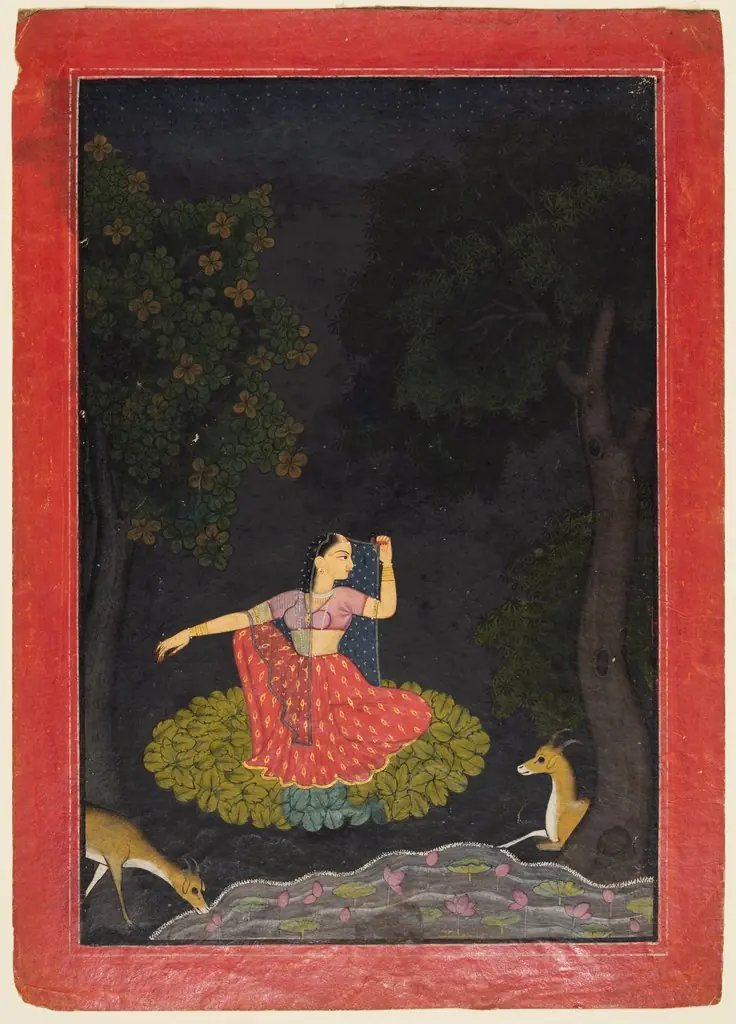
Gaudi Ragini, page from a Ragamala series
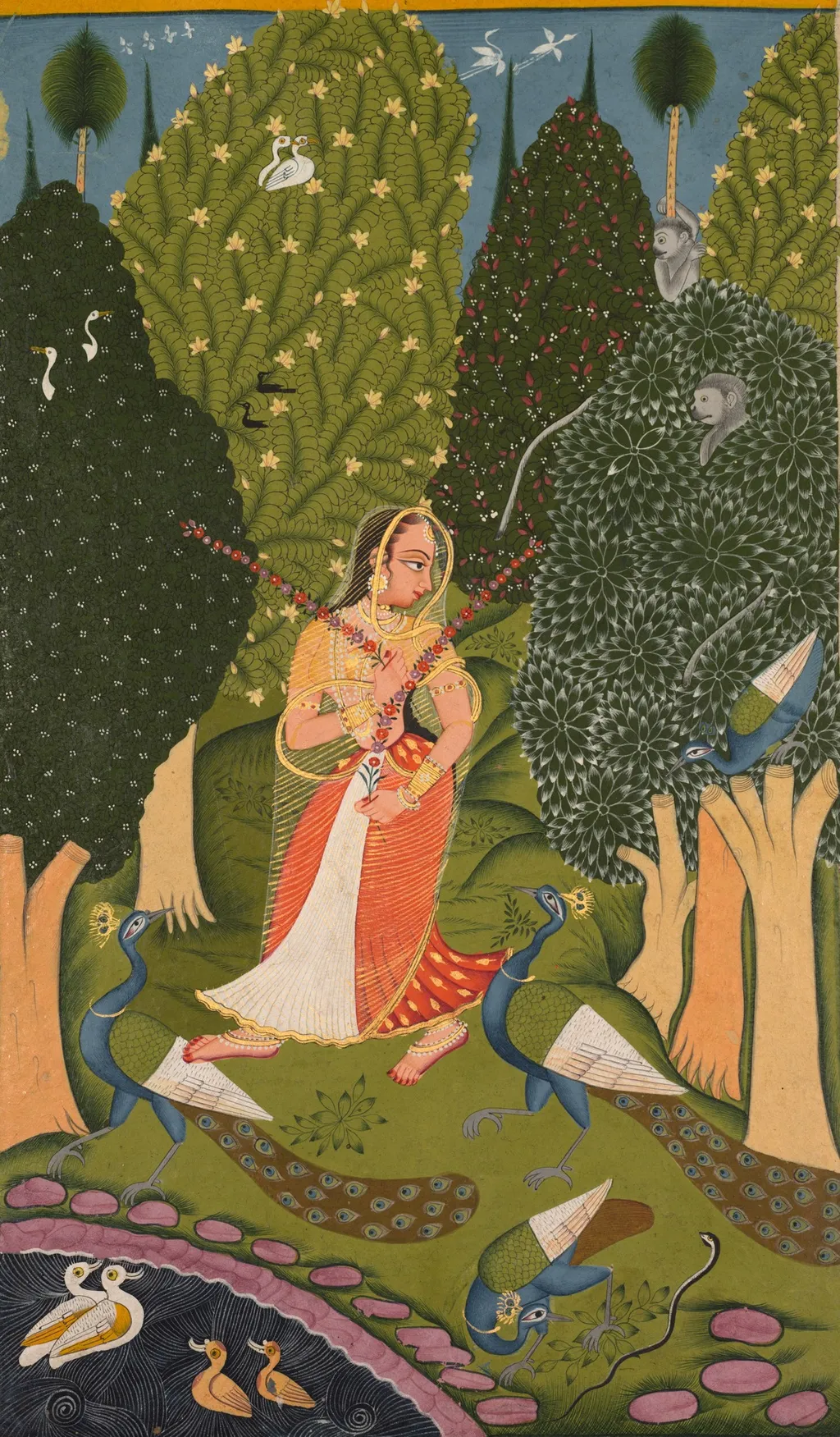
Gaudi Ragini, page from a Ragamala series is an unspecified painting. It dates from 1796 and is held in the collection of the Cleveland Museum of Art. Gaudi Ragini is a painted page from a Ragamala series, a group of works that visually interpret Indian musical modes.
About this work
Overview
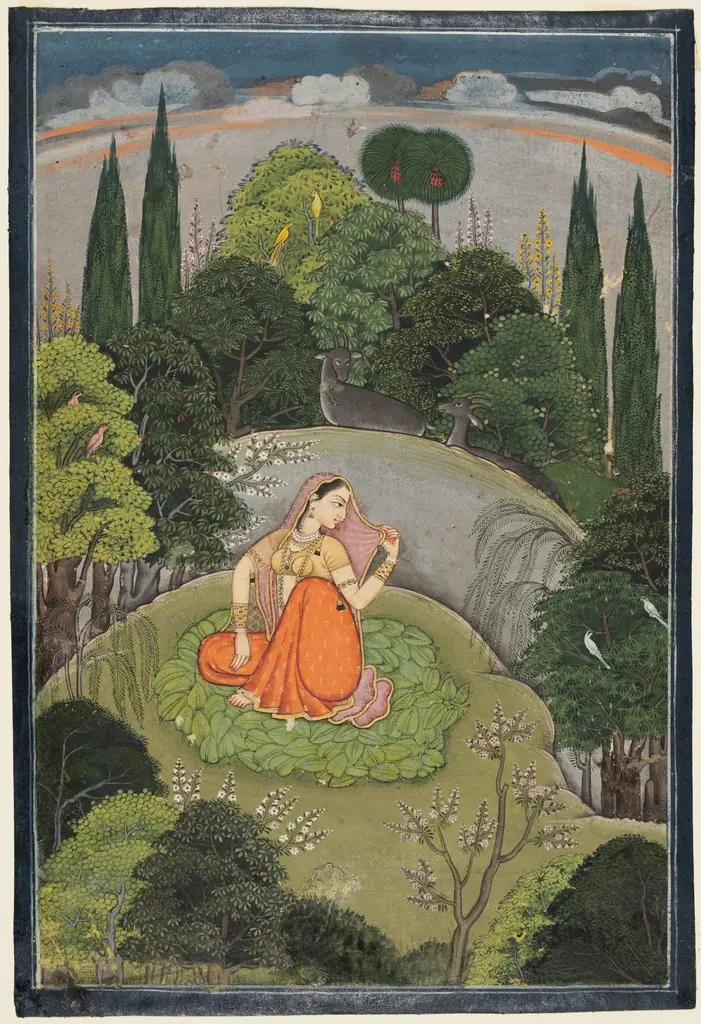
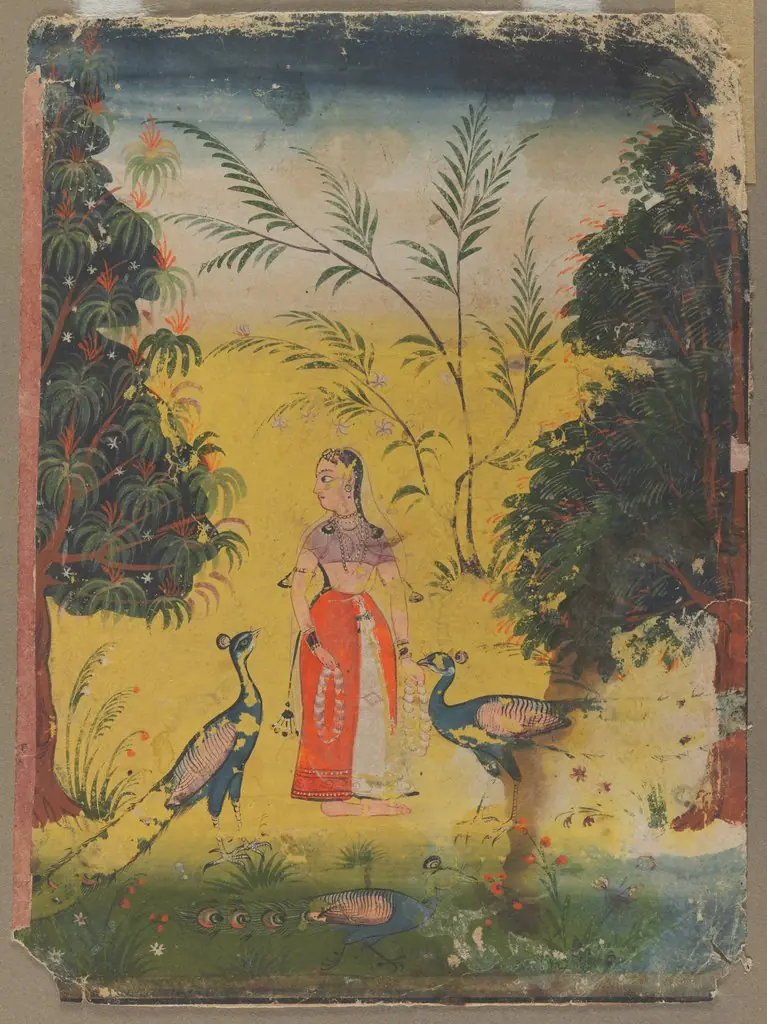
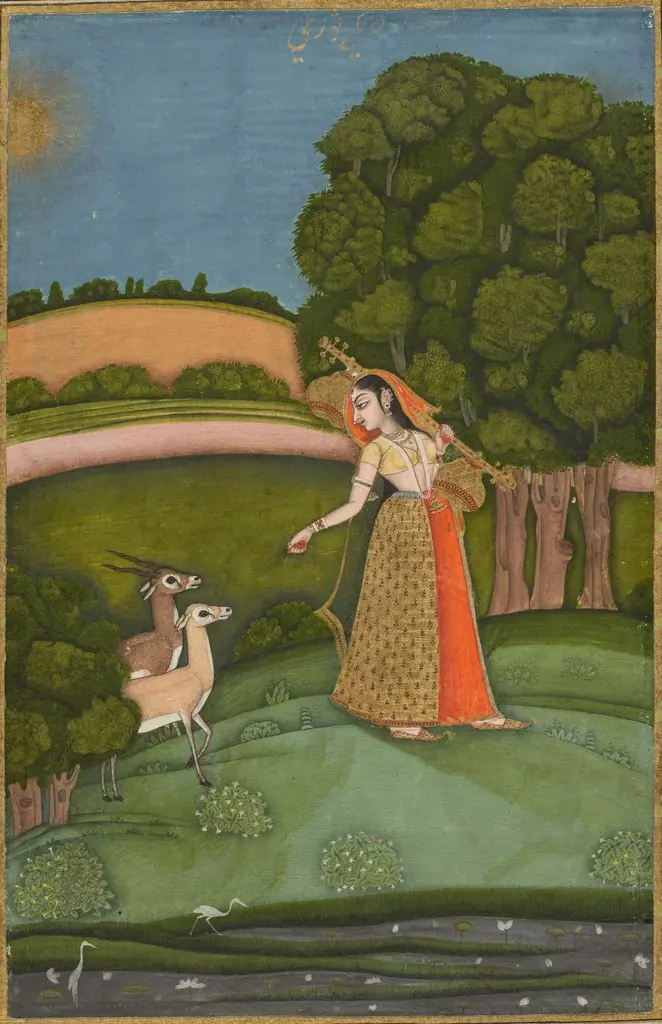
Gaudi Ragini is a painted page from a Ragamala series, a group of works that visually interpret Indian musical modes. The composition presents a solitary female figure in a vivid red‑and‑white garment, positioned within a luxuriant garden populated by peacocks, soaring birds, flowering trees, pink lotus pads and verdant grass.
Subject & Meaning
The woman’s half‑veiled face, graceful stance, and the presence of ornamental peacocks suggest an identification with a deity or heroine from Hindu mythology, a common motif in Ragamala imagery where each scene embodies a particular raga’s emotional character.
Technique & Style
Executed in traditional Indian miniature painting techniques, the work employs fine brushwork and a bright palette to delineate intricate foliage, delicate feather patterns and the luminous sheen of the lotus pads, while the figure’s drapery is rendered with fluid, rhythmic lines that echo the musical inspiration of the series.
History & Provenance
The painting is part of a broader collection of Ragamala illustrations that circulated in the Indian subcontinent from the 16th to 18th centuries. It now resides in the Cleveland Museum of Art, which holds several comparable Ragamala pages, indicating a shared provenance within the museum’s South Asian holdings.
Context
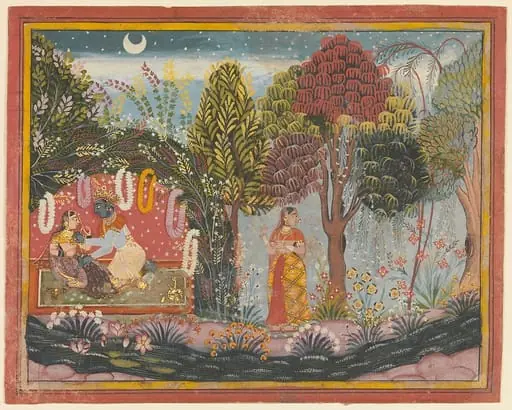
Ragamala, meaning “garland of ragas,” served as a visual counterpart to classical Indian music, pairing each melodic mode with a narrative tableau. Such pages were often used as devotional or instructional aids, linking auditory and visual experiences for patrons and scholars of the arts.
Legacy
The Gaudi Ragini page exemplifies the interdisciplinary nature of Indian courtly culture, where music, poetry, and painting intersected. Its preservation in a major museum underscores the continued scholarly interest in Ragamala as a window into historic aesthetic theory and religious storytelling.
Artist & collection