Artwork
Nanda and the Elders in Council with the Cowherds, from a Bhagavata Purana
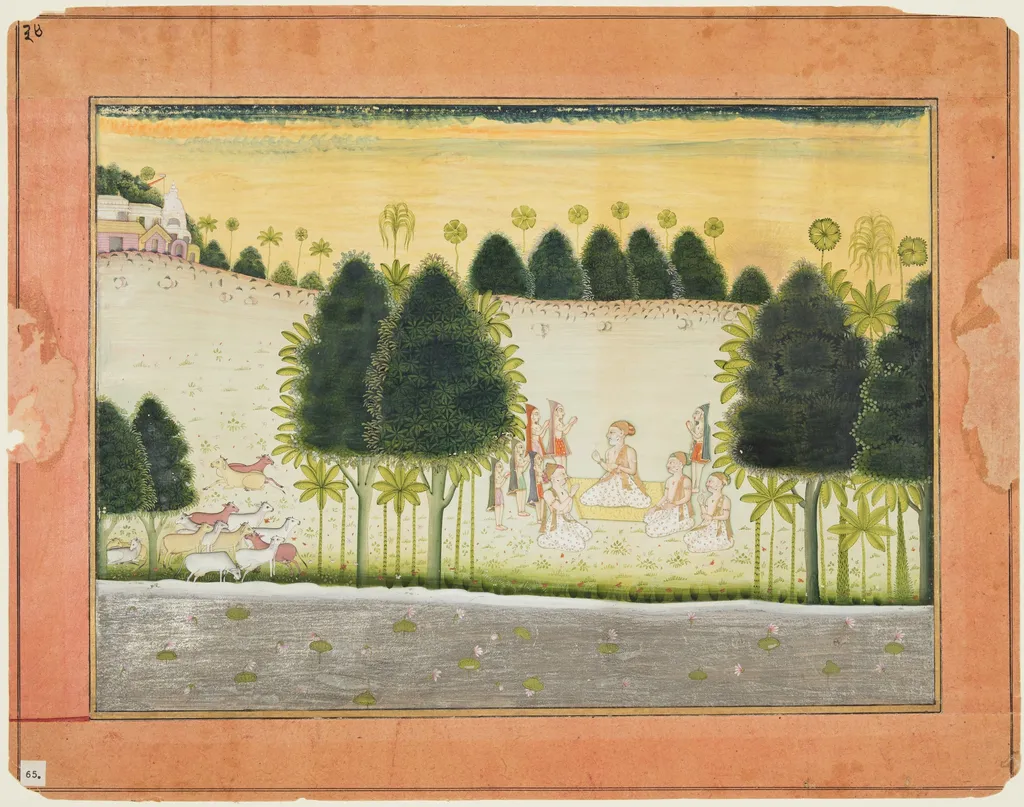
Nanda and the Elders in Council with the Cowherds, from a Bhagavata Purana is an unspecified painting. It dates from 1698 and is held in the collection of the Cleveland Museum of Art.
About this work
Overview
The work titled *Nanda and the Elders in Council with the Cowherds, from a Bhagavata Purana* depicts a gathering of figures in a verdant outdoor setting.
The work titled *Nanda and the Elders in Council with the Cowherds, from a Bhagavata Purana* depicts a gathering of figures in a verdant outdoor setting. Trees and low shrubs frame the scene, while cattle and goats wander nearby. The participants wear traditional attire and appear to be engaged in a communal discussion, set against a gently illuminated sky and a distant hill crowned with modest structures.
Subject & Meaning
The composition illustrates a narrative drawn from the *Bhagavata Purana*, focusing on Nanda, the foster‑father of Krishna, and a council of village elders together with cowherds. The assembly suggests a moment of deliberation concerning pastoral life or divine events, reflecting themes of communal responsibility and spiritual guidance within the Hindu mythic tradition.
Technique & Style
Rendered in a naturalistic yet stylized manner, the painting balances detailed figural representation with a simplified landscape. The warm yellow hue of the sky creates a tranquil ambience, while the foliage and animal forms are outlined with clear brushwork, emphasizing both narrative clarity and decorative elegance typical of Indian courtly painting traditions.
History & Provenance
The piece is part of the collection at the Cleveland Museum of Art. Its acquisition details are recorded by the museum, indicating that it entered the institution’s holdings through purchase or donation, though specific provenance prior to museum ownership is not provided in the available description.
Context
As an illustration of a *Bhagavata Purana* episode, the painting aligns with a broader tradition of visualizing Hindu scriptures for devotional and educational purposes. Such works were often produced for elite patrons or temple settings, serving to reinforce narrative familiarity and moral instruction among viewers.
Artist & collection
