Artwork
Megha-Nada (Indrajit, Son of Radha)
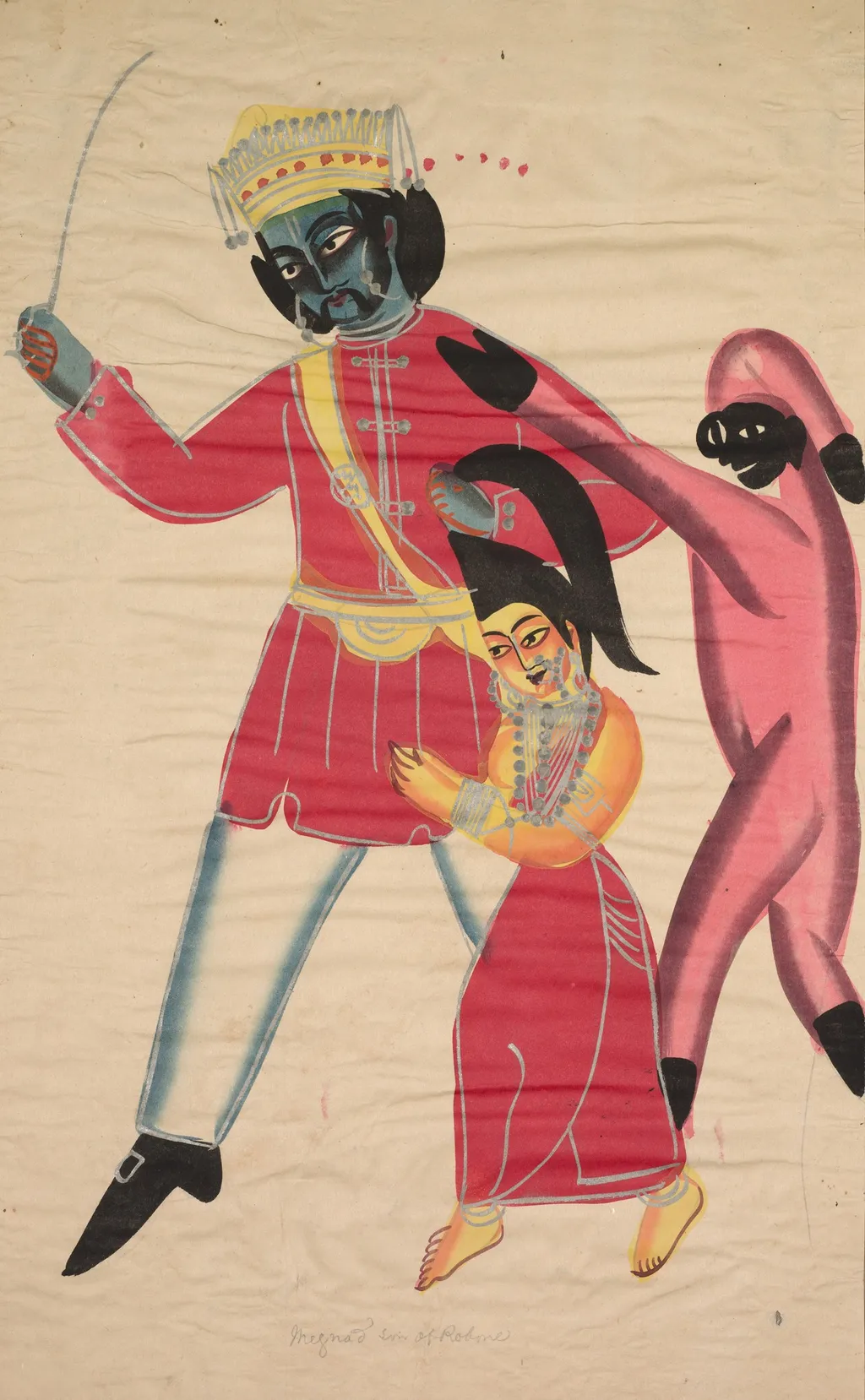
Megha-Nada (Indrajit, Son of Radha) is an unspecified painting. It dates from 1896 and is held in the collection of the Cleveland Museum of Art.
About this work
Overview
Megha‑Nada, also known as Indrajit, Son of Radha, is a painted work that depicts a dark‑skinned male figure in a vivid red costume, equipped with both a sword and a bow, and crowned with gold. He is positioned beside a woman dressed in a pink garment with a yellow upper portion, while a pink elephant bearing black spots appears partially behind them.
Subject & Meaning
The composition brings together a heroic male presence, suggested by weaponry and regal headgear, with a female companion in softer hues, hinting at a narrative of partnership or mythic lineage. The inclusion of the elephant, a traditional symbol of strength and auspiciousness, adds a layer of cultural symbolism.
Technique & Style
Executed in the kalighat tradition, the painting employs bright, saturated colors and strong, defined outlines characteristic of the 19th‑century Bengal folk art movement. The flat planes of pigment and stylized forms reflect the commercial print‑making influences that shaped the genre.
History & Provenance
Kalighat paintings originated in the vicinity of the Kalighat temple in Kolkata, where itinerant artists catered to pilgrims and urban patrons. While the specific ownership trail of Megha‑Nada is not documented, its stylistic traits place it within that historic production context.
Context
The work belongs to a period when Bengali artists blended indigenous iconography with emerging market demands, creating accessible visual narratives for a growing middle class. The depiction of mythic or heroic figures aligns with popular storytelling themes of the era.
Artist & collection
