Artwork
Portrait of Emperor Alamgir (Aurangzeb)
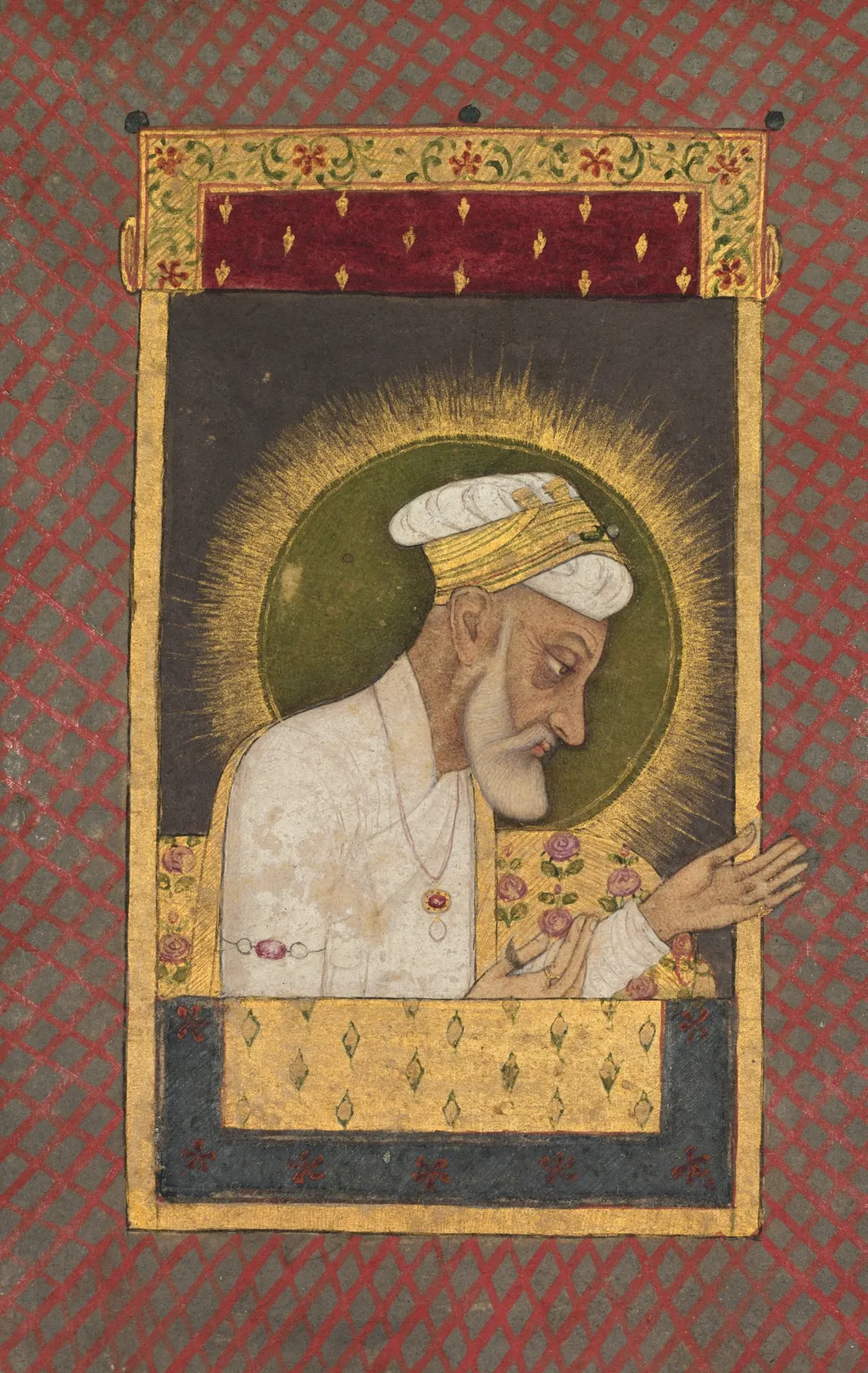
Portrait of Emperor Alamgir (Aurangzeb) is an unspecified painting. It dates from 1700 and is held in the collection of the Cleveland Museum of Art. This painting depicts Emperor Alamgir, also known as Aurangzeb, a significant figure in Mughal history.
About this work
Overview
This painting depicts Emperor Alamgir, also known as Aurangzeb, a significant figure in Mughal history. The artwork presents a formal portrayal of the ruler, emphasizing his regal presence and contemplative demeanor. It is a representative example of portraiture from the period, capturing the distinct features and attire associated with the imperial court.
Subject & Meaning
He holds a cloth patterned with pink flowers, an element that adds a touch of detail to the otherwise austere composition.
The emperor is shown with a white beard and a striped turban, adorned in a white robe with a gold chain. A golden halo encircles his head, a common visual motif signifying divine favor and imperial authority. He holds a cloth patterned with pink flowers, an element that adds a touch of detail to the otherwise austere composition. His calm expression and gently resting hand suggest a moment of quiet reflection.
Technique & Style
The artist employs soft shadows to model the emperor's face, particularly under his eyes and nose, contributing to a sense of depth and realism. The background features a dark frame with a repeating red-and-gray diamond pattern, providing a structured yet understated setting for the central figure. This stylistic choice directs focus to the emperor, highlighting his dignified presence within the composition.
Artist & collection
