Artwork
Rooster
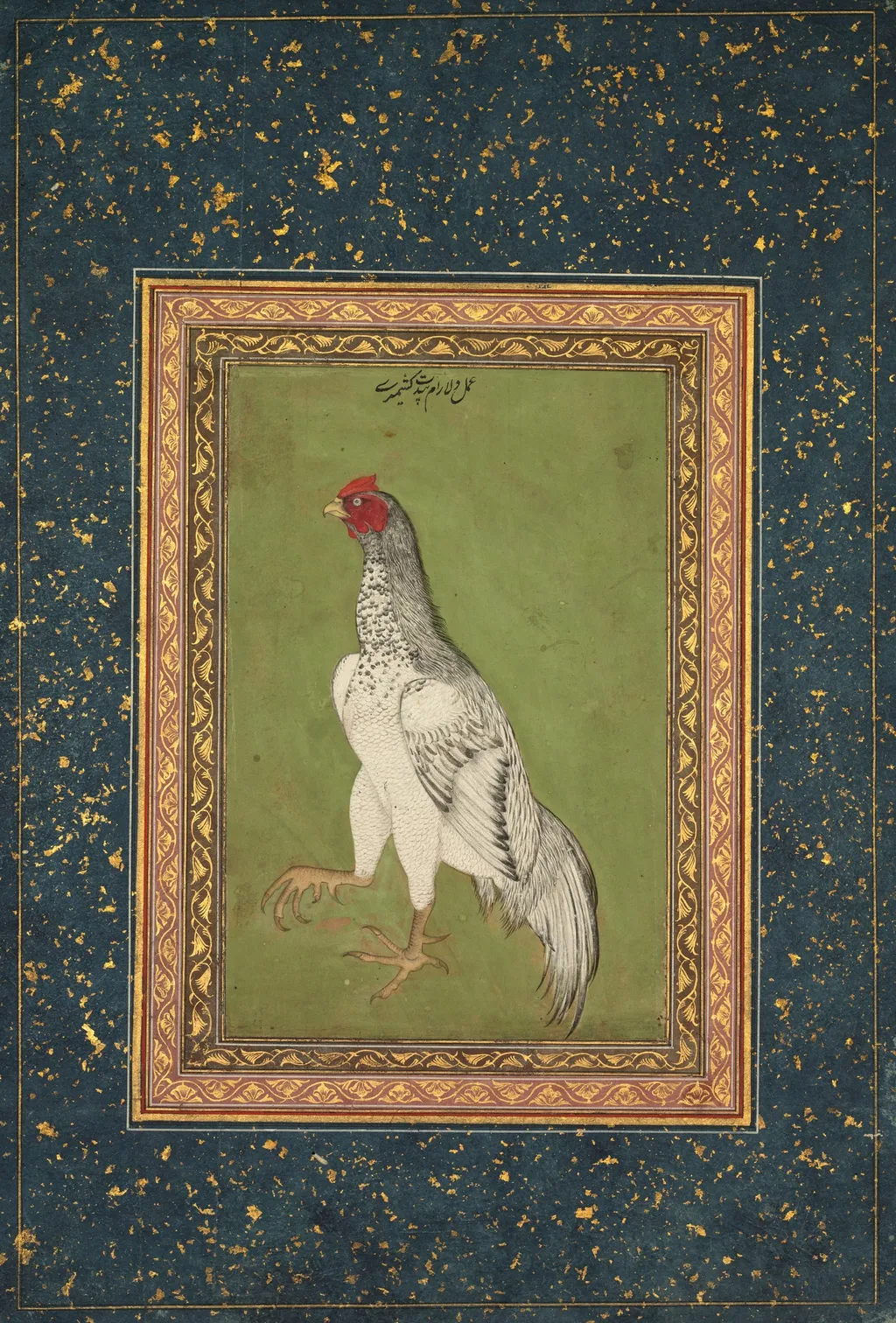
Rooster is an unspecified painting. It dates from 1620 and is held in the collection of the Cleveland Museum of Art.
About this work
Overview
The work depicts a solitary rooster positioned against a deep green field. The bird’s plumage combines white feathers marked with black speckles, a vivid red comb, and an elongated tail. Its gaze is directed slightly leftward, conveying alertness. A decorative border frames the composition, featuring gold motifs and Arabic calligraphy.
Subject & Meaning
The central figure is a domestic rooster, a common symbol of vigilance and territorial pride in many cultures. The inclusion of Arabic script within the ornamental frame suggests a possible link to Islamic artistic traditions, where such motifs often accompany depictions of everyday life.
Technique & Style
The artist renders the rooster with meticulous attention to feather texture, employing fine brushwork to differentiate the white and black patterning. The background’s dark green surface is enriched with specks of gold, creating a subtle, luminous texture that contrasts with the bird’s vivid coloration.
History & Provenance
The painting is part of the collection at the Cleveland Museum of Art. While specific details about its creation date, artist, or original ownership are not provided, its presence in the museum indicates recognition of its artistic and cultural value.
Context
The combination of a naturalistic animal portrait with decorative Islamic elements reflects a cross‑cultural aesthetic that was common in regions where Persian, Ottoman, or Mughal influences merged with local artistic practices. Such works often served both decorative and didactic purposes.
Artist & collection
