Artwork
Story of Krishna and Radha
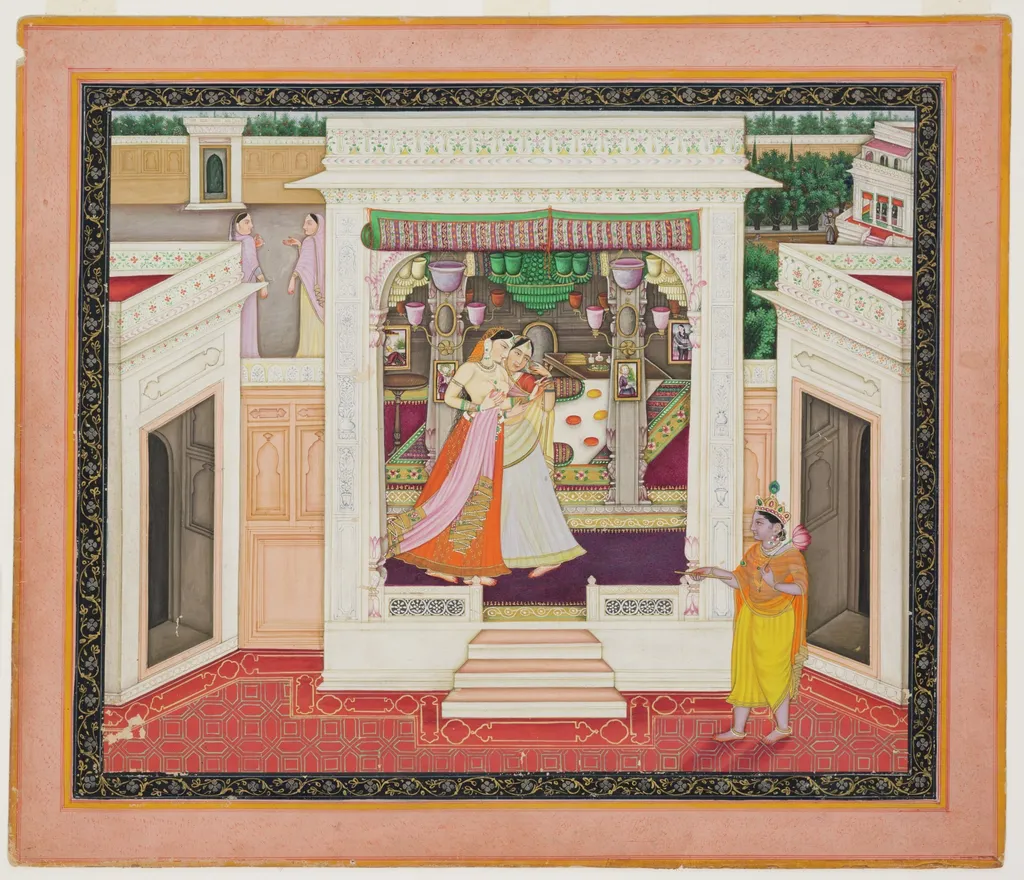
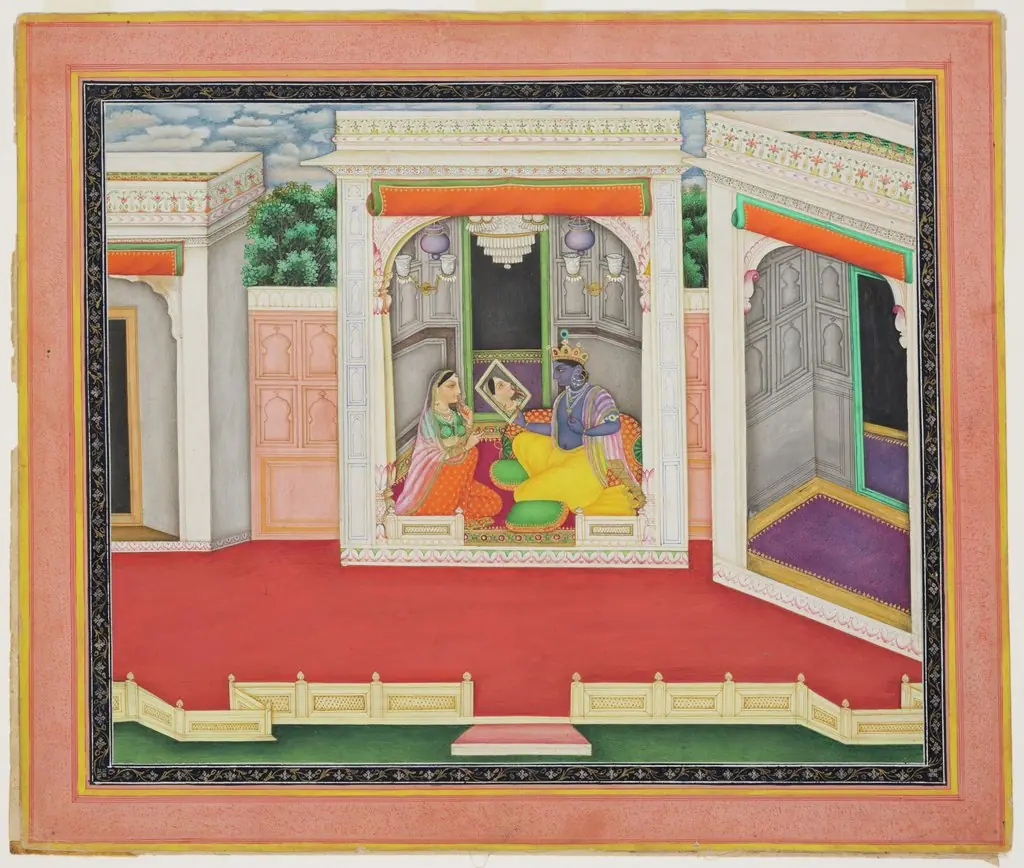
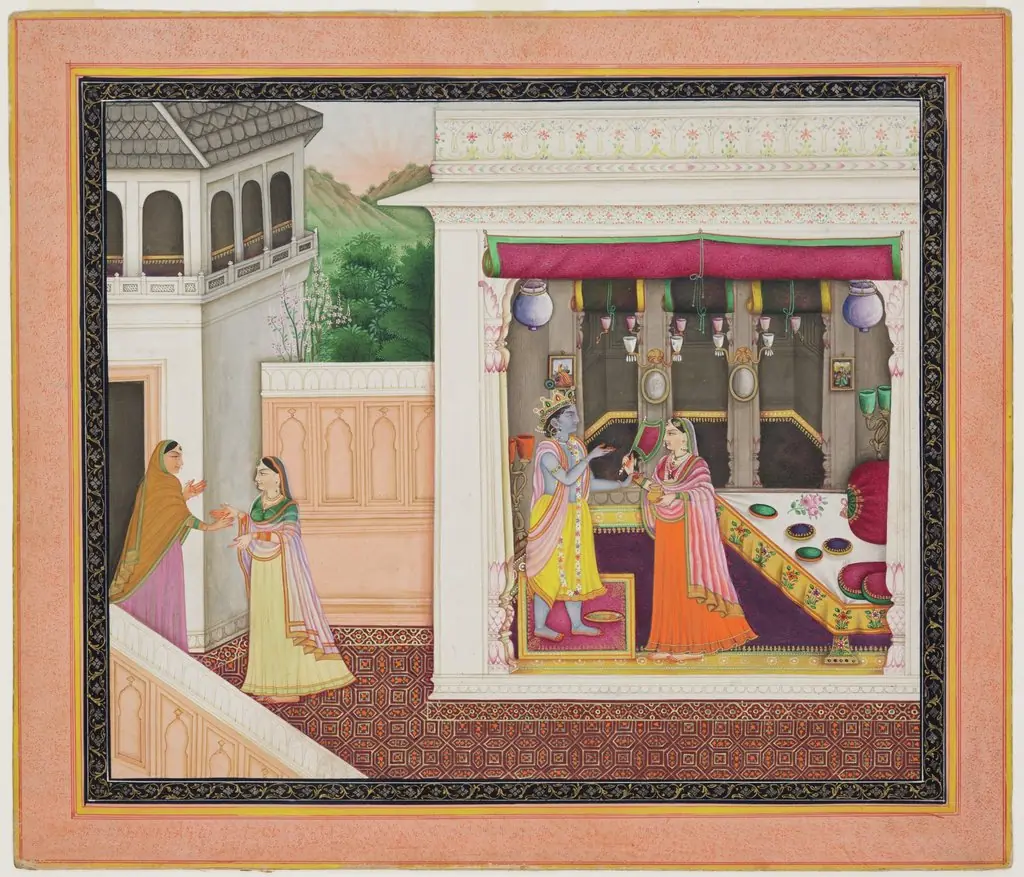
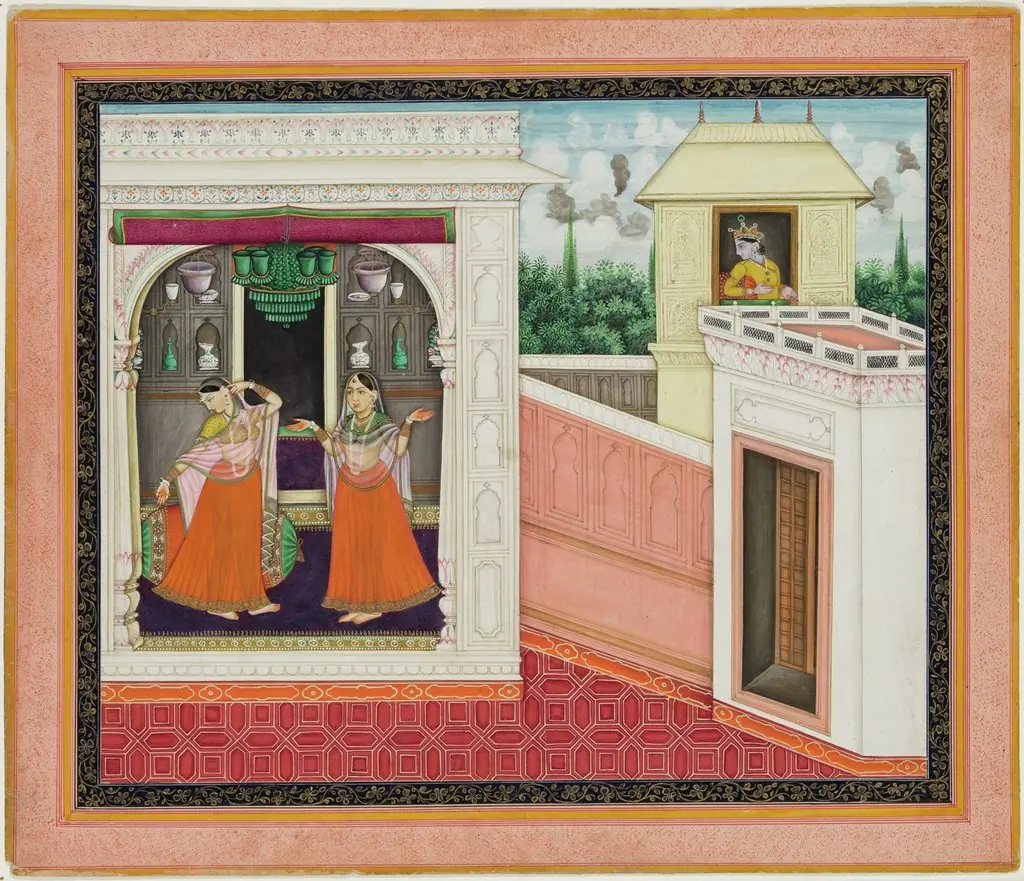
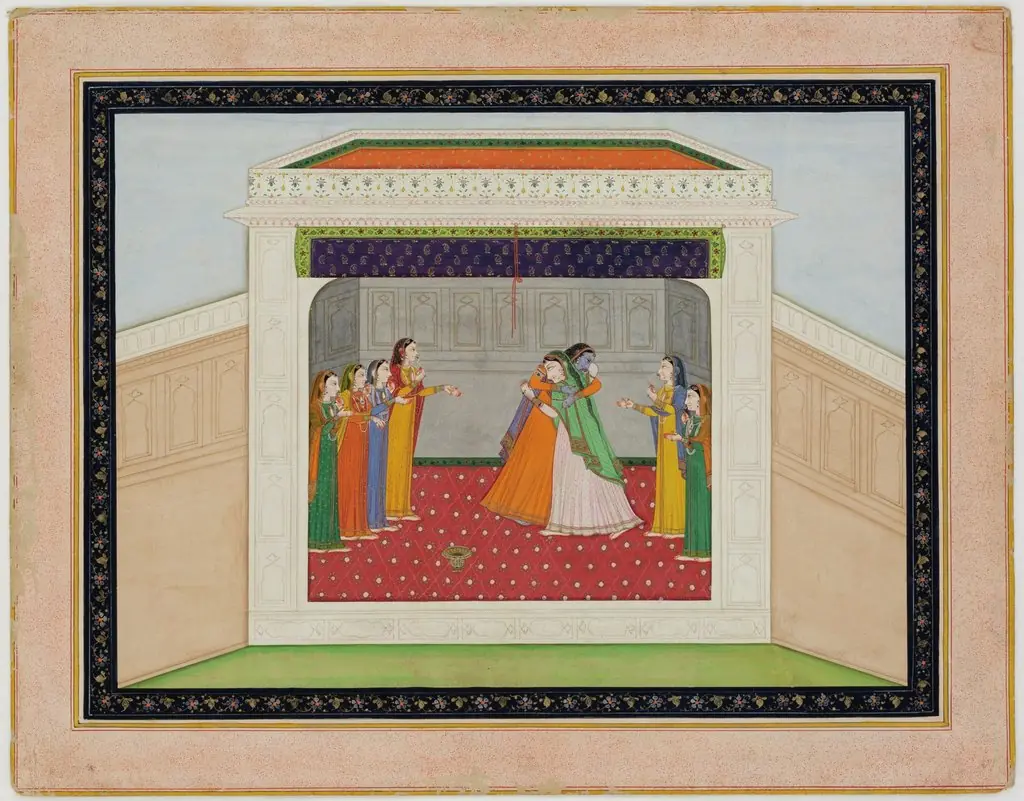
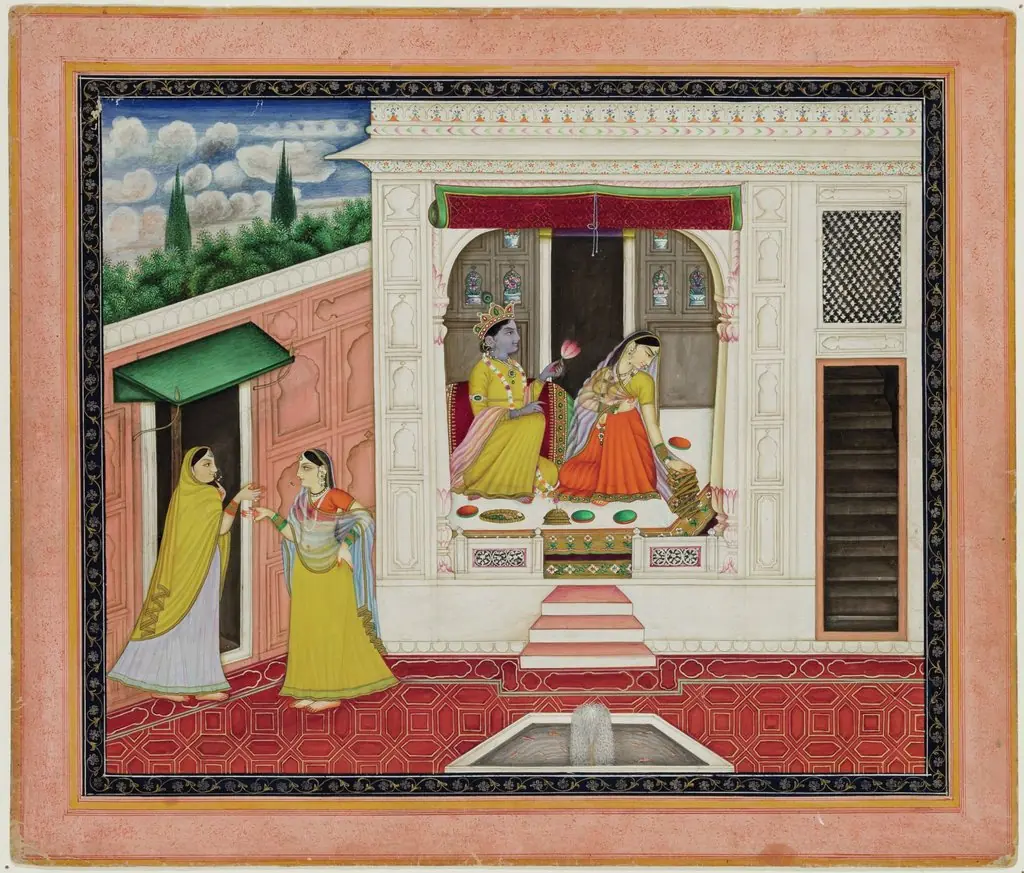
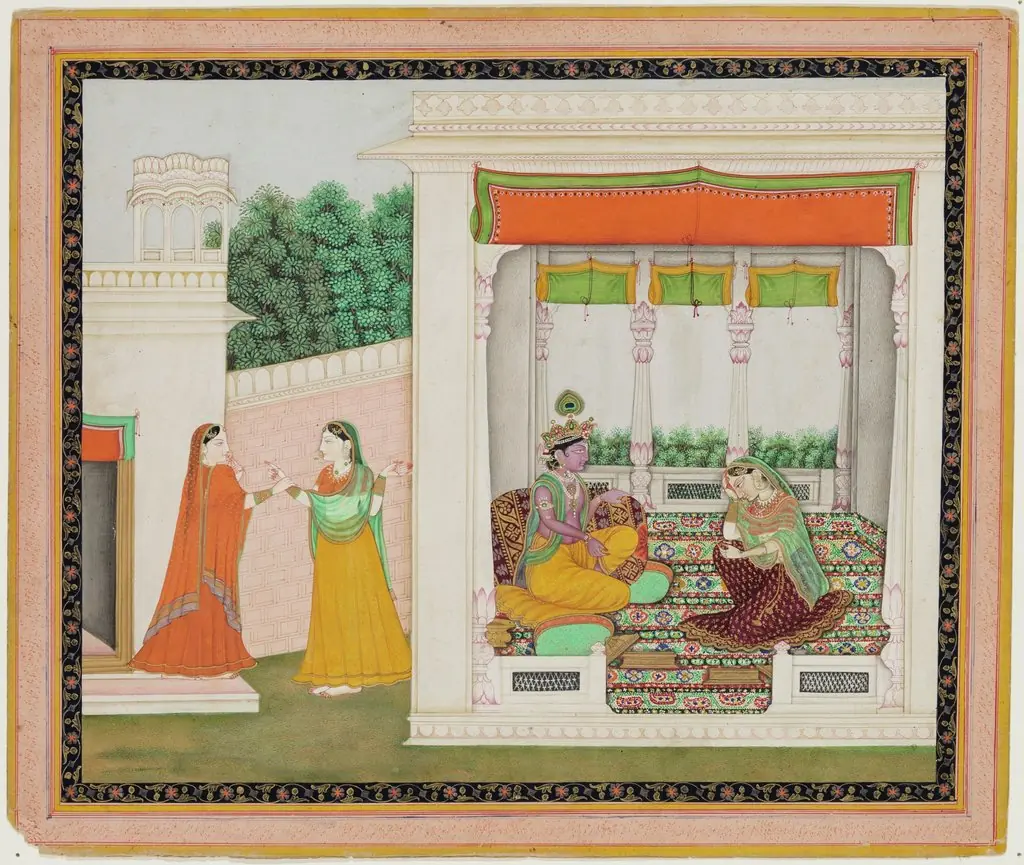
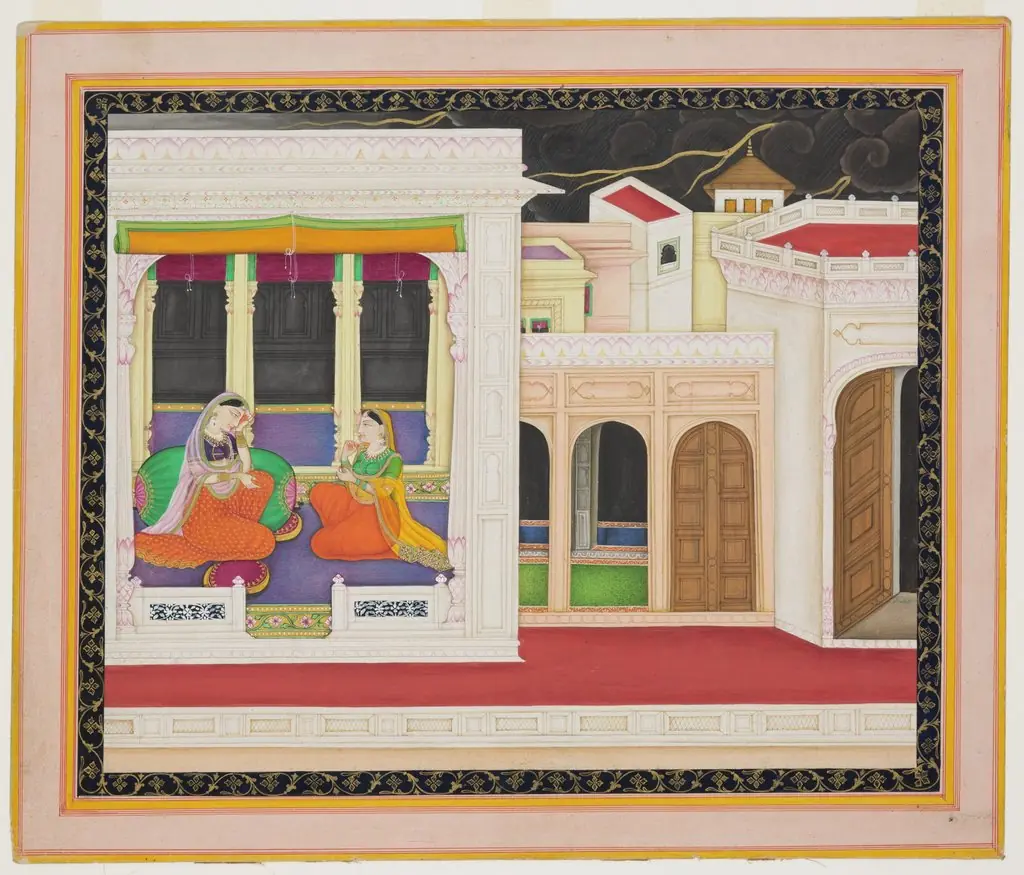
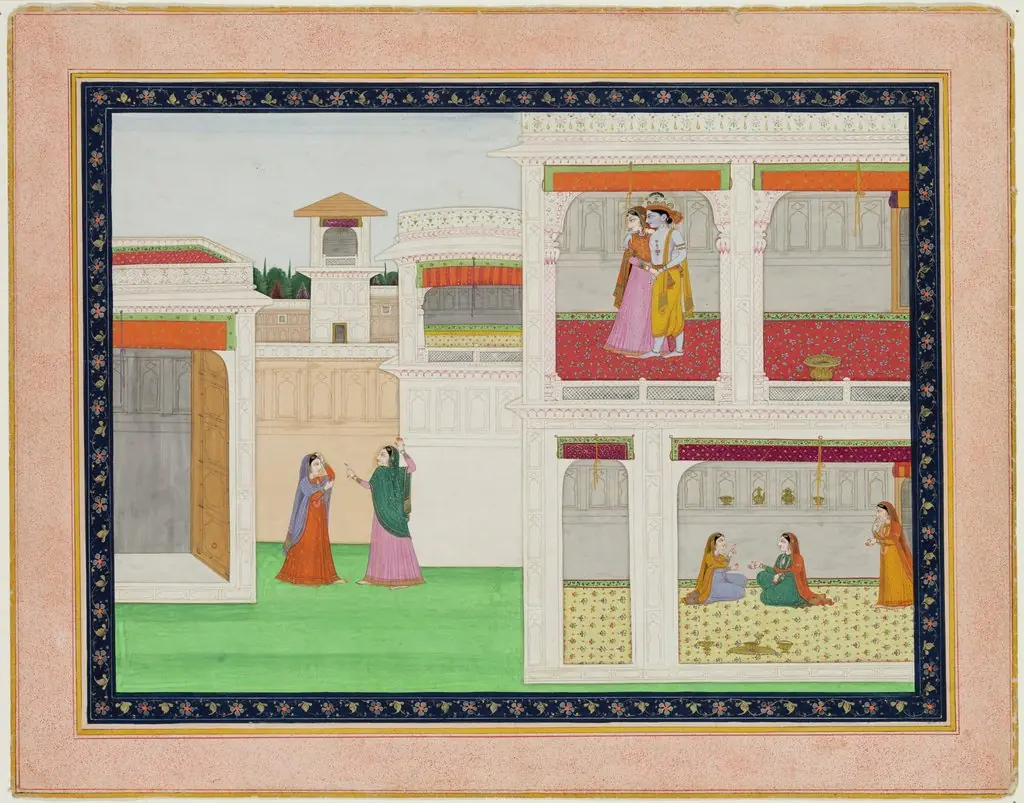
Story of Krishna and Radha is an unspecified painting by Unknown. It dates from 1800 and is held in the collection of the Detroit Institute of Arts. This painting depicts a moment from the devotional tradition of Krishna and Radha, rendered in a richly detailed Mughal or Rajput style.
About this work
Overview
The composition centers on two women in embrace, with a male figure holding a flower nearby, suggesting a moment of spiritual or romantic exchange.
This painting depicts a moment from the devotional tradition of Krishna and Radha, rendered in a richly detailed Mughal or Rajput style. The scene unfolds in an interior space adorned with ornate textiles and decorative objects, emphasizing intimacy and ritual. The composition centers on two women in embrace, with a male figure holding a flower nearby, suggesting a moment of spiritual or romantic exchange. The work is part of the Detroit Institute of Arts collection.
Subject & Meaning
The figures represent Krishna, Radha, and a companion, likely a gopi, engaged in a tender, symbolic interaction. The flower may signify devotion or divine offering, while the embrace reflects the spiritual union central to Bhakti poetry. The presence of additional women in the background implies a secluded, courtly setting where such sacred narratives were privately contemplated, blending earthly beauty with transcendental themes.
Technique & Style
The painting employs fine brushwork and layered pigments to render intricate patterns on textiles, architecture, and furnishings. Colors are vivid yet harmonious, with soft gradients in skin tones and detailed rendering of fabrics. The spatial depth is suggested through overlapping figures and architectural elements, while the flat, decorative background reflects regional aesthetic preferences over Western perspective.
History & Provenance
The work likely originated in a North Indian court workshop during the 17th or 18th century, where illustrated manuscripts and devotional scenes were commissioned by royalty or nobility. It entered the Detroit Institute of Arts collection through documented acquisition, though its earlier provenance remains unrecorded in public sources. Its preservation reflects continued interest in Indian miniature traditions in Western collections.
Context
This painting belongs to a broader tradition of Indian miniature art that visualized Krishna’s legends, particularly in regions like Rajasthan and the Punjab Hills. Such works were often created for private devotion or courtly entertainment, blending poetic texts with visual storytelling. The inclusion of multiple figures and ornate interiors aligns with Mughal-influenced styles that flourished under royal patronage.
Legacy
The painting contributes to the understanding of how devotional narratives were visually codified in pre-colonial India. Its preservation in a major Western institution underscores the global recognition of Indian miniature painting as a refined artistic tradition. It continues to inform scholarly study of gender, spirituality, and aesthetics in South Asian visual culture.
Artist & collection

 Domestic Scene
 Giacomo and Cardinal Marco, investing Andrea, Abbot of San Zeno, with his Benefice
 The Nymph of Fontainebleau
 Portrait of a Woman
 Madonna and Child with Saints in the Enclosed Garden
 Venus and Minerva
 Family Group of Four on Sofa
 Wall painting from Room H of the Villa of P. Fannius Synistor at Boscoreale