Artwork
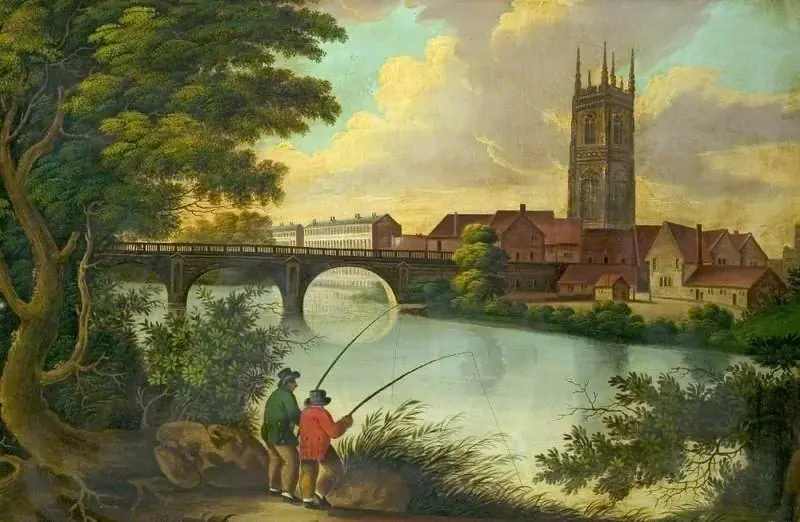
A Prospect of Derby
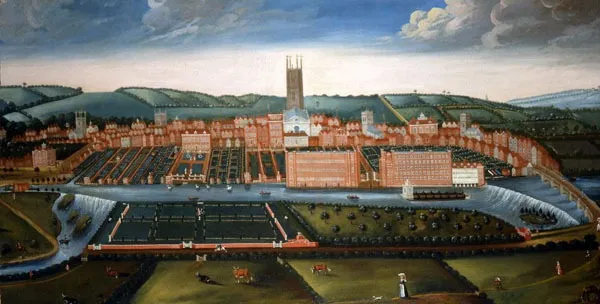
A Prospect of Derby is an oil painting by the Rococo painting artist Unknown. It dates from 1725 and is held in the collection of the Derby Museum and Art Gallery.
About this work
It has been on view there for many years, helping visitors understand the city’s history.
A Prospect of Derby is an oil painting from around 1725. The artist is unknown, but the work records the town’s layout in the early 18th century. It offers a glimpse of how Derby looked before modern development.
The painting is part of the collection at Derby Museum and Art Gallery. It has been on view there for many years, helping visitors understand the city’s history. The museum also holds other local artworks and documents that add context to the scene.
If you’re curious about more local history, explore Derby Museum and Art Gallery.
Overview
A Prospect of Derby is an oil painting dated around 1725, created by an unidentified artist. It presents a detailed view of the town as it appeared in the early eighteenth century, capturing streets, buildings, and natural features before significant modern changes. The work serves as a visual record of urban form during a period of gradual growth and transition in England’s provincial towns.
Subject & Meaning
The painting depicts Derby’s topography with attention to key landmarks, river routes, and built structures, offering a topographical rather than idealized perspective. Its purpose appears to be documentary: to preserve a recognizable image of the town for local patrons or civic use. The absence of human activity emphasizes the physical environment, suggesting a focus on spatial organization over narrative or social commentary.
Technique & Style
Executed in oil on panel or canvas, the work employs a flat, elevated viewpoint typical of early topographical views. Details are rendered with careful precision—rooftops, bridges, and church spires are distinguishable, though perspective is not strictly linear. The palette is muted, dominated by earth tones and soft grays, reflecting the limitations of contemporary pigments and the artist’s documentary intent rather than dramatic effect.
History & Provenance
The painting has remained in Derby since its creation, eventually entering the collection of Derby Museum and Art Gallery. Its continuous local ownership suggests it was valued by residents as a record of their town’s appearance. While its original commission is unrecorded, its survival and preservation indicate early recognition of its historical significance within the community.
Context
In the early 1700s, English towns like Derby were undergoing slow transformation due to trade and early industrial activity. This painting aligns with a broader trend of local topographical art produced for civic pride or personal interest. Unlike grand landscape traditions, it reflects a regional, practical approach to recording place, often commissioned by merchants or civic figures rather than aristocrats.
Legacy
As one of the earliest known visual records of Derby’s urban layout, the painting remains a key reference for historians studying the town’s development. Its presence in the museum supports public engagement with local heritage, complementing archival materials and other regional artworks. It continues to serve as a quiet but vital link between past and present spatial identities.
Artist & collection

 Domestic Scene
 Giacomo and Cardinal Marco, investing Andrea, Abbot of San Zeno, with his Benefice
 The Nymph of Fontainebleau
 Portrait of a Woman
 Madonna and Child with Saints in the Enclosed Garden
 Venus and Minerva
 Family Group of Four on Sofa
 Wall painting from Room H of the Villa of P. Fannius Synistor at Boscoreale
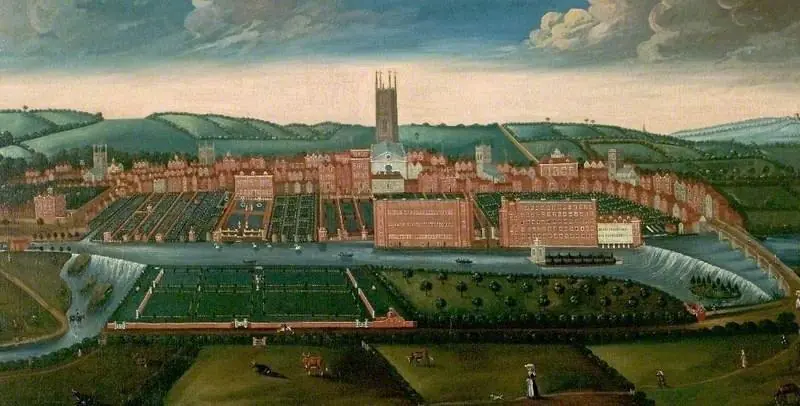 A Prospect of the City of Derby
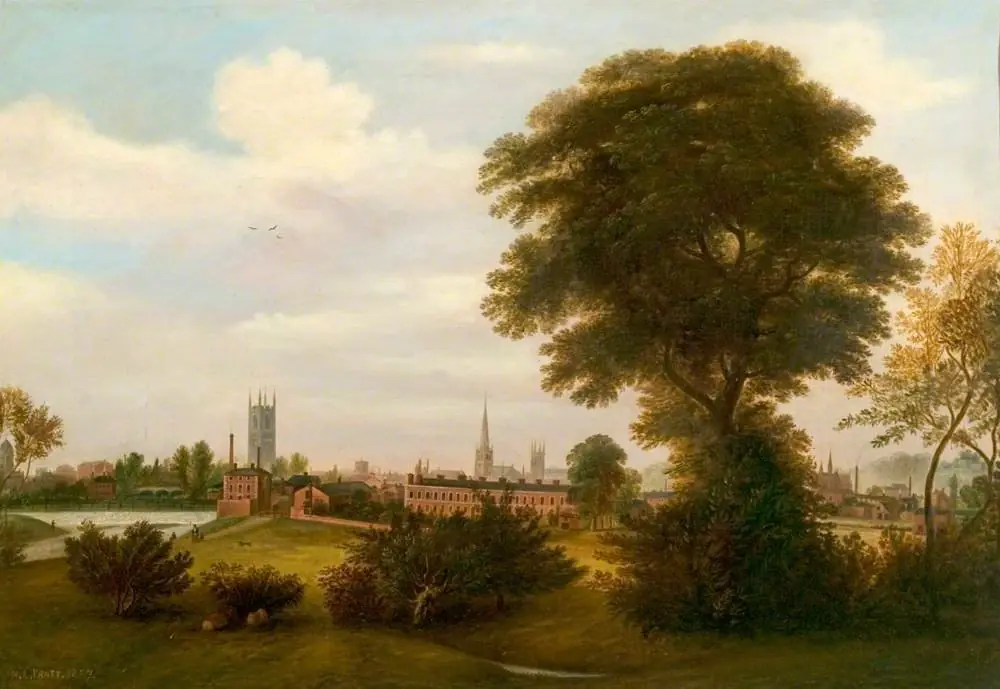 Derby from the Meadows
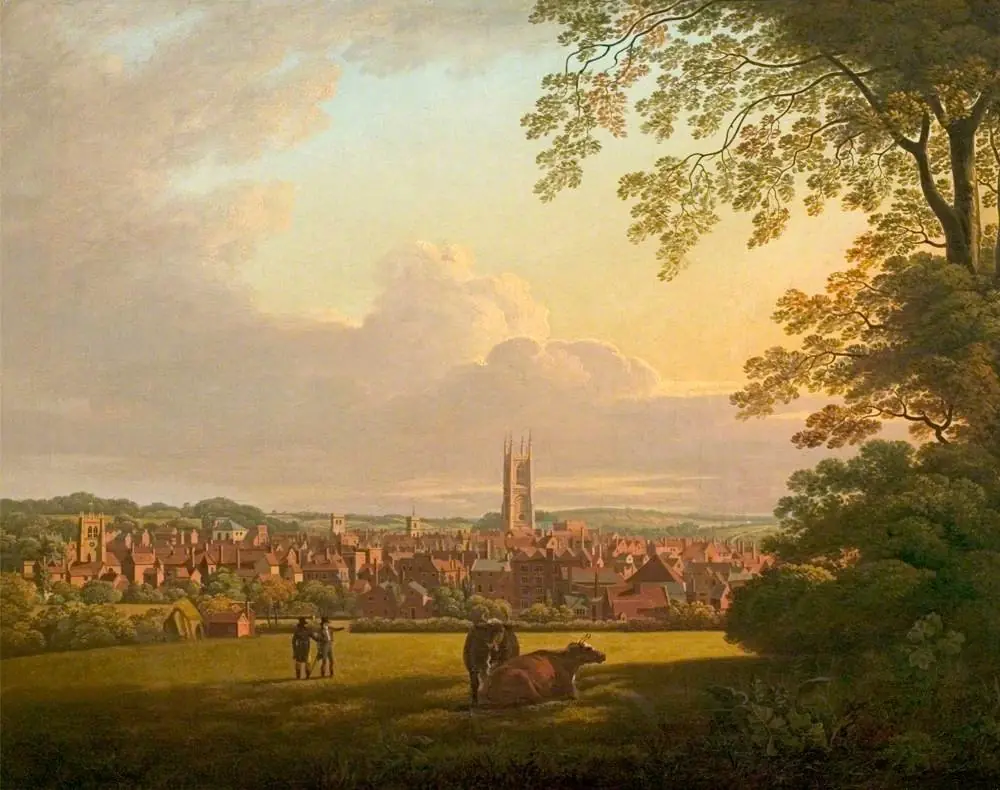 Derby from a Field Adjoining Abbey Barns
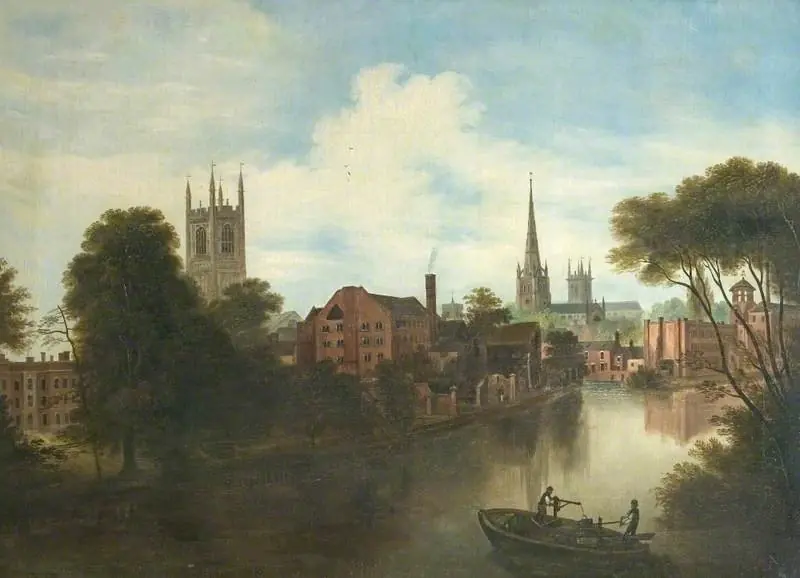 View of Derby, Showing the Derwent
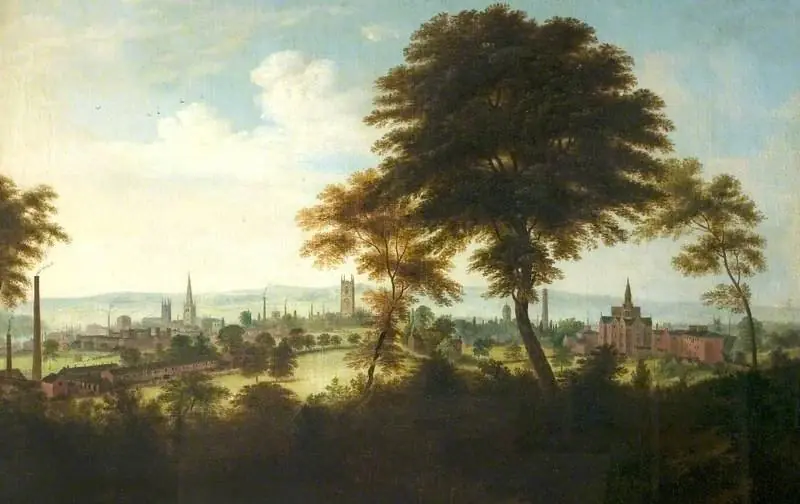 A View of Derby from Rowditch
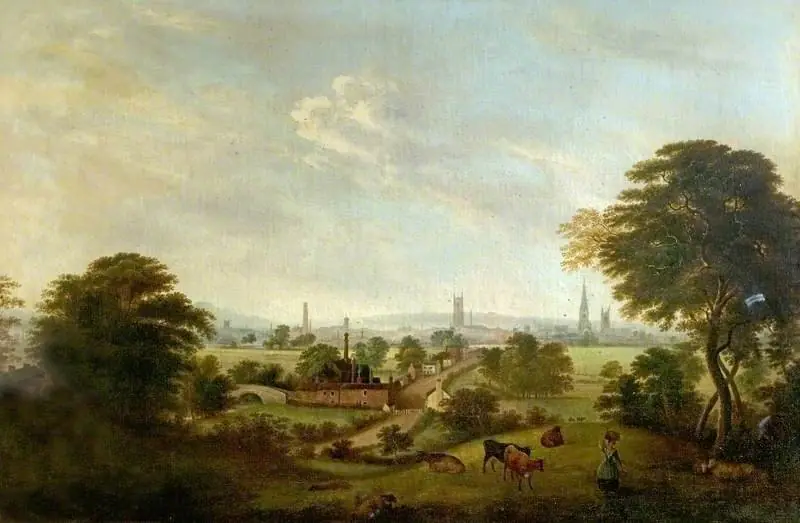 View of Derby from Nottingham Road
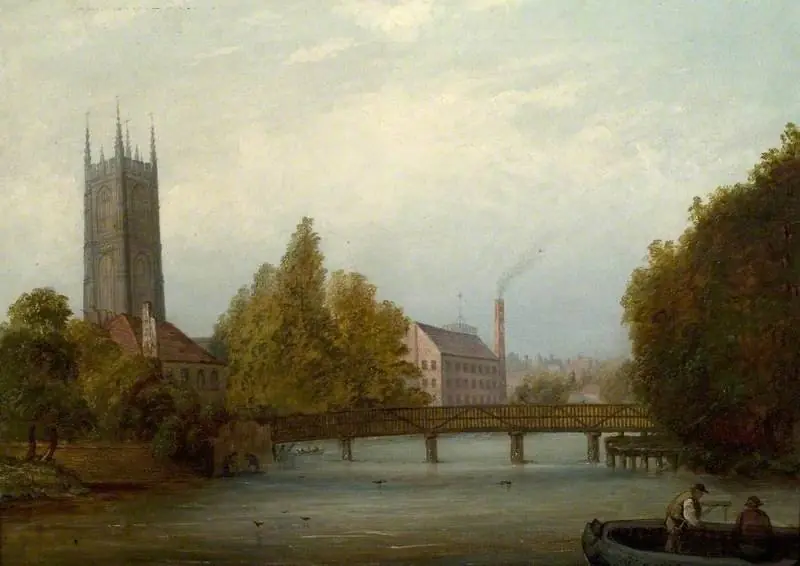 First Exeter Bridge, Derby
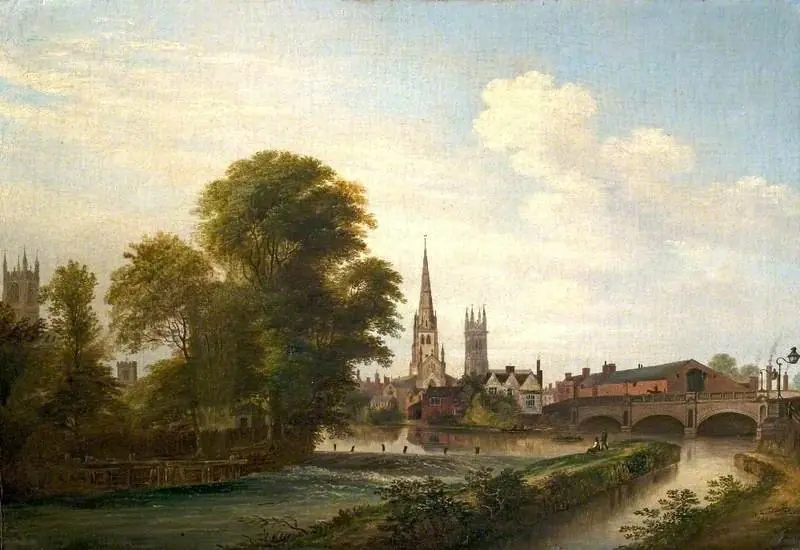 Junction of River and Canal, Derby
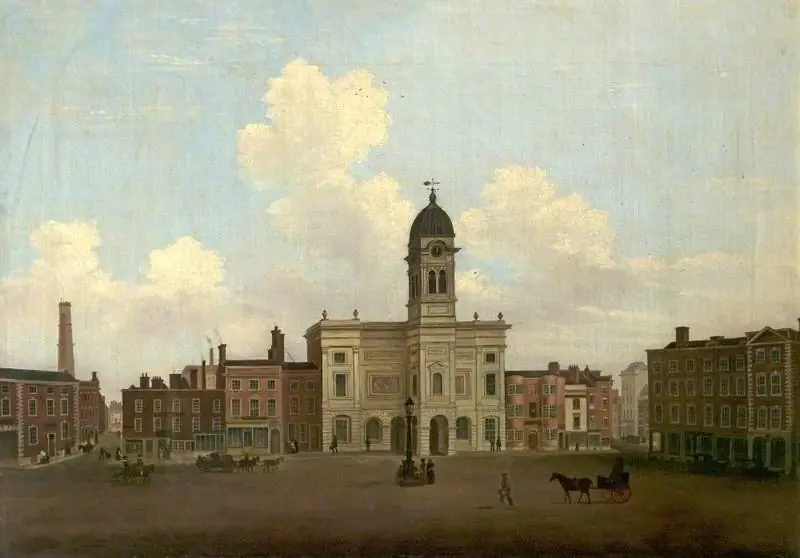 View of the Market Place, Derby
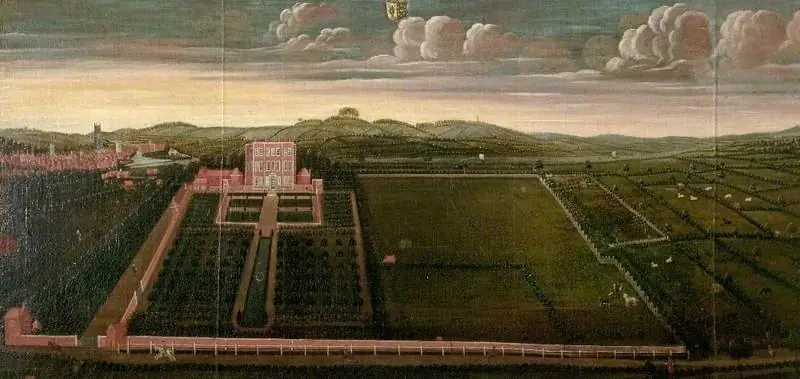 Castlefields, Derbyshire
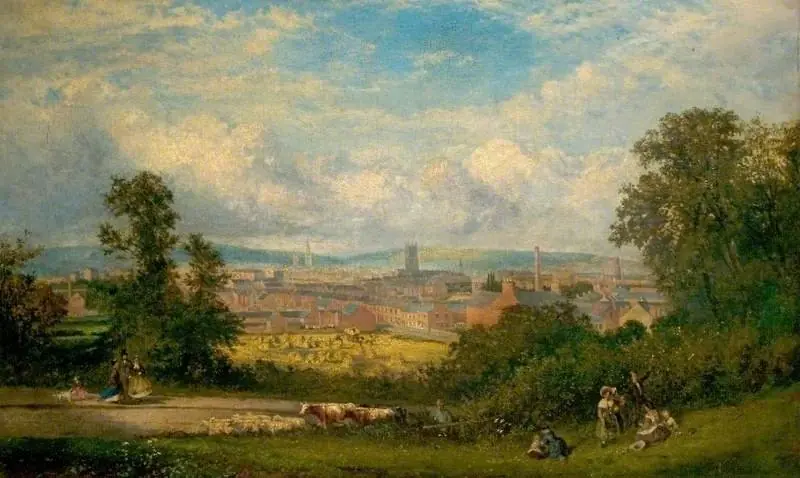 Derby from Burton Road
 Derby from Chester Close