Artwork
Ecce homo
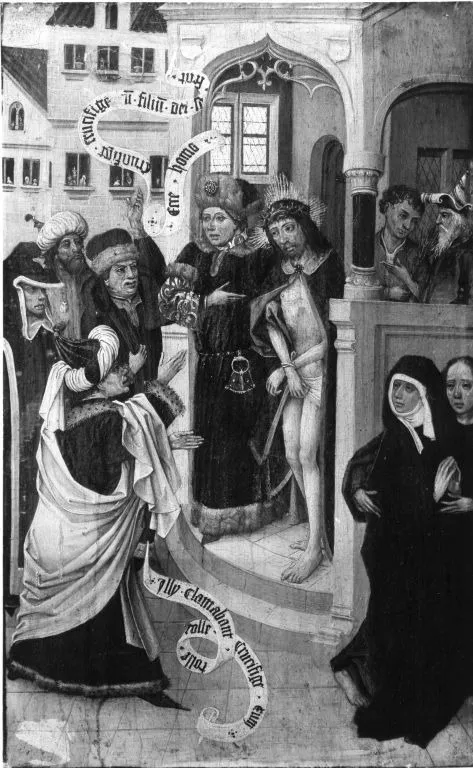
Ecce homo is an unspecified painting. It dates from 1490 and is held in the collection of the Bavarian State Painting Collections.
About this work
The people around him are dressed in clothing from the 15th century, and some of them are holding objects such as a cloth or a stick.
This painting shows a scene with several people gathered around a man who is standing in the center. He is wearing a crown of thorns and has his hands tied behind his back. The people around him are dressed in clothing from the 15th century, and some of them are holding objects such as a cloth or a stick.
In the background, there are buildings and windows that suggest a city or town setting. The painting is done in a style that is characteristic of the Northern Renaissance, with attention to detail and realism.
The artist who created this painting is the same one who painted other works during the Northern Renaissance.
Overview
The work entitled *Ecce homo* depicts a central figure bound and crowned with thorns, surrounded by a group of onlookers dressed in 15th‑century attire. The setting includes architectural elements such as buildings and windows that suggest an urban environment, rendered with the detailed realism typical of the Northern Renaissance.
Subject & Meaning
The central figure represents the biblical scene in which Pontius Pilate presents a scourged Jesus to the crowd, a moment traditionally called “Ecce homo” or “Behold the man.” The surrounding figures, some holding cloths or staffs, convey the public’s reaction and the ritual of judgment.
Technique & Style
Executed in the Northern Renaissance idiom, the painting employs meticulous attention to surface texture, fine brushwork, and a naturalistic palette. The artist renders fabrics, skin, and architectural details with a level of observation that emphasizes three‑dimensionality and spatial depth.
History & Provenance
The piece is attributed to the same hand responsible for other Northern Renaissance productions, though specific documentation of its commission or ownership history remains limited. Its survival in a museum collection reflects the continued scholarly interest in the period’s devotional imagery.
Context
During the 15th century, depictions of the “Ecce homo” theme served both liturgical and didactic purposes, reinforcing the humanity and suffering of Christ. The work aligns with contemporary trends that combined religious narrative with realistic portraiture of contemporary dress, linking sacred events to viewers’ everyday world.
Artist & collection
