Artwork
Opium Smokers Served Fruit and Bread
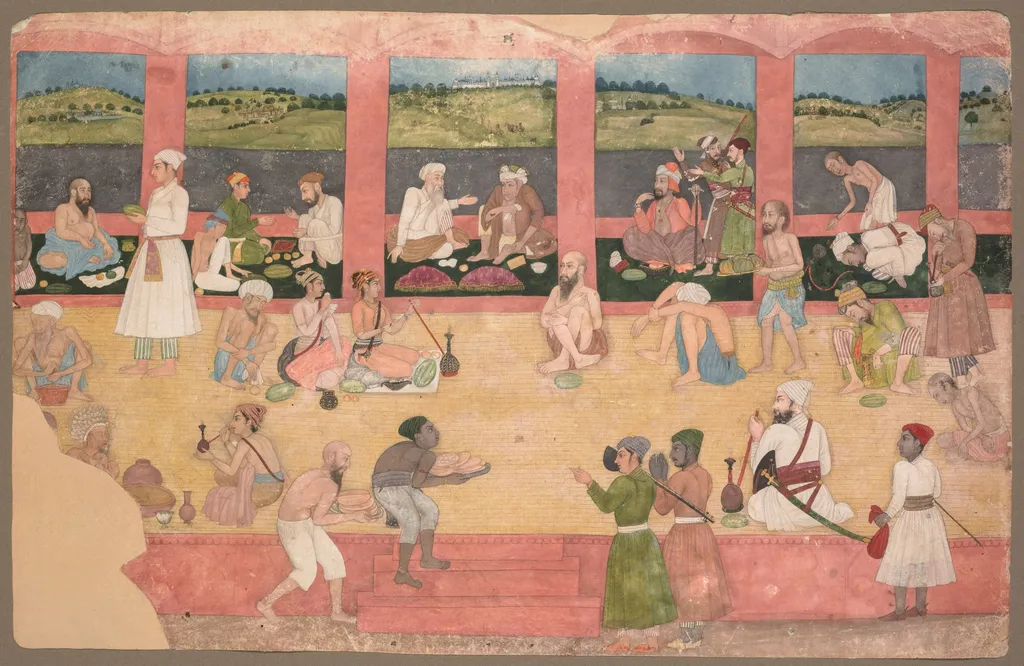
Opium Smokers Served Fruit and Bread is an unspecified painting. It dates from 1750 and is held in the collection of the Cleveland Museum of Art. The canvas presents an interior gathering where numerous figures occupy a tiled floor beneath muted earth tones.
About this work
Overview
Small windows reveal distant landscapes, and a few nude bodies are interspersed among the clothed attendees, creating a bustling yet intimate atmosphere.
The canvas presents an interior gathering where numerous figures occupy a tiled floor beneath muted earth tones. Central to the composition, a man dressed in green offers a pipe to a seated companion, while surrounding participants consume fruit and bread. Small windows reveal distant landscapes, and a few nude bodies are interspersed among the clothed attendees, creating a bustling yet intimate atmosphere.
Subject & Meaning
The work depicts a social ritual of opium consumption accompanied by food, highlighting the varied emotional states of the participants. Some figures appear relaxed, eyes half‑closed, suggesting contemplation or escape, whereas others stare into space, conveying a sense of introspection or detachment. The juxtaposition of nourishment and narcotic use invites reflection on pleasure, indulgence, and the fleeting nature of sensation.
Technique & Style
Rendered in a palette dominated by browns, greens, and reds, the artist employs a muted tonal harmony that unifies the crowded scene. The tiled floor is delineated with subtle linear perspective, while the windows provide shallow depth through simplified landscape sketches. Brushwork varies between smooth modeling of flesh and looser, suggestive strokes for textiles, emphasizing the contrast between the tangible food and the intangible haze of opium.
Context
The painting belongs to a tradition of genre scenes that document everyday leisure activities, particularly those associated with 19th‑century urban life. By foregrounding opium use—a practice both fashionable and controversial at the time—the artist captures a moment of cultural transition, reflecting contemporary attitudes toward exotic substances, social gatherings, and the interplay between public display and private indulgence.
Artist & collection