Artwork
Adoration of the Magi
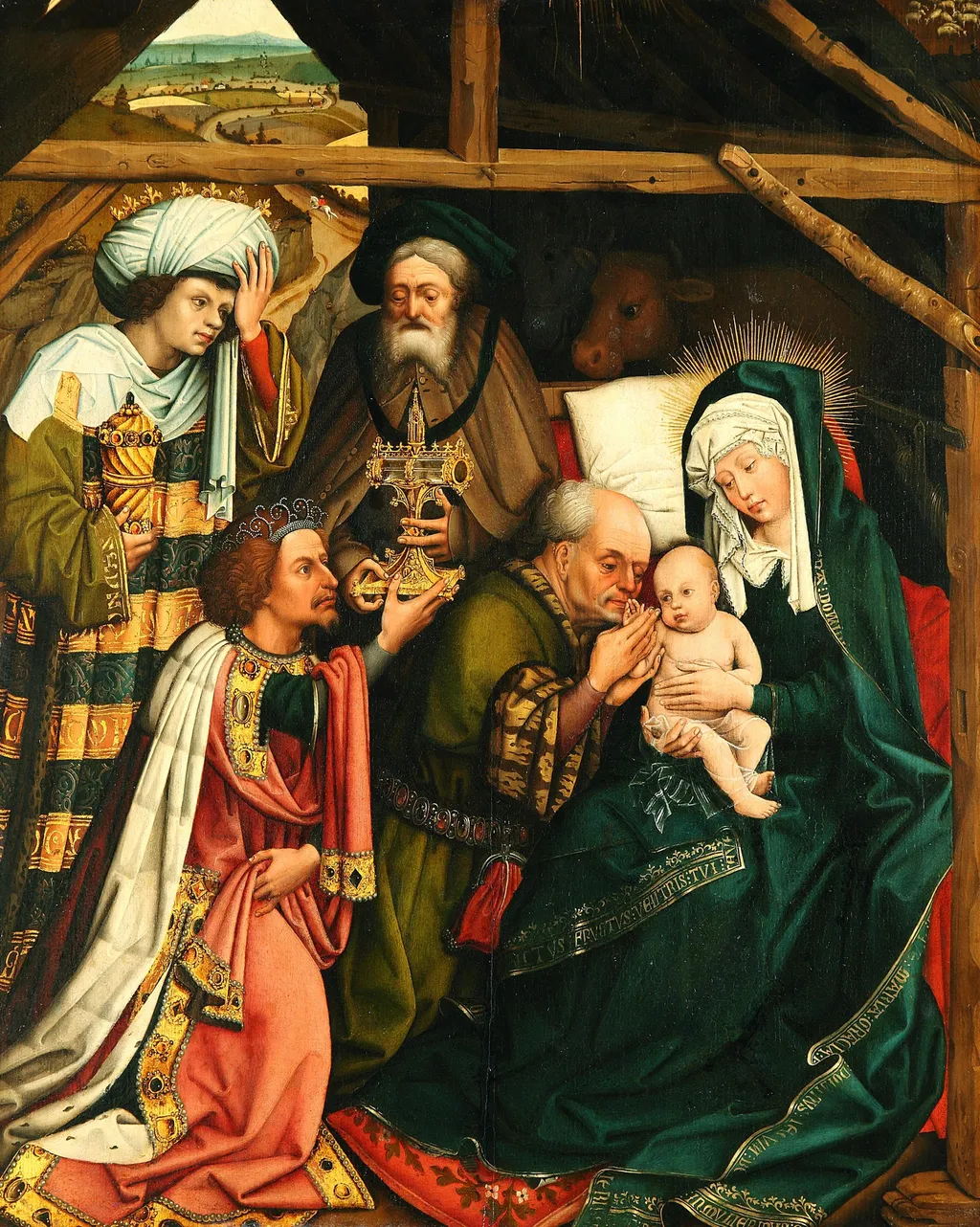
Adoration of the Magi is a paint painting. It dates from 1498 and is held in the collection of the Gemäldegalerie Berlin. The work depicts a small gathering around an infant, who rests on a woman's lap.
About this work
Overview
The woman wears a green garment and a white head covering, while three richly dressed figures stand nearby.
The work depicts a small gathering around an infant, who rests on a woman's lap. The woman wears a green garment and a white head covering, while three richly dressed figures stand nearby. One holds a golden box, another gently kisses the child's hand, and a third watches attentively. The setting is a modest wooden structure, its backdrop marked by a red cloth. The palette emphasizes deep greens and abundant gold, creating a calm, reverent atmosphere.
Subject & Meaning
The scene illustrates the traditional Christian narrative of the adoration of the newborn Christ by the Magi, symbolizing the recognition of his divinity by the gentile world. The inclusion of the woman, likely the Virgin Mary, underscores the maternal role, while the gestures of reverence—gift offering and hand‑kissing—convey devotion and the acknowledgment of the infant’s spiritual significance.
Technique & Style
Executed in paint, the composition relies on vivid coloration and a strong contrast between the golden accents and the deep green attire. The figures are rendered with a smooth, almost sculptural quality, and the simple wooden interior is suggested through minimal detailing, allowing the focus to remain on the interaction between the characters and the infant.
Context
The painting follows a long tradition of representing the Magi’s visit, a subject popular in Western religious art from the medieval period onward. Its emphasis on rich fabrics and gold reflects the patron’s desire to convey both piety and wealth, a common motif in devotional works intended for private or chapel settings.
Artist & collection
