Artwork
Portrait of Willem I 'de Zwijger' van Oranje- Nassau (1533-1584)
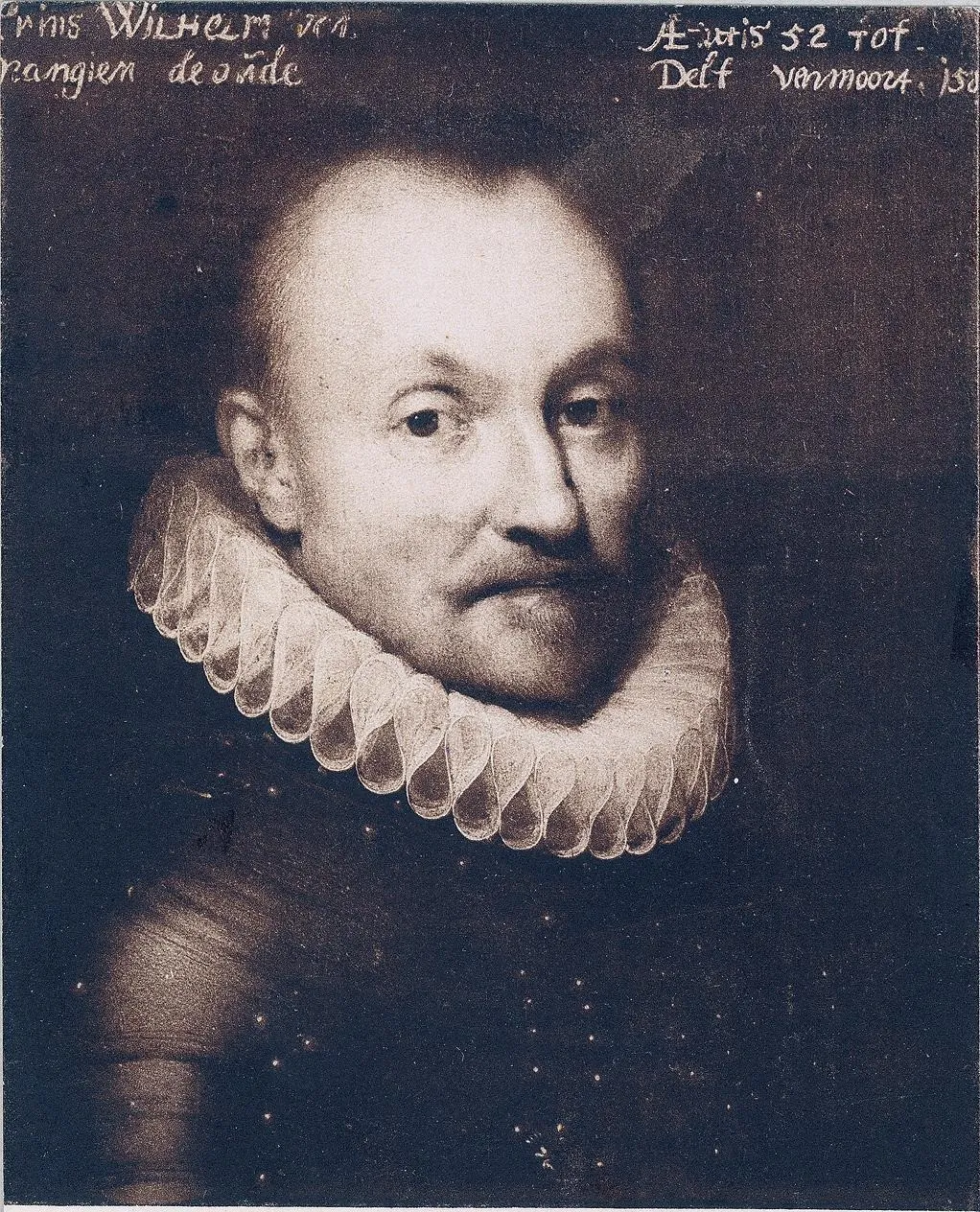
Portrait of Willem I 'de Zwijger' van Oranje- Nassau (1533-1584) is an oil painting. It dates from 1611 and is held in the collection of the Rijksmuseum.
About this work
Overview
The work is an oil painting portraying a balding figure with a solemn expression, set against a dark backdrop that emphasizes his facial features. He is dressed in a white ruff that spreads outward from his neck, a garment typical of the mid‑16th century. The composition relies on strong contrasts of light and shadow to give the portrait a three‑dimensional presence.
Subject & Meaning
Identified by an inscription at the top, the sitter is Willem I van Oranje‑Nassau (1533‑1584), a prominent Dutch leader. The portrait was executed well after his death, suggesting the artist intended to commemorate his historical role rather than capture a contemporary likeness.
Technique & Style
Rendered in oil on canvas, the painting employs chiaroscuro, using illumination to model the subject’s face and ruff while the surrounding darkness recedes. The careful rendering of the ruff’s folds and the crisp detailing of the facial features reflect a meticulous, realistic approach characteristic of Northern European portraiture of the period.
History & Provenance
The portrait was produced posthumously, indicating reliance on earlier visual sources or descriptions to achieve historical accuracy in costume and appearance. No further ownership details are provided in the source material.
Context
Willem I was a central figure in the Dutch struggle for independence during the mid‑16th century. Portraits of such leaders were often commissioned to reinforce their legacy, and the use of period attire in this work aligns with that commemorative tradition.
Artist & collection
