Artwork
Illustrations to Life of Dhurva Maharaj: #23 Dhurva sits on the golden mountain in concentration and meets his parents and the 7 Rishis
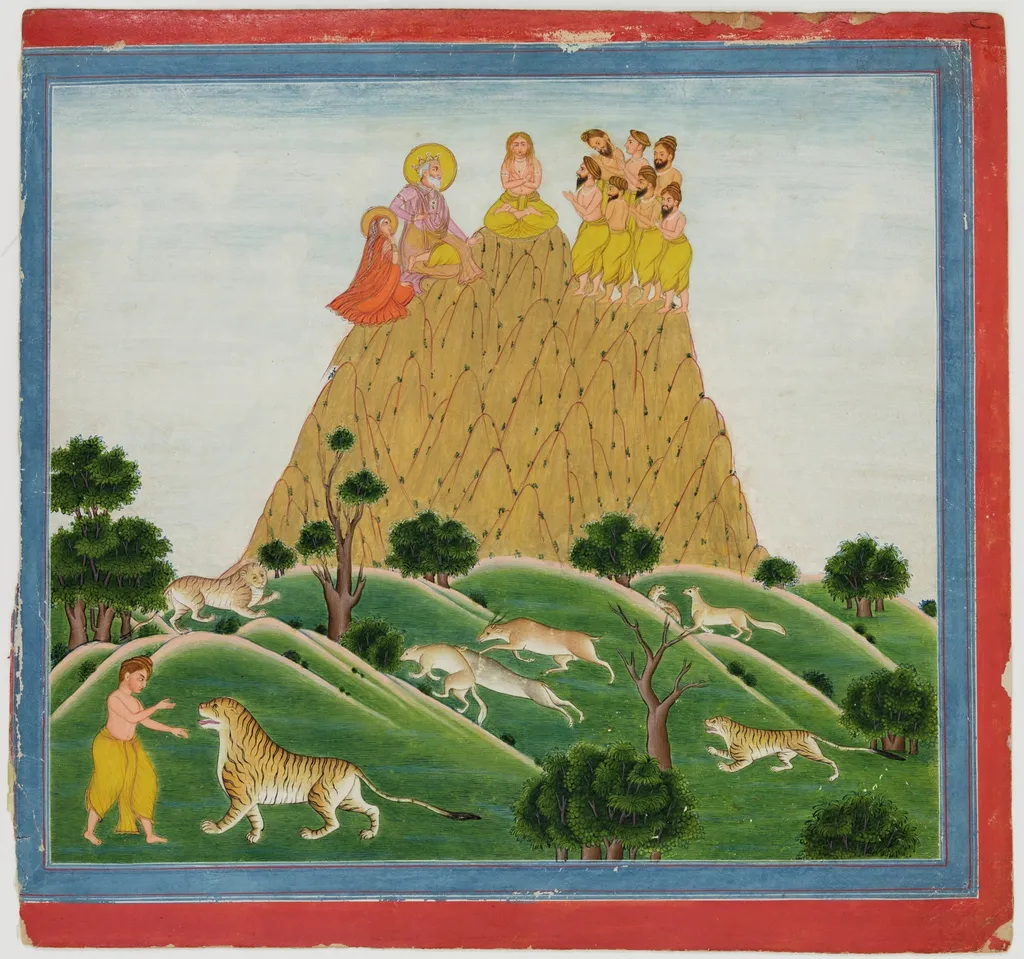
Illustrations to Life of Dhurva Maharaj: #23 Dhurva sits on the golden mountain in concentration and meets his parents and the 7 Rishis is an unspecified painting by the Patna School of Painting artist Unknown. It dates from 1800 and is held in the collection of the Detroit Institute of Arts. This painting is one of twenty-three illustrations depicting the life of Dhurva Maharaj, a figure from Hindu devotional tradition.
About this work
Overview
This painting is one of twenty-three illustrations depicting the life of Dhurva Maharaj, a figure from Hindu devotional tradition.
This painting is one of twenty-three illustrations depicting the life of Dhurva Maharaj, a figure from Hindu devotional tradition. Executed in a miniature style, it captures a pivotal moment of spiritual attainment. The work is part of a larger narrative series and is currently housed in the Detroit Institute of Arts, where it is preserved as an example of regional Indian painting from the late 18th or early 19th century.
Subject & Meaning
The scene portrays Dhurva, seated in deep meditation atop a golden mountain, radiating spiritual authority through his halo and pink robe. Below him, his parents and seven sages gather, acknowledging his ascension. In the foreground, a young boy surrounded by tigers suggests a parallel journey of innocence and divine protection. The composition reflects the Hindu ideal of devotion leading to transcendence and familial reconciliation.
Technique & Style
The artist employs flat, luminous color fields and precise linear detail characteristic of Pahari miniature painting. Gold is used symbolically for the mountain, contrasting with the soft blues of the sky and the earthy tones of the landscape. Figures are arranged hierarchically by scale and position, enhancing spiritual hierarchy. The layered hills and scattered tigers create subtle depth without perspective, adhering to traditional Indian compositional norms.
History & Provenance
The painting originates from a commissioned series illustrating the life of Dhurva Maharaj, likely produced in a Pahari court workshop. Its stylistic features align with works from the early 19th century in the Himalayan foothills. It entered the Detroit Institute of Arts’ collection through documented acquisition, though its exact path from India to the United States remains partially undocumented.
Context
Dhurva’s story, drawn from the Bhagavata Purana, recounts a child’s unwavering devotion that leads to divine vision and cosmic recognition. Such illustrated manuscripts were created for royal patrons and temple use, serving both devotional and didactic purposes. The inclusion of tigers and sages reflects symbolic motifs common in regional storytelling traditions, where nature and sages embody divine order.
Legacy
This painting contributes to the broader corpus of Indian devotional art that visualized sacred narratives for contemplative practice. Its preservation in a Western institution highlights the global circulation of South Asian manuscripts, while its stylistic consistency with regional schools underscores the enduring influence of Pahari aesthetics in religious illustration.
Artist & collection

 Domestic Scene
 Giacomo and Cardinal Marco, investing Andrea, Abbot of San Zeno, with his Benefice
 The Nymph of Fontainebleau
 Portrait of a Woman
 Madonna and Child with Saints in the Enclosed Garden
 Venus and Minerva
 Family Group of Four on Sofa
 Wall painting from Room H of the Villa of P. Fannius Synistor at Boscoreale
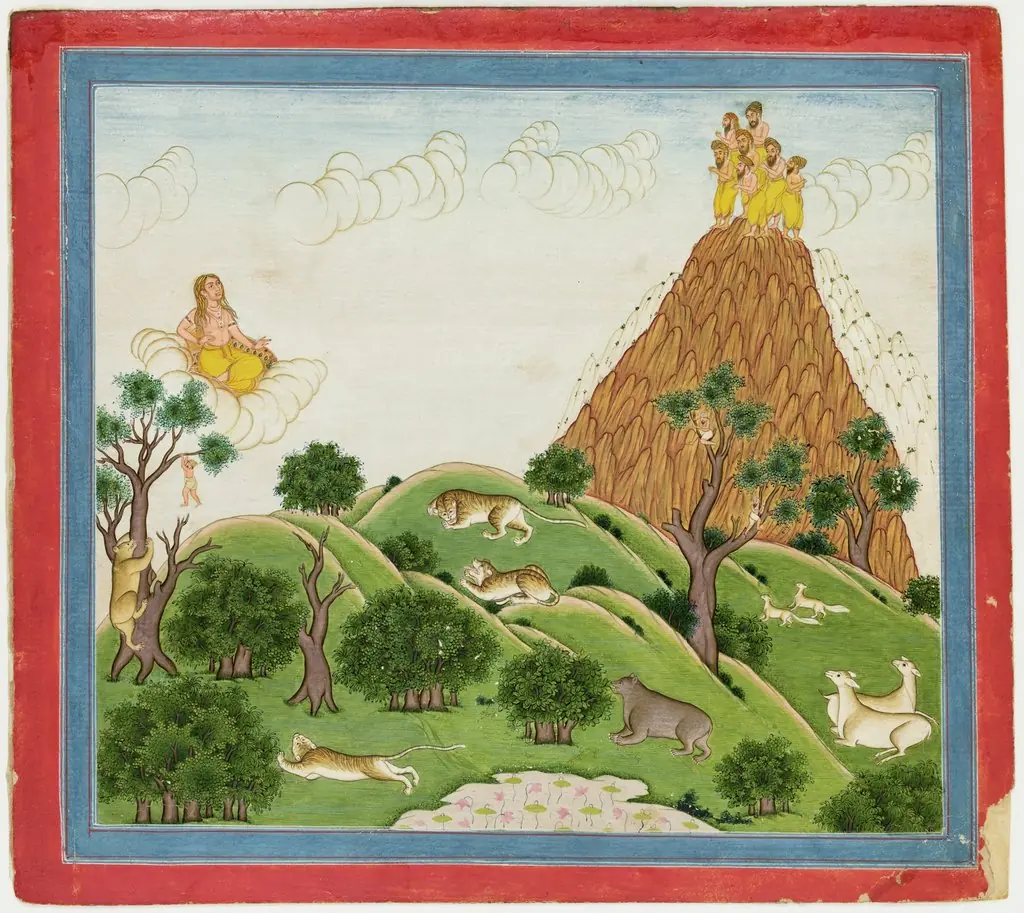 Illustrations to Life of Dhurva Maharaj: #22 Dhurva reaches the mountain of gold where 7 sacred Rishis who are called the Seven Stars receive him
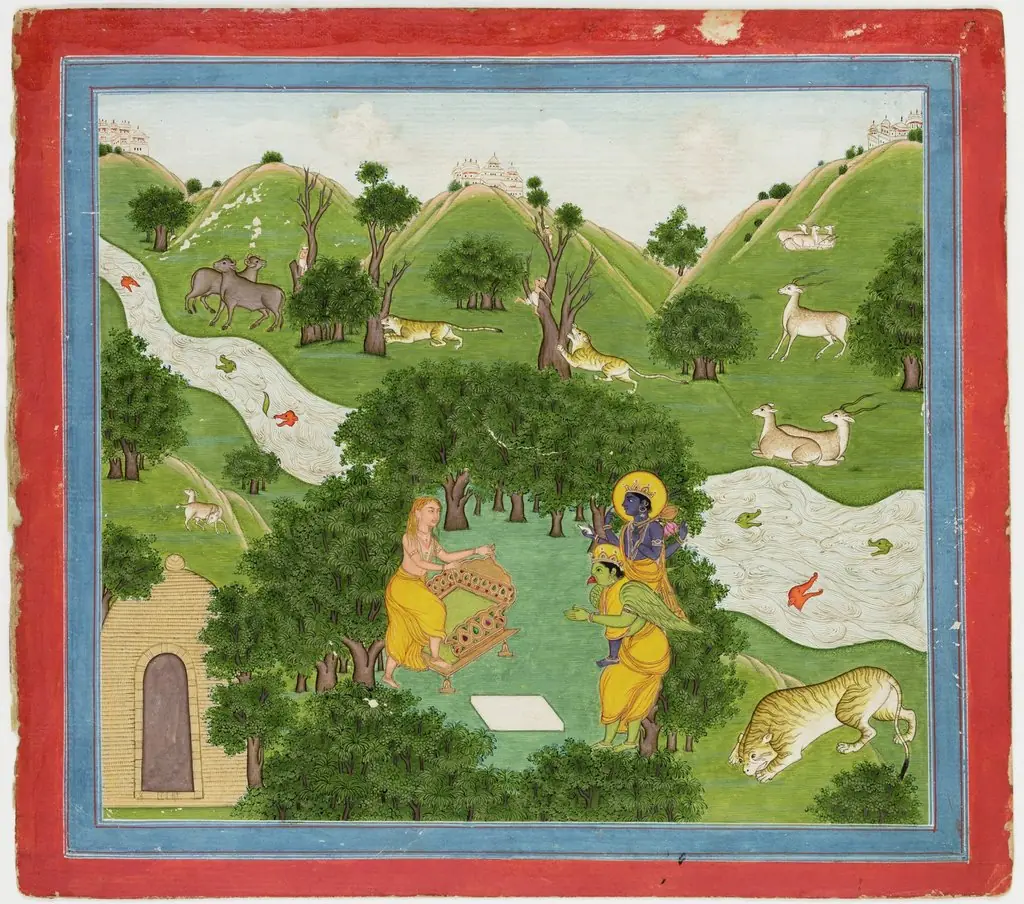 Illustrations to Life of Dhurva Maharaj: #20 God gives Dhurva his throne upon which he can fly anywhere
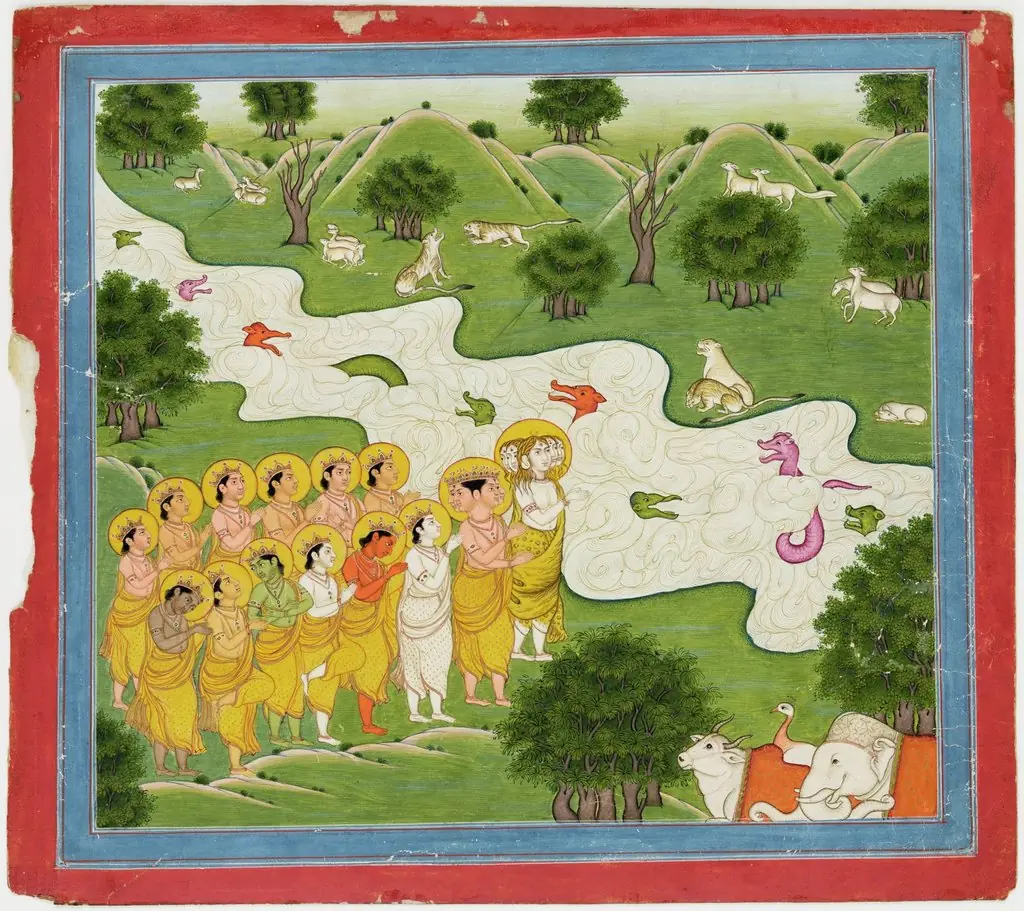 Illustrations to Life of Dhurva Maharaj: #16 All of them go to Dhurva hoping to break his concentration, and to deter him in his mission of seeing God
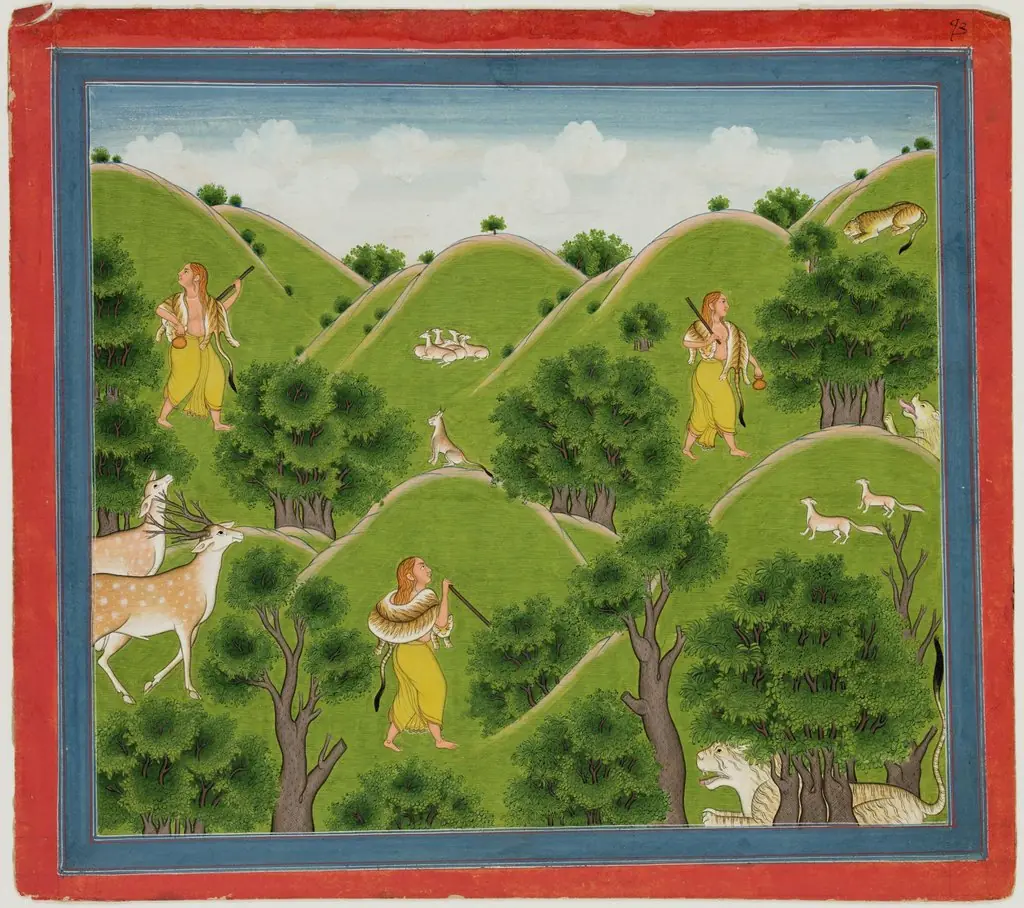 Illustrations to Life of Dhurva Maharaj: #11 Dhurva travels from place to place in Rishi garb
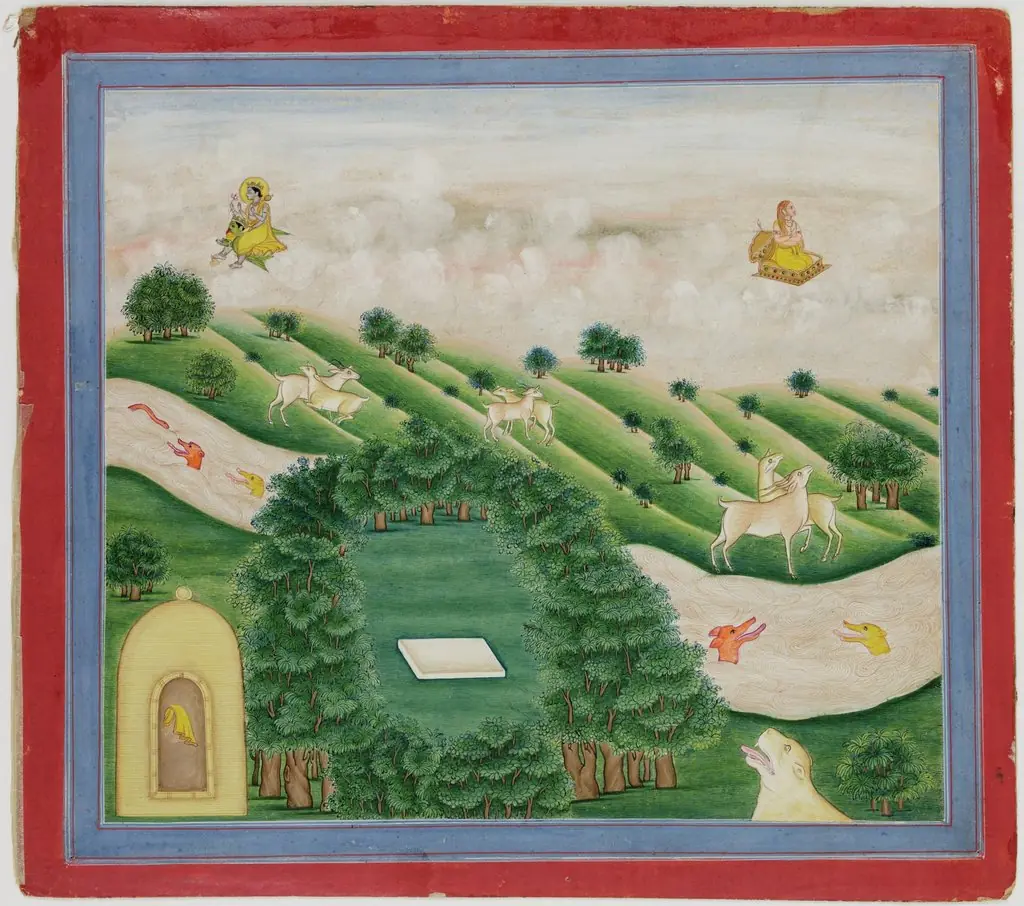 Illustrations to Life of Dhurva Maharaj: #21 Dhurva is shown flying on his throne, and on another, the greatest power in the world, Vishnu
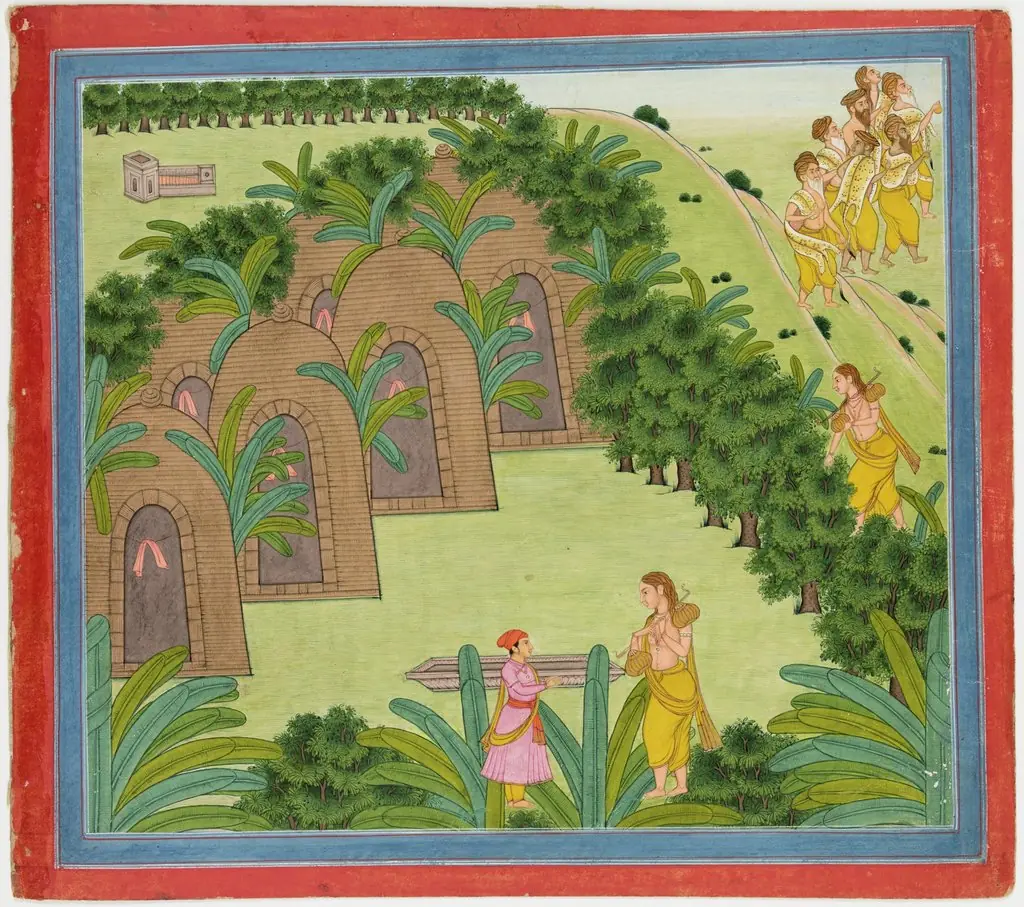 Illustrations to Life of Dhurva Maharaj: #9 God deputes Narada to examine Dhurva Maharaj's truthfulness