Artwork
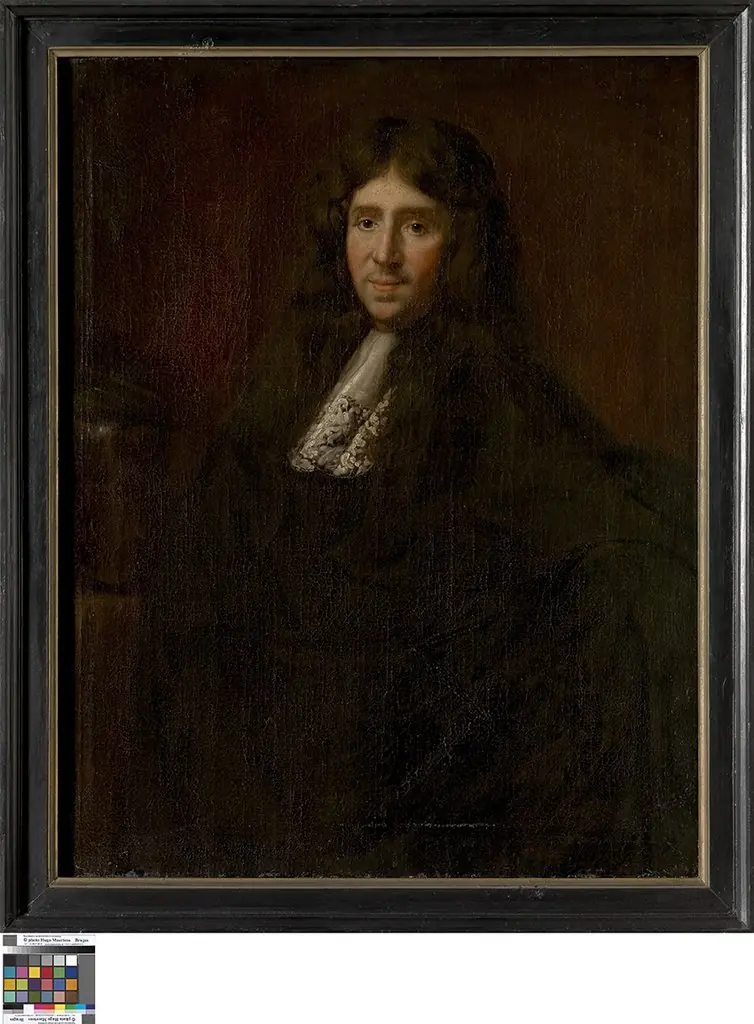
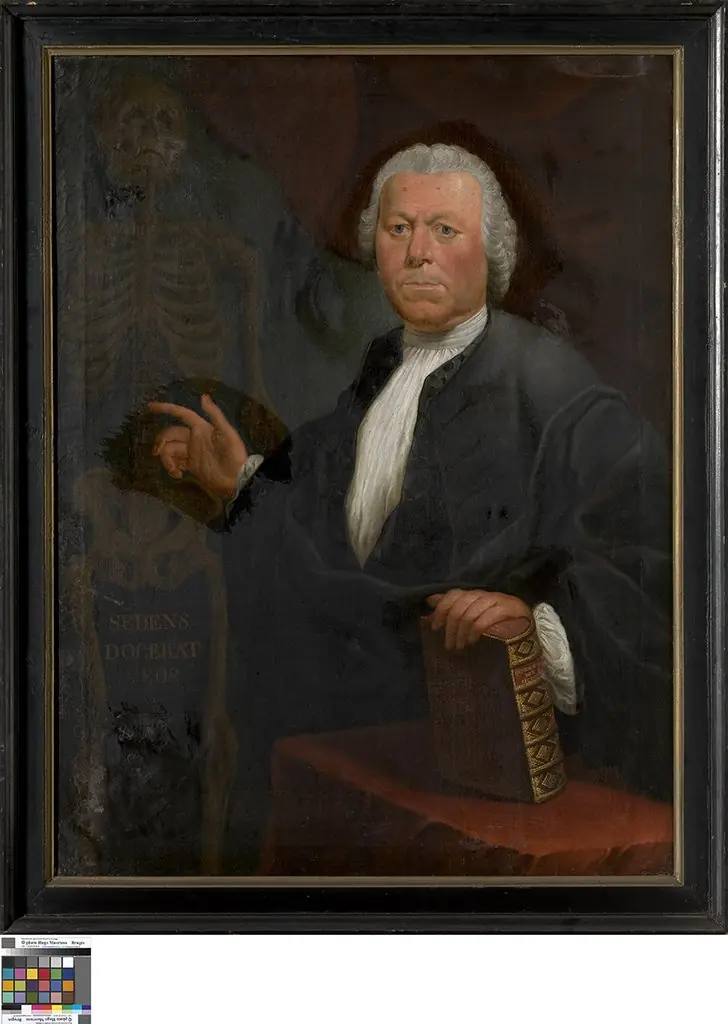
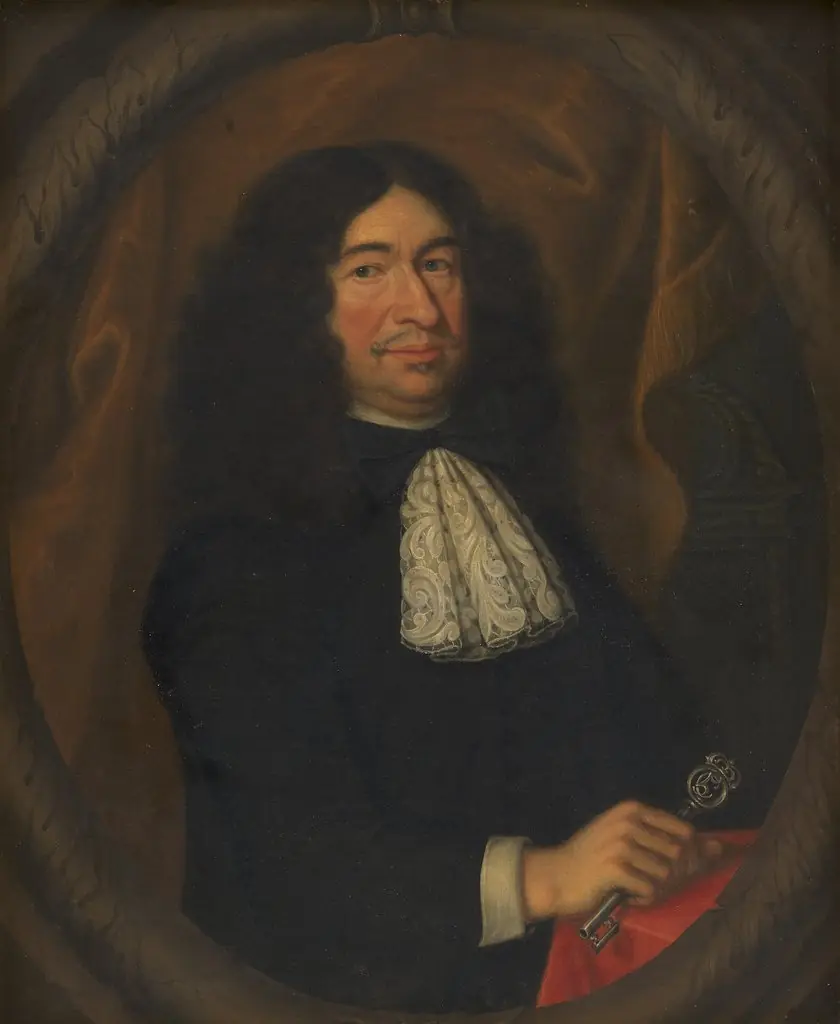
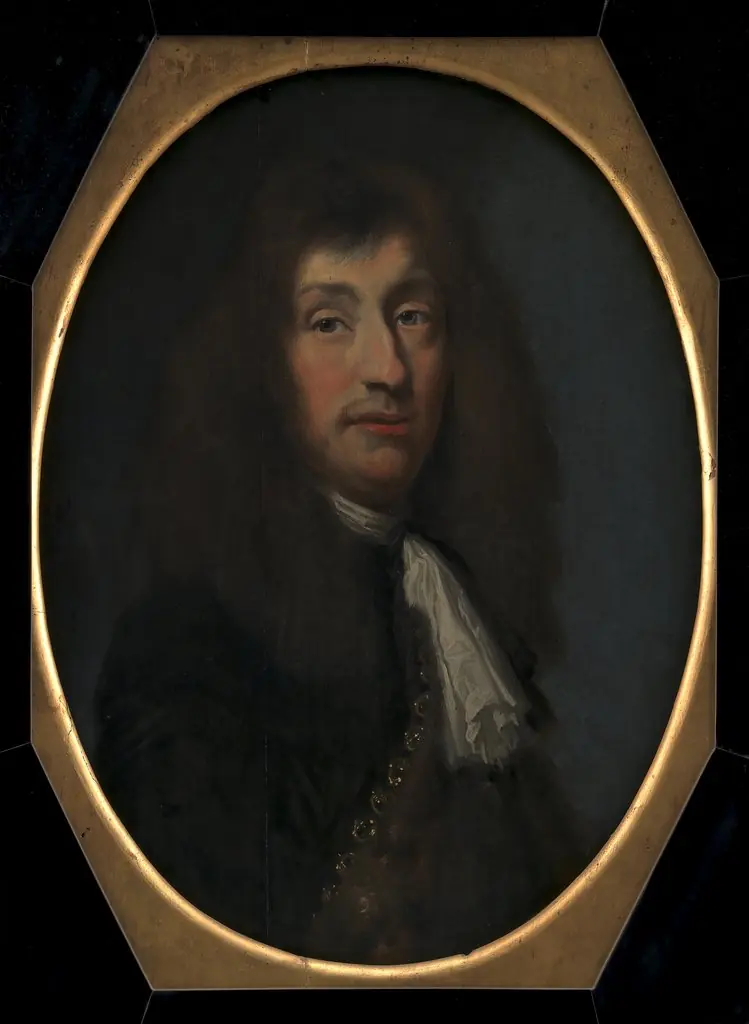
Portret van Jacques Lanbiot
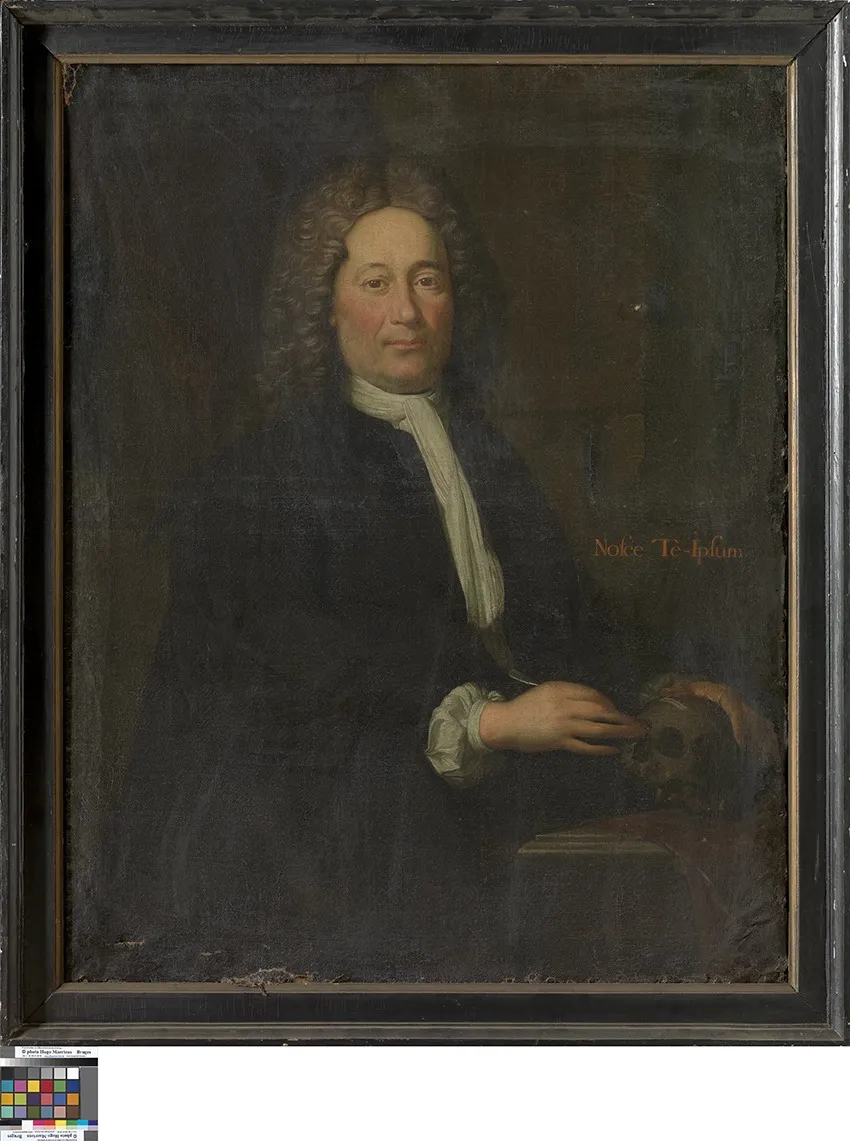
Portret van Jacques Lanbiot is an oil painting by the French Classical Baroque artist Unknown. It dates from 1701 and is held in the collection of the Groeningemuseum.
About this work
Overview
This oil painting portrays a man with curly hair, dressed in a dark jacket and white shirt with a high collar, holding a skull in his right hand.
This oil painting portrays a man with curly hair, dressed in a dark jacket and white shirt with a high collar, holding a skull in his right hand. The composition employs chiaroscuro to model form and create spatial depth. The subject’s attire and the presence of the skull suggest a professional identity tied to medicine or anatomy, though no definitive inscription or external record confirms his name or role.
Subject & Meaning
The figure, likely a physician or anatomist, holds a skull as a symbol of mortality and the study of human anatomy. The direct gaze and composed posture convey seriousness and intellectual authority. The skull, a common memento mori motif, underscores themes of transience and the medical profession’s engagement with death, without overt religious or moralizing intent.
Technique & Style
The artist uses chiaroscuro to define the figure’s form, with light falling sharply across the face and hand holding the skull, while the background recedes into shadow. Brushwork is restrained, emphasizing texture in fabric and bone without decorative flourish. The palette is muted, dominated by dark tones with contrast provided by the white collar and the pale skull.
History & Provenance
The painting’s origin and early ownership remain undocumented. It is attributed to an anonymous artist active in the late 16th or early 17th century, possibly in the Low Countries, where such portraiture of medical professionals was uncommon but not unknown. No exhibition or collection history predates the 20th century.
Context
During the Renaissance and early Baroque periods, portraits of physicians often included anatomical symbols to signify expertise. While grander depictions of scholars or surgeons existed, this work reflects a quieter, more intimate tradition—focusing on individual identity and professional duty rather than institutional prestige or public recognition.
Legacy
The painting contributes to a modest but persistent genre of medical portraiture that values quiet dignity over spectacle. Though not widely reproduced or studied, it offers insight into how medical identity was visually constructed in early modern Europe—through gesture, attire, and symbolic objects rather than titles or settings.
Artist & collection

 Domestic Scene
 Giacomo and Cardinal Marco, investing Andrea, Abbot of San Zeno, with his Benefice
 The Nymph of Fontainebleau
 Portrait of a Woman
 Madonna and Child with Saints in the Enclosed Garden
 Venus and Minerva
 Family Group of Four on Sofa
 Wall painting from Room H of the Villa of P. Fannius Synistor at Boscoreale