Artwork
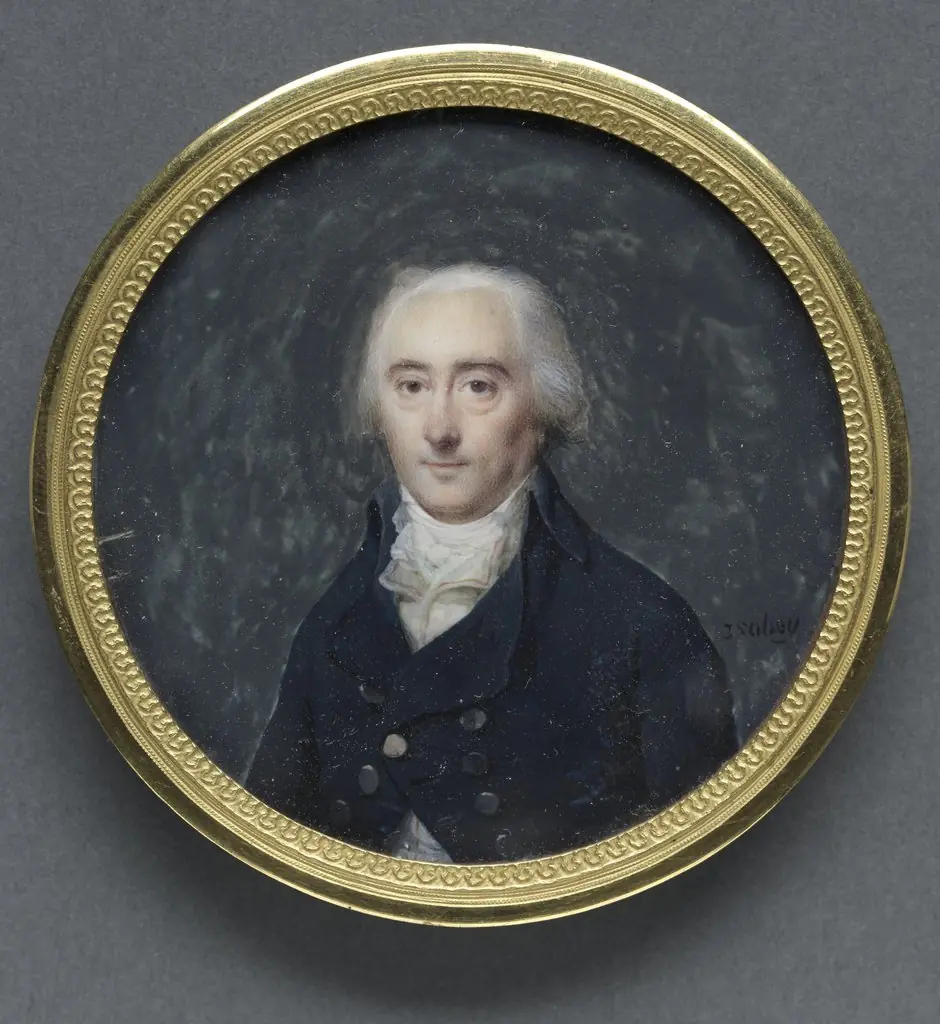
Portrait of a Man with an Earring
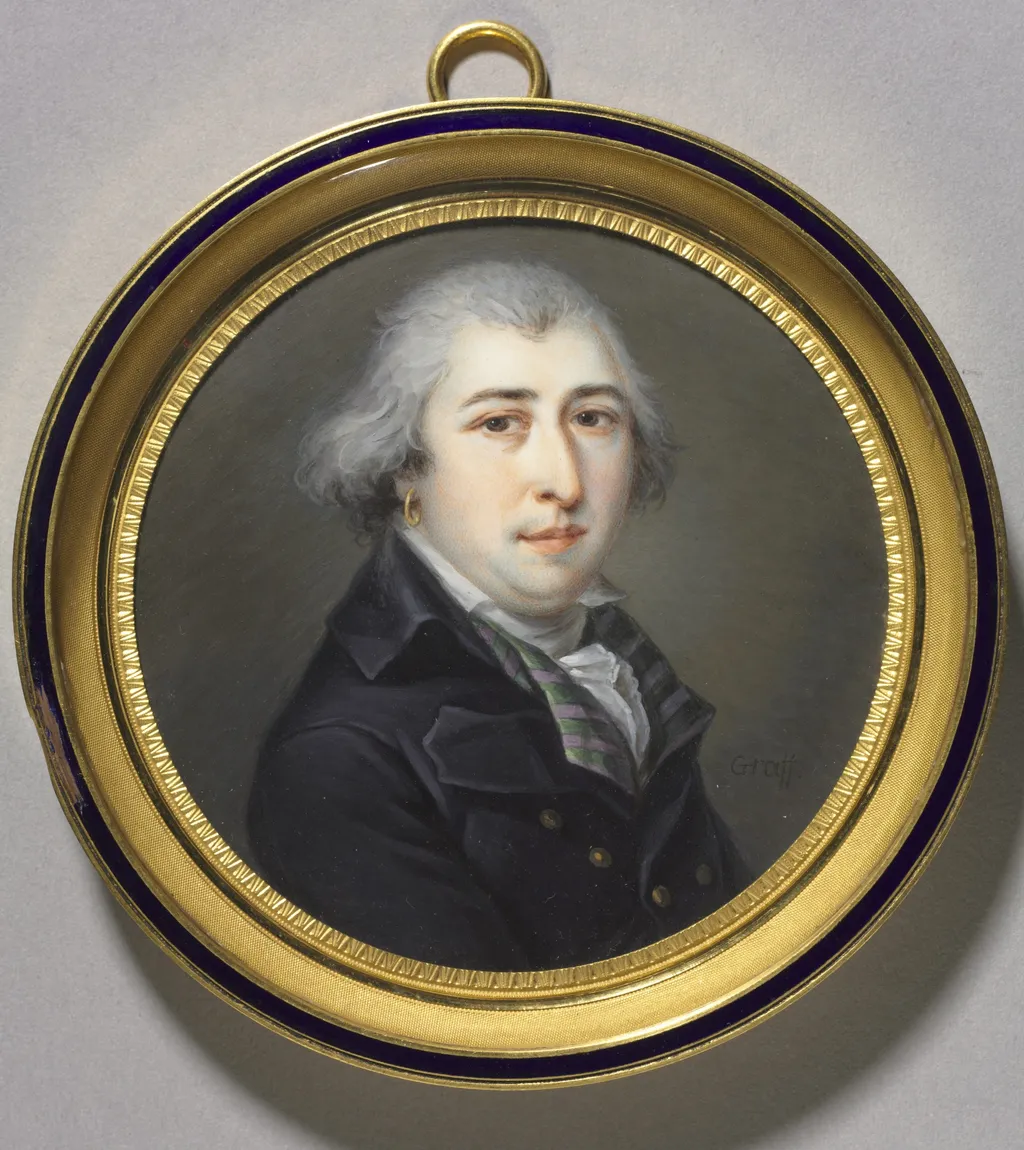
Portrait of a Man with an Earring is an unspecified painting. It dates from 1800 and is held in the collection of the Cleveland Museum of Art. The work is a modestly sized, circular oil painting that depicts a seated gentleman with curled, greying hair and a solemn expression.
About this work
Overview
The work is a modestly sized, circular oil painting that depicts a seated gentleman with curled, greying hair and a solemn expression. He is dressed in a dark overcoat, a white shirt and a patterned cravat, and wears a single earring in his left ear. The composition is framed in a gold‑toned border that emphasizes its decorative quality.
Subject & Meaning
The portrait presents an individual of apparent middle‑age status, suggested by the formal attire and the solitary earring, a detail that may hint at personal taste or cultural affiliation. The serious gaze and restrained pose convey a sense of dignity and introspection, typical of private commissions intended to record the sitter’s likeness and social standing.
Technique & Style
Rendered with a soft, diffused light that isolates the face, the painting employs chiaroscuro to model the features against an unadorned background. The subtle gradations of tone and the careful handling of textures—particularly the sheen of the coat and the fabric of the cravat—reflect a refined, academic approach to portraiture.
History & Provenance
A signature reading “Graff” appears in the lower corner, offering a clue to the artist’s identity, though the name remains obscure in standard catalogues. The gold frame and dark border suggest the piece was intended for display as a decorative object, possibly within a private domestic setting.
Context
Circular portraits, or tondi, were popular in the 17th‑century European tradition for intimate, personal representations. The inclusion of an earring aligns with contemporary fashions that allowed men to adopt ornamental jewelry, reflecting broader shifts in dress codes of the period.
Legacy
While the artist’s oeuvre is not widely documented, the work exemplifies the period’s interest in individualized portraiture and the technical use of light to convey character. It continues to serve as a reference point for studies of modestly scaled, privately commissioned portraits.
Artist & collection