Artwork
Scenes from the Tale of Genji
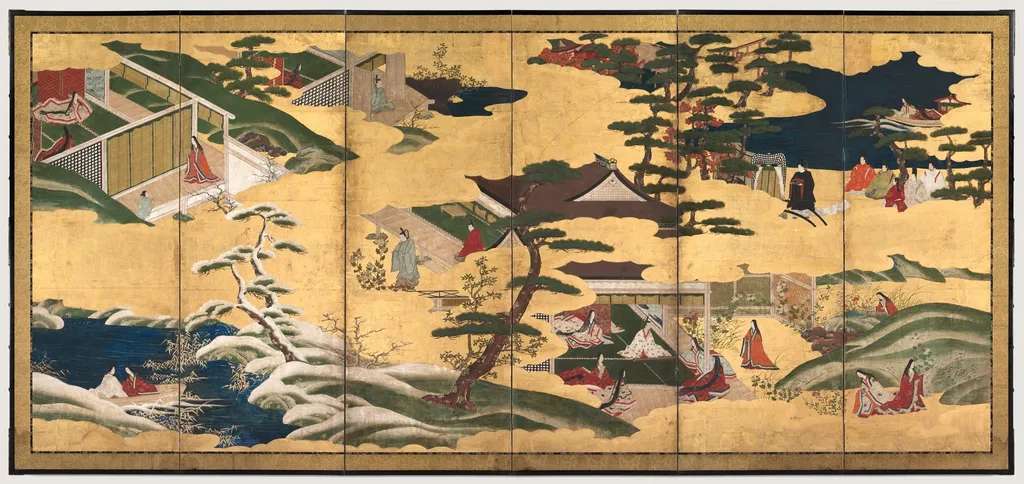
Scenes from the Tale of Genji is an unspecified painting. It dates from 1749 and is held in the collection of the Cleveland Museum of Art.
About this work
Overview
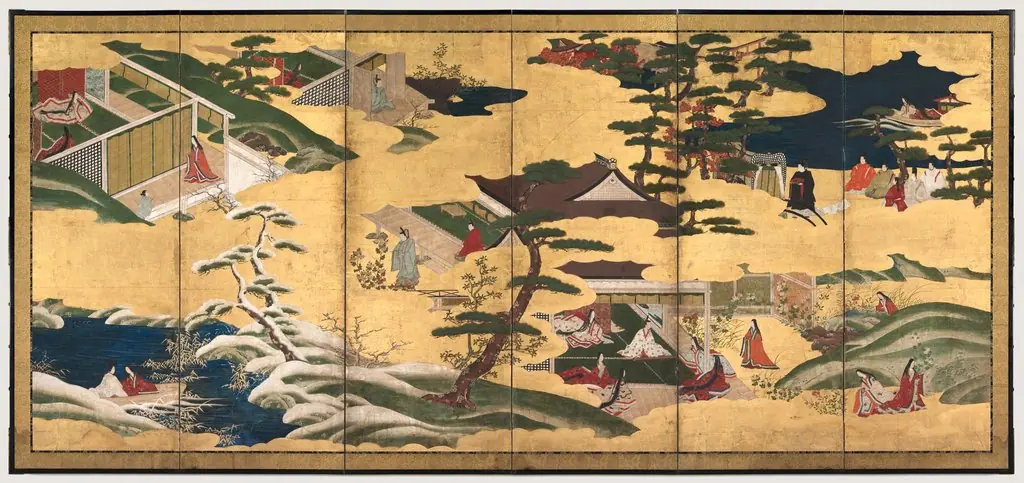
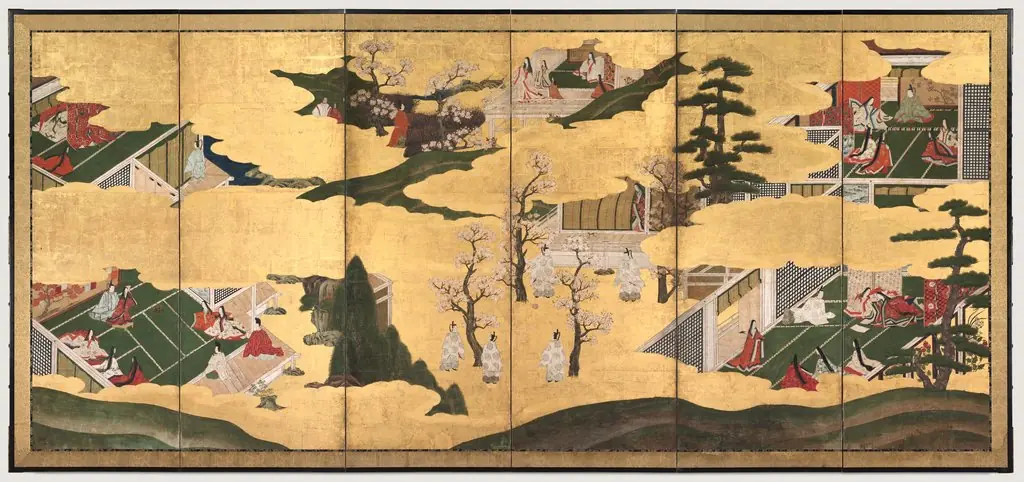
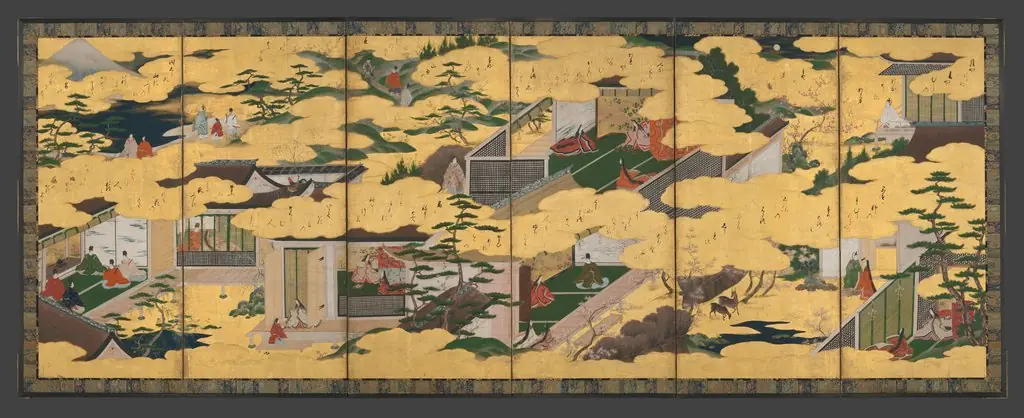
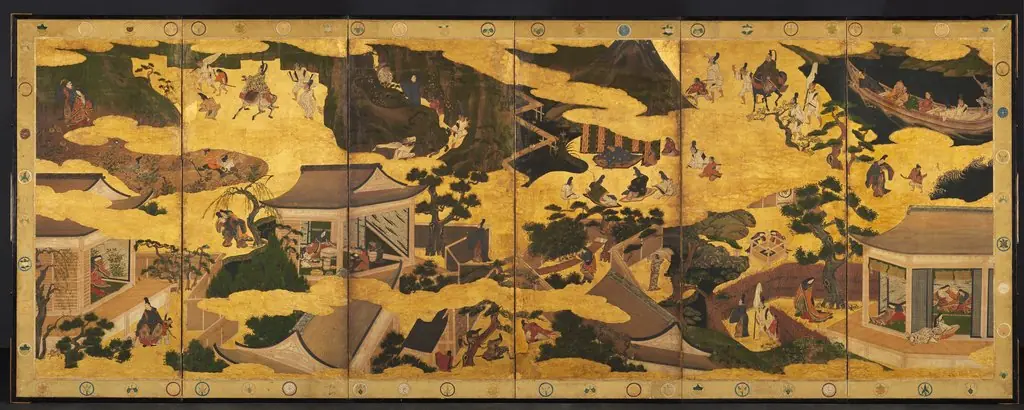
Scenes from the Tale of Genji is a painted narrative panel that presents a succession of compact vignettes arranged within a wintry setting. The composition unfolds across a riverbank and adjacent structures, guiding the eye from one tableau to the next as figures in brightly colored garments traverse bridges, boats, and garden pavilions beneath a softly clouded sky.
Subject & Meaning
The work visualizes episodes drawn from the classic Japanese novel The Tale of Genji, depicting characters moving through seasonal landscapes that echo the story’s emotional shifts. The snowy backdrop and muted palette suggest a contemplative atmosphere, while the varied activities—walking, pausing by a bridge, boarding a boat—reflect the narrative’s focus on courtly travel and fleeting encounters.
Technique & Style
Executed with delicate brushwork, the painting balances fine line detail in architectural elements with broader washes of color that define the snow‑laden trees and river. A restrained yet vivid chromatic scheme—blues, reds, greens against a golden ground—creates visual contrast without overwhelming the subtle tonal harmony characteristic of traditional Japanese narrative scrolls.
History & Provenance
The panel is part of the collection of the Cleveland Museum of Art, where it is displayed among other works of East Asian painting. Its acquisition history indicates it entered the museum’s holdings through a mid‑20th‑century donation, though earlier ownership records remain limited.
Context
Scenes from the Tale of Genji belongs to a long tradition of illustrated literature in Japan, where visual sequences accompanied the reading of classic texts. The depiction of seasonal change, especially snow, aligns with the aesthetic principle of mono no aware, emphasizing the transient beauty of moments within the larger narrative.
Artist & collection