Artwork
El Santo Nino de Atocha: santo de retablo
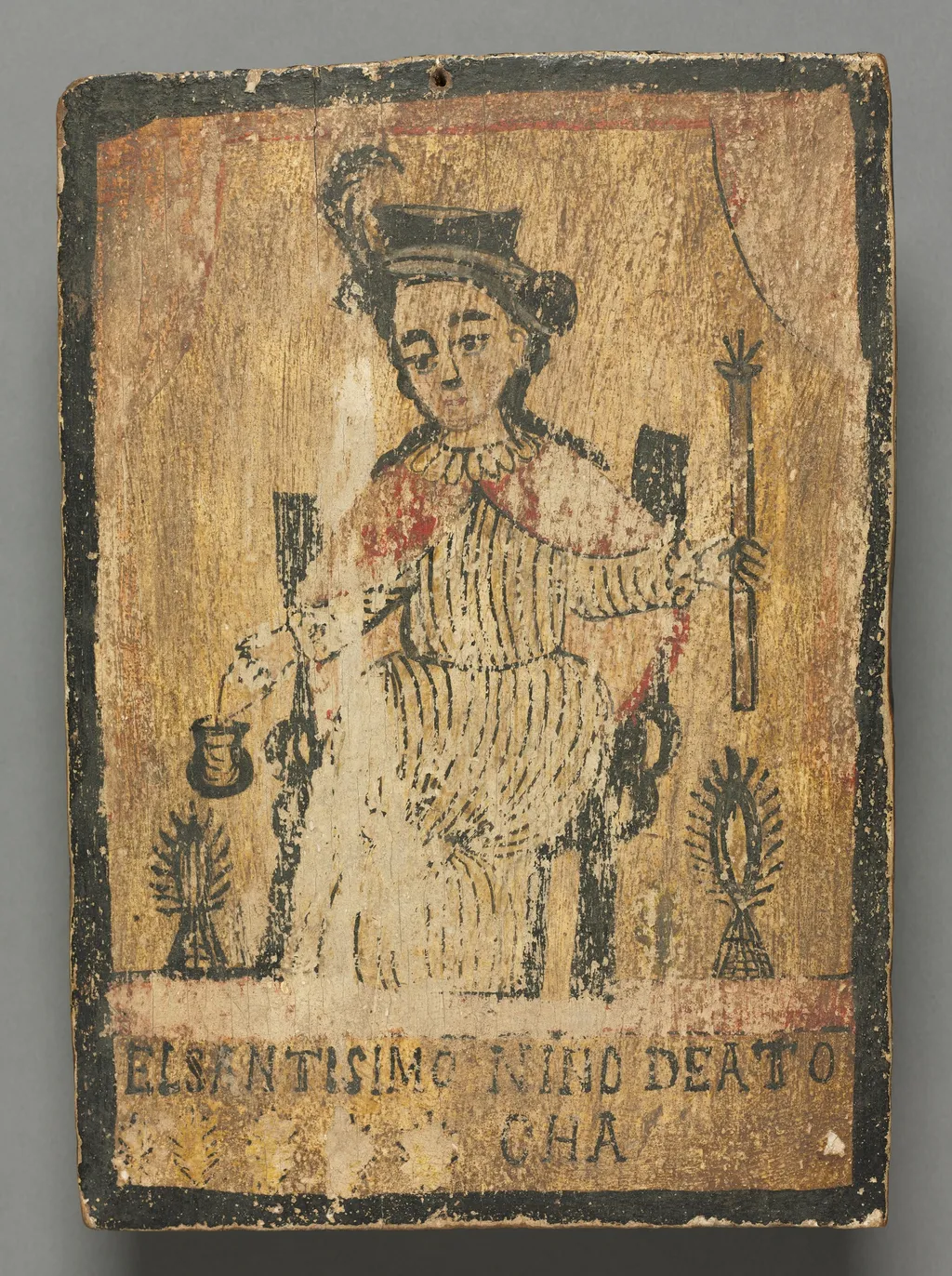
El Santo Nino de Atocha: santo de retablo is an unspecified painting. It dates from 1700 and is held in the collection of the Cleveland Museum of Art.
About this work
Overview
The work titled *El Santo Niño de Atocha* presents a youthful holy figure, likely representing the infant Saint John, set against a warm, golden backdrop. Dressed in a simple white robe, the child holds a staff in one hand and a cup in the other, his expression calm and contemplative, inviting quiet devotion.
Subject & Meaning
The saint’s attributes—a staff and a cup—reference traditional iconography associated with the Santo Niño de Atocha, a figure venerated for providing aid and protection. The serene demeanor and intimate lighting suggest a focus on personal piety rather than grand narrative, emphasizing the saint’s role as a compassionate intercessor.
Technique & Style
The painting employs chiaroscuro, using strong contrasts between the luminous golden background and the softer illumination on the figure to model form. Visible brushwork creates a subtle impasto, adding texture to the robe and accessories, while the overall palette of warm tones reinforces a sense of reverence.
History & Provenance
Created as a devotional panel, the piece belongs to a tradition of Spanish colonial religious art that circulated in churches and private chapels. Its exact date and original location are undocumented, but the stylistic traits align with 17th‑ to 18th‑century practices in New Spain.
Context
During the colonial period, images of the Santo Niño de Atocha were popular among the faithful for their perceived protective powers, especially among travelers and miners. Such paintings functioned both as objects of worship and as visual reinforcement of Catholic doctrine in missionary settings.
Artist & collection
