Artwork
Funerary Portrait of a Young Girl
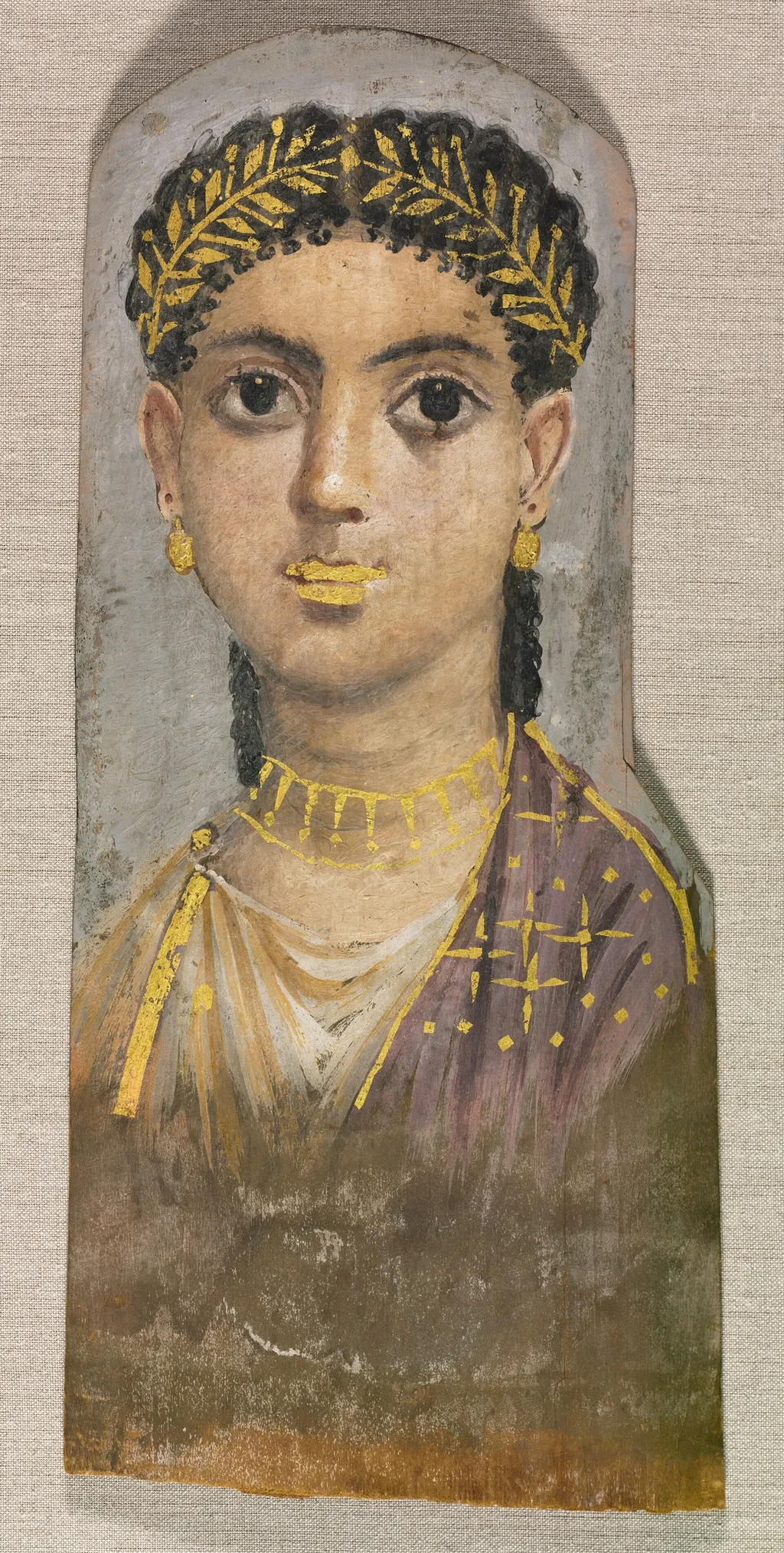
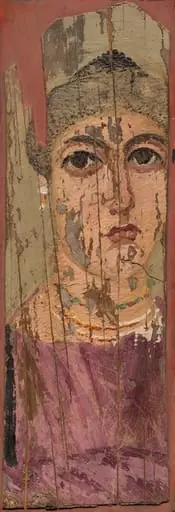
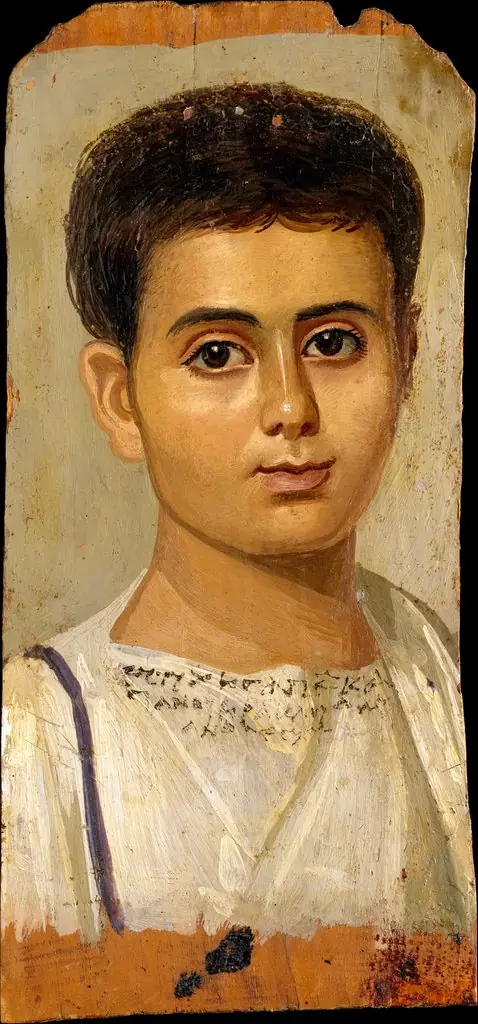
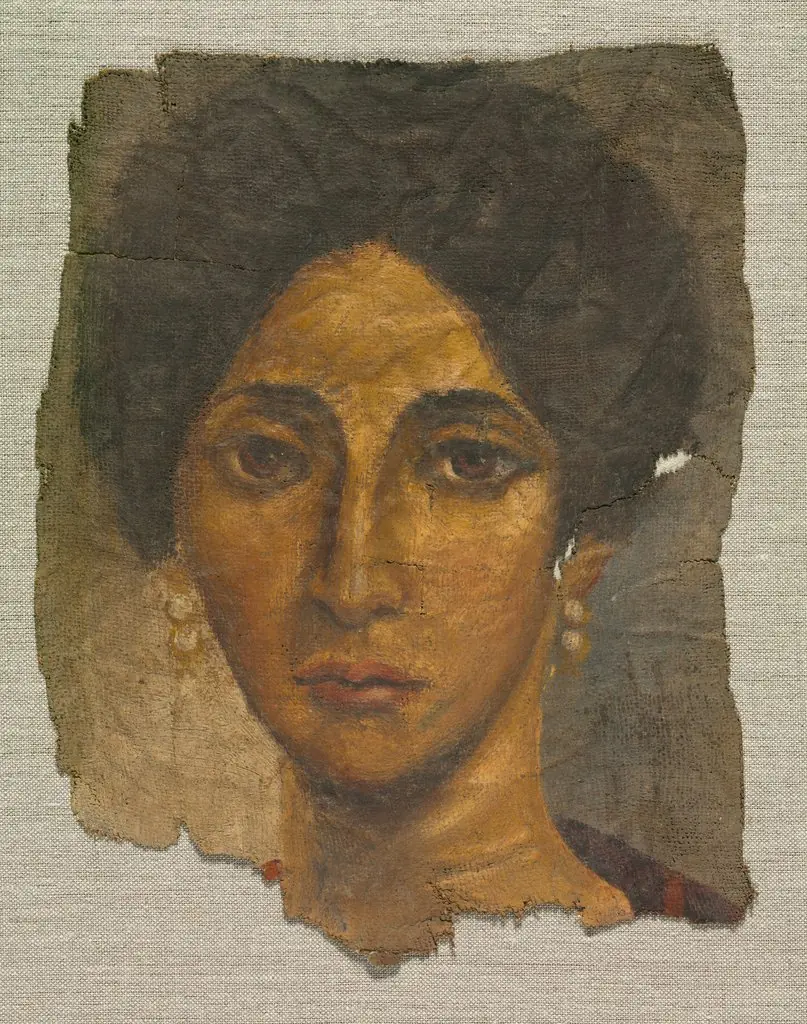
Funerary Portrait of a Young Girl is an unspecified painting. It is held in the collection of the Cleveland Museum of Art. The work is a painted funerary portrait depicting a youthful figure with a serene expression.
About this work
Overview
Simple adornments include a necklace and earrings, and the garment is unadorned except for gold‑colored dots and linear motifs on the shoulder.
The work is a painted funerary portrait depicting a youthful figure with a serene expression. A leafy wreath crowns the head, while the hair is arranged in two braids. Simple adornments include a necklace and earrings, and the garment is unadorned except for gold‑colored dots and linear motifs on the shoulder. The surface shows age‑related fading and cracking, yet the principal details remain legible.
Subject & Meaning
The portrait serves as a commemorative image, intended to honor a deceased individual. The calm demeanor and modest attire suggest an emphasis on the inner virtue of the sitter rather than social status. The wreath of leaves, a traditional symbol of mortality and remembrance, reinforces the funerary purpose, while the restrained jewelry hints at personal identity without ostentation.
Technique & Style
Executed in tempera or early oil on a prepared panel, the painting employs a limited palette that has darkened over time. Gold‑toned dots and linear embroidery motifs are rendered with fine brushwork, creating a subtle texture on the shoulder area. The artist’s handling of light produces a gentle modeling of the face, allowing the serene expression to dominate despite the work’s aged condition.
History & Provenance
The portrait originates from a period when posthumous likenesses were commonly commissioned for private remembrance. Although the exact date and creator are not recorded, the stylistic traits align with late antiquity funerary portraiture. The piece entered the Cleveland Museum of Art’s collection through acquisition in the early twentieth century, where it has been conserved and displayed as part of the museum’s ancient art holdings.
Context
Funerary portraits of this type were typically produced for families wishing to preserve the memory of a young relative. The modest dress and simple jewelry reflect cultural norms that valued modesty and piety in commemorative imagery. Such works were often placed in tombs or memorial chapels, serving both as a visual tribute and as a focal point for mourning rituals.
Artist & collection