Artwork
Salome with the Head of Saint John the Baptist
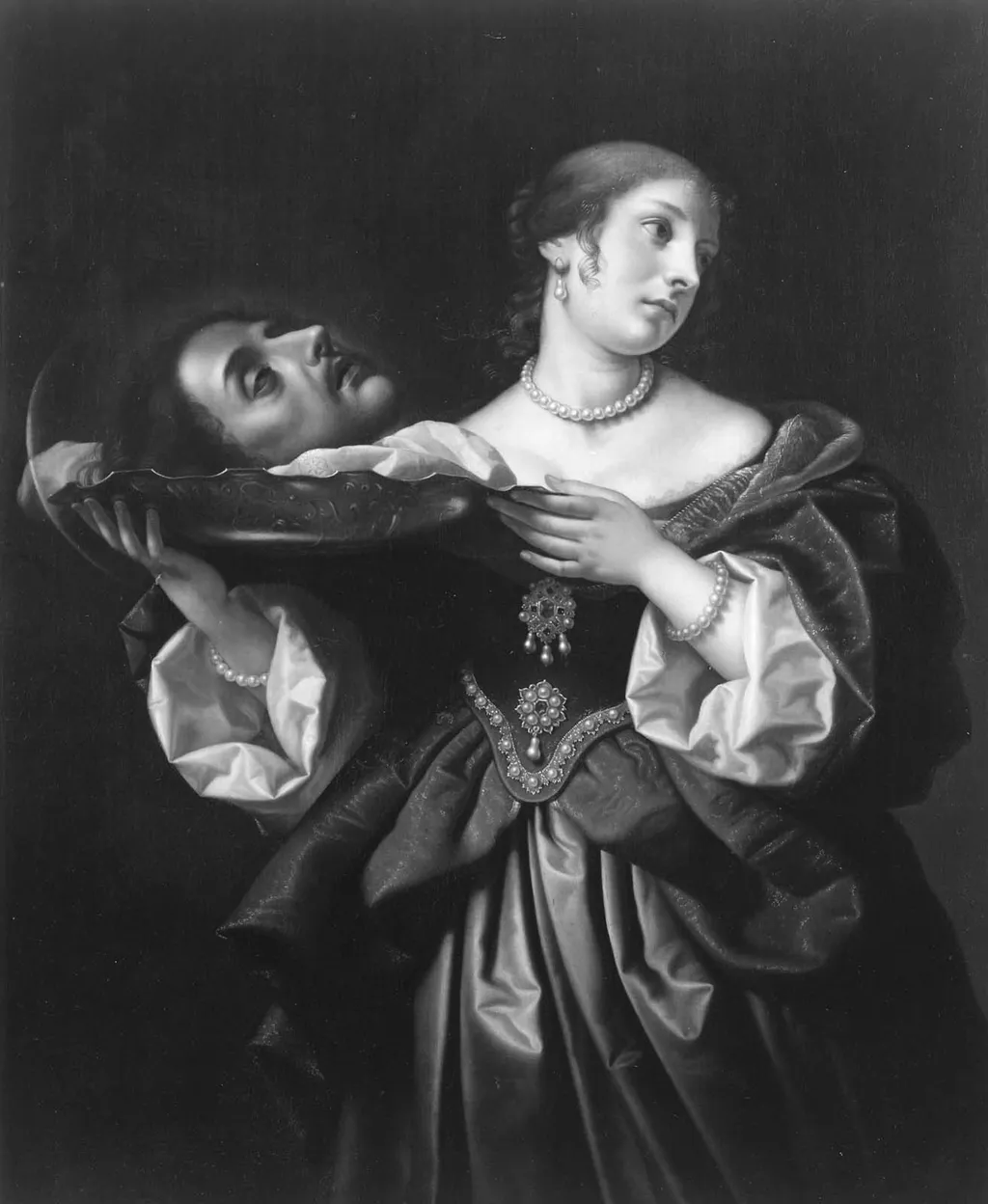
Salome with the Head of Saint John the Baptist is an oil painting. It dates from 1750 and is held in the collection of the Museum of Fine Arts Boston. The oil painting depicts a woman dressed in elaborate attire, clutching a wrapped bundle that partially reveals a concealed face.
About this work
Overview
The oil painting depicts a woman dressed in elaborate attire, clutching a wrapped bundle that partially reveals a concealed face. She is adorned with a pearl necklace and a prominent brooch, while dark drapery falls around her shoulders. The composition centers on the tension between the figure’s poised elegance and the ominous suggestion of the hidden head within the bundle.
Subject & Meaning
The scene references the biblical narrative of Salome presenting the severed head of John the Baptist. The woman's regal clothing and the partially exposed head convey the moment of triumph and horror intertwined in the story, inviting contemplation of power, martyrdom, and the moral complexities surrounding the act of beheading.
Technique & Style
The artist employs chiaroscuro, contrasting deep shadows with illuminated surfaces to model the sumptuous fabrics and the gleam of jewelry. This handling of light creates a three‑dimensional effect, emphasizing texture in the velvet drapery and the smoothness of the pearl necklace, while the blurred visage within the bundle is rendered with softer edges to suggest distance and mystery.
History & Provenance
Created in oil on canvas, the work belongs to a tradition of Baroque‑inspired biblical subjects that circulated among European collectors.
Created in oil on canvas, the work belongs to a tradition of Baroque‑inspired biblical subjects that circulated among European collectors. Though specific ownership records are limited, the painting has been documented in several private collections before entering its current institutional setting, where it continues to be studied for its compositional treatment of a well‑known religious episode.
Artist & collection