Artwork
Rejection of Hagar
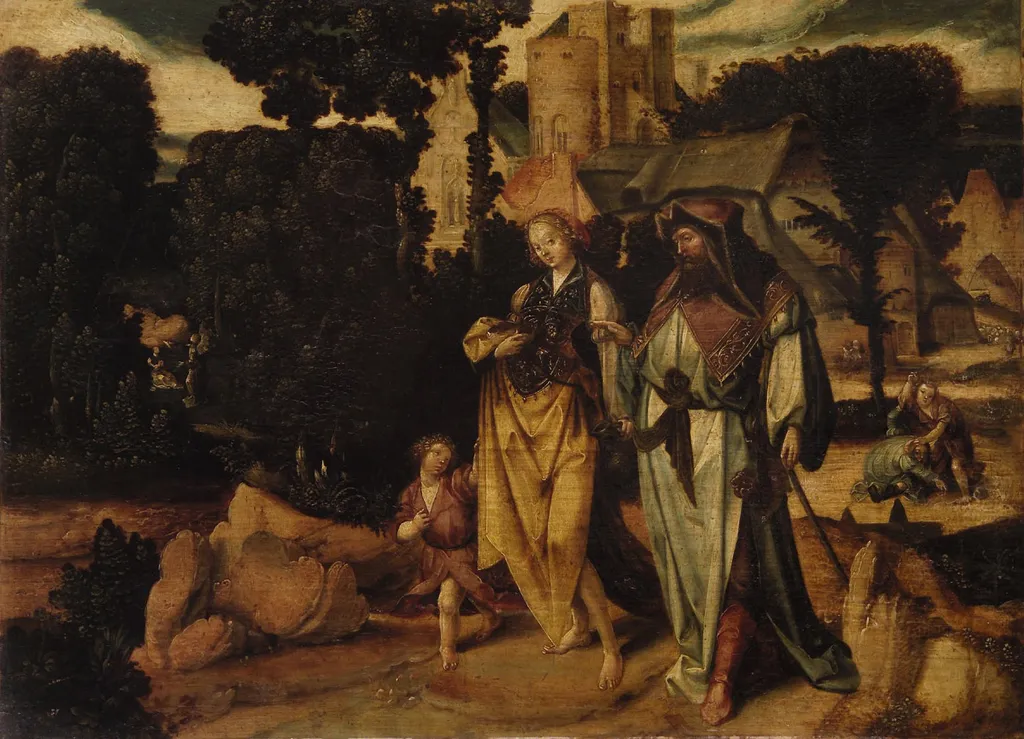
Rejection of Hagar is an oil painting. It dates from 1520 and is held in the collection of the Kunsthistorisches Museum.
About this work
Overview
The oil painting titled Rejection of Hagar portrays a quiet, contemplative moment drawn from the biblical narrative of Hagar and Ishmael. Central to the composition are a woman and a man walking together, the woman cradling a small child. The scene unfolds against a backdrop of trees and modest structures that suggest a rural or village environment.
Subject & Meaning
The work references the episode in which Hagar, the Egyptian maidservant of Abraham, is expelled with her son Ishmael. By presenting the figures in a still, reflective pose, the artist emphasizes themes of exile, maternal care, and the solemnity of departure, inviting viewers to consider the emotional weight of the biblical episode.
Technique & Style
The painter employs chiaroscuro to model the figures, creating a contrast between illuminated forms and shadowed surroundings. A glazing method adds layers of translucent color, enriching the surface texture and deepening spatial recession. The careful handling of light and color directs attention to the central trio while maintaining atmospheric depth.
Context
Executed in oil, the composition reflects a 19th‑century interest in biblical subjects rendered with academic realism. The inclusion of period costume— a long‑robed man with hat and a woman in a yellow dress and headscarf— situates the narrative within a historically imagined setting, aligning with contemporary approaches to religious storytelling in art.
Artist & collection
