Artwork
Ecce homo
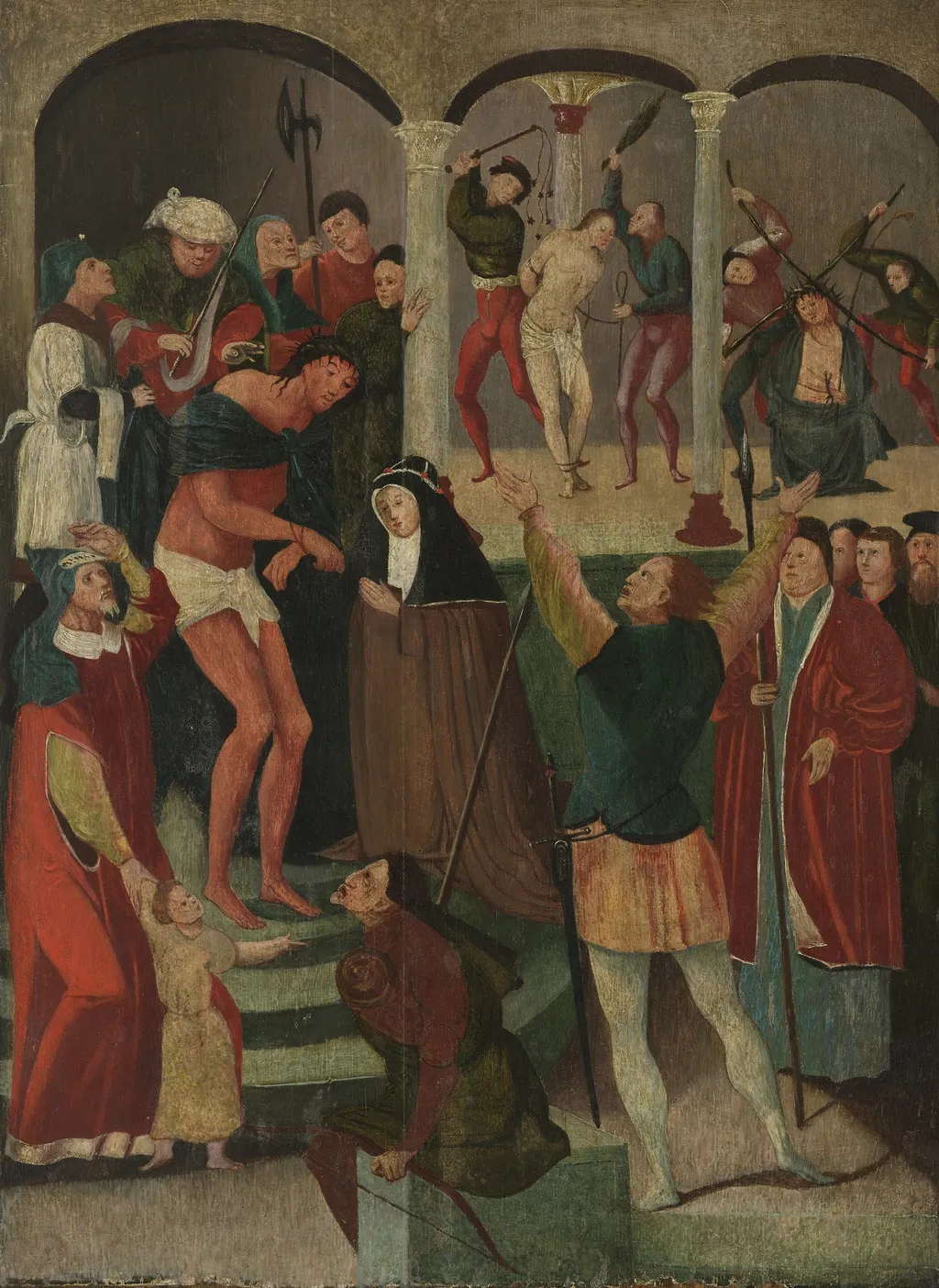
Ecce homo is an oil painting. It dates from 1520 and is held in the collection of the Rijksmuseum.
About this work
Overview
The oil painting titled “Ecce homo” portrays a nude male figure bound at the wrists, his waist wrapped only in a white cloth. He stands amid a hostile crowd in an open courtyard, with spears, swords and other weapons brandished by the surrounding figures. The composition conveys a moment of tension and impending violence.
Subject & Meaning
The work illustrates the biblical “Ecce Homo” episode, in which a captive is presented before a hostile audience. By emphasizing the captive’s vulnerability and the aggressors’ readiness to strike, the painting underscores themes of suffering, humiliation and the stark contrast between innocence and brutality.
Technique & Style
The artist employs strong chiaroscuro, using dramatic light and shadow to model the figures and heighten the scene’s emotional intensity. Thick impasto layers give texture to the clothing, weapons and architectural background, adding a tactile quality that enhances the sense of immediacy.
History & Provenance
Created in oil on canvas, the painting’s date and author are not specified in the provided information. Its subject aligns with a long tradition of Christian art that revisits the “Ecce Homo” narrative, a motif popular from the medieval period through the Baroque.
Context
Set in a courtyard with visible structures, the scene reflects a public setting often associated with the presentation of a condemned figure before a crowd. The inclusion of spears and swords situates the work within a martial or punitive context, echoing historical practices of public spectacle.
Artist & collection
