Artwork
Scene in a Bedchamber
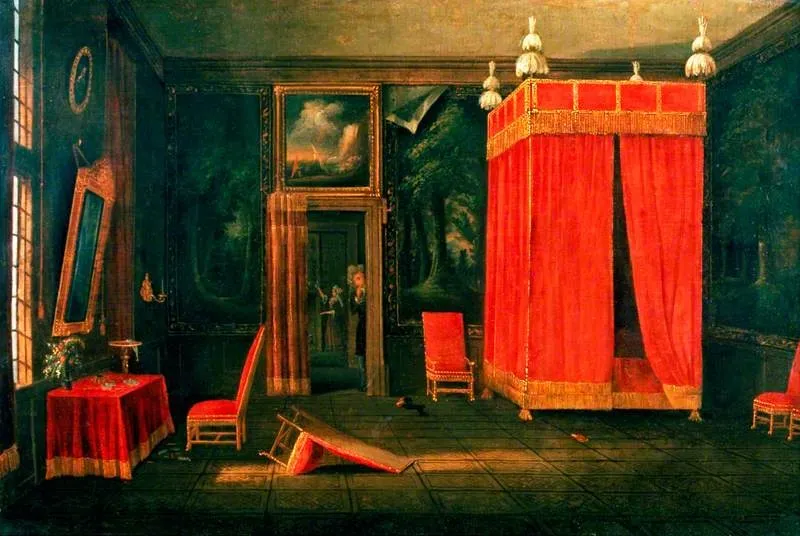
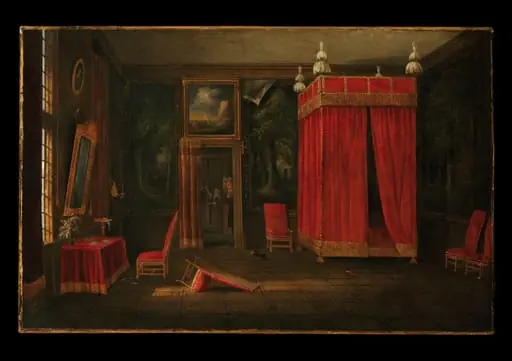
Scene in a Bedchamber is an oil painting by the Rococo painting artist Unknown. It dates from 1700 and is held in the collection of the Victoria and Albert Museum. This oil painting depicts an interior space of considerable opulence, centered on a large, curtained bed.
About this work
The painting's use of chiaroscuro, a technique that uses strong contrasts between light and dark, adds depth and drama to the scene.
This painting shows a lavish bedchamber with a large, red, curtained bed dominating the center. The room is richly decorated with dark green walls, gold accents, and a large painting above a doorway. A red table with a mirror above it is to the left, and a few chairs are scattered around the room.
The room appears to be in disarray, with the bed's curtains open and a chair knocked over. The overall atmosphere is one of opulence and luxury, with the rich colors and ornate decorations creating a sense of grandeur.
The painting's use of chiaroscuro, a technique that uses strong contrasts between light and dark, adds depth and drama to the scene. The Victoria and Albert Museum holds this painting, titled "Scene in a Bedchamber," created by an unknown artist in 1700.
Overview
This oil painting depicts an interior space of considerable opulence, centered on a large, curtained bed. The room’s furnishings—dark green walls, gilded details, and a mirrored table—convey wealth, while the disordered state of the scene suggests recent activity or disruption. Strong contrasts of light and shadow enhance the spatial depth and emotional tension, drawing attention to the bed as both focal point and narrative anchor.
Subject & Meaning
The scene lacks identifiable figures, yet the overturned chair and open bed curtains imply a sudden departure or disturbance. The absence of people heightens the sense of absence or aftermath, transforming the chamber into a silent witness to private events. The luxury of the setting contrasts with its disarray, hinting at themes of transience or hidden turmoil beneath surface grandeur.
Technique & Style
The artist employs chiaroscuro to model forms and create volume, with light falling sharply across the bed’s crimson drapery and the ornate furniture. Brushwork is precise in rendering textures—velvet, gilding, polished wood—while the composition is deliberately asymmetrical, reinforcing the sense of unease. The palette is rich but restrained, emphasizing deep reds, greens, and golds against shadowed recesses.
History & Provenance
The painting resides in the collection of the Victoria and Albert Museum, acquired as part of its 19th-century decorative arts holdings. Its origins remain undocumented, though stylistic elements suggest it was produced in late 17th- or early 18th-century Europe, possibly in the Netherlands or France, where interior scenes of aristocratic life were commonly depicted.
Context
During the period of its creation, domestic interiors in art often served as metaphors for social status or moral states. This work aligns with a tradition of genre scenes that portrayed private spaces with psychological nuance, where clutter and lighting could signal emotional or narrative shifts, even without human presence.
Legacy
Though not widely exhibited, the painting contributes to scholarly understanding of how luxury interiors were rendered in early modern European art. Its emphasis on atmosphere over narrative influenced later realist and symbolist depictions of empty rooms, where environment alone conveys meaning.
Artist & collection

 Domestic Scene
 Giacomo and Cardinal Marco, investing Andrea, Abbot of San Zeno, with his Benefice
 The Nymph of Fontainebleau
 Portrait of a Woman
 Madonna and Child with Saints in the Enclosed Garden
 Venus and Minerva
 Family Group of Four on Sofa
 Wall painting from Room H of the Villa of P. Fannius Synistor at Boscoreale
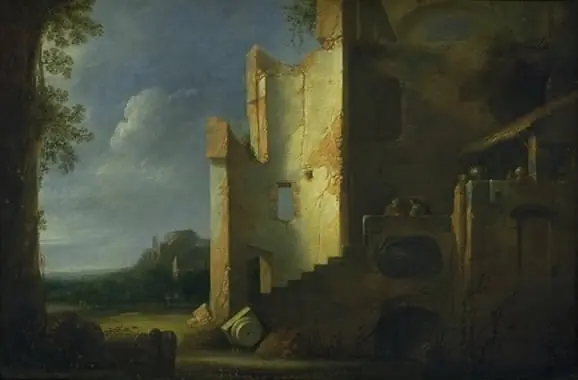 Landskab med ruiner
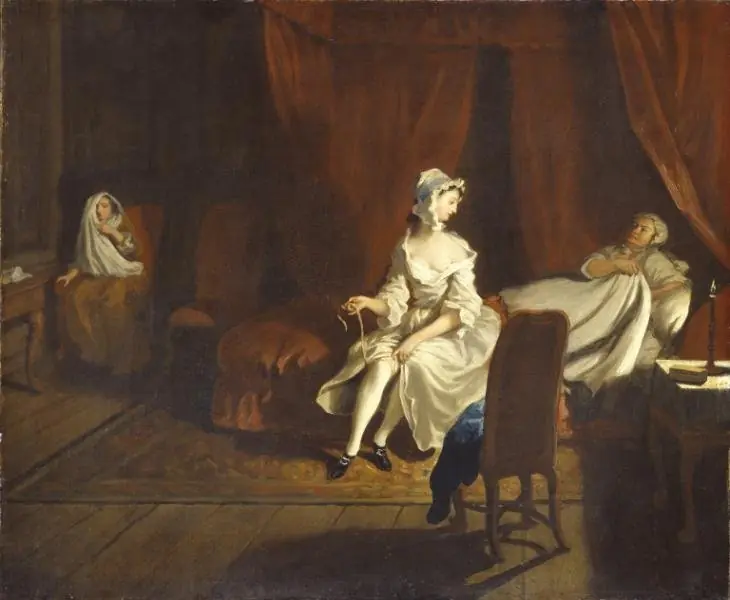 Untitled
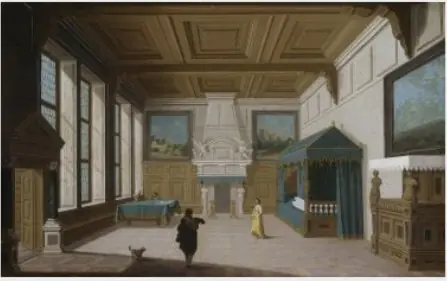 Interior with Figures
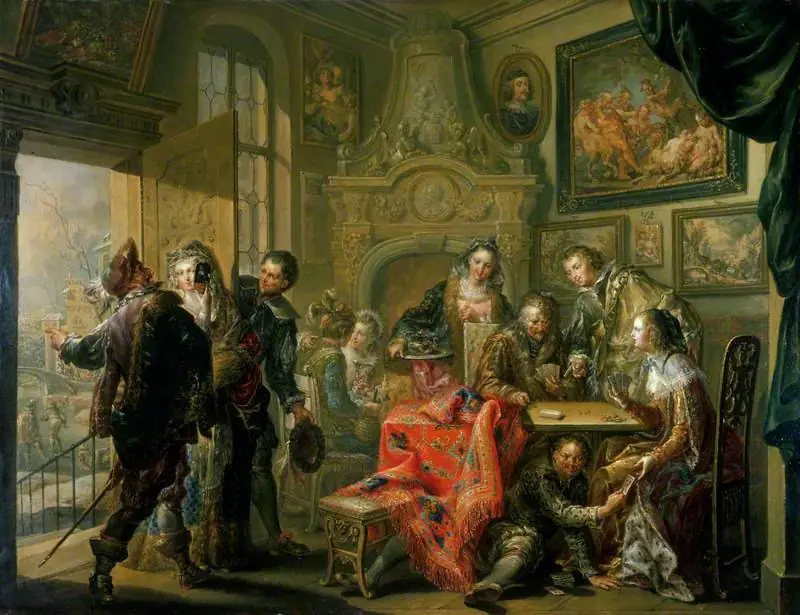 Winter
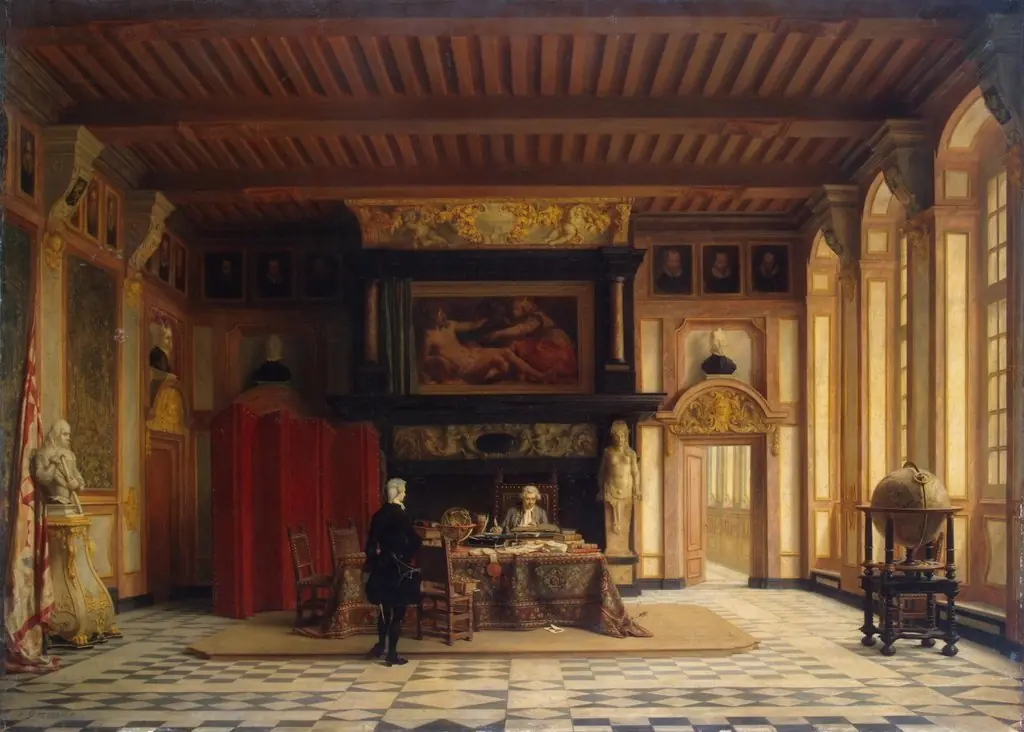 Hall of Estates at the City Council in Antwerp
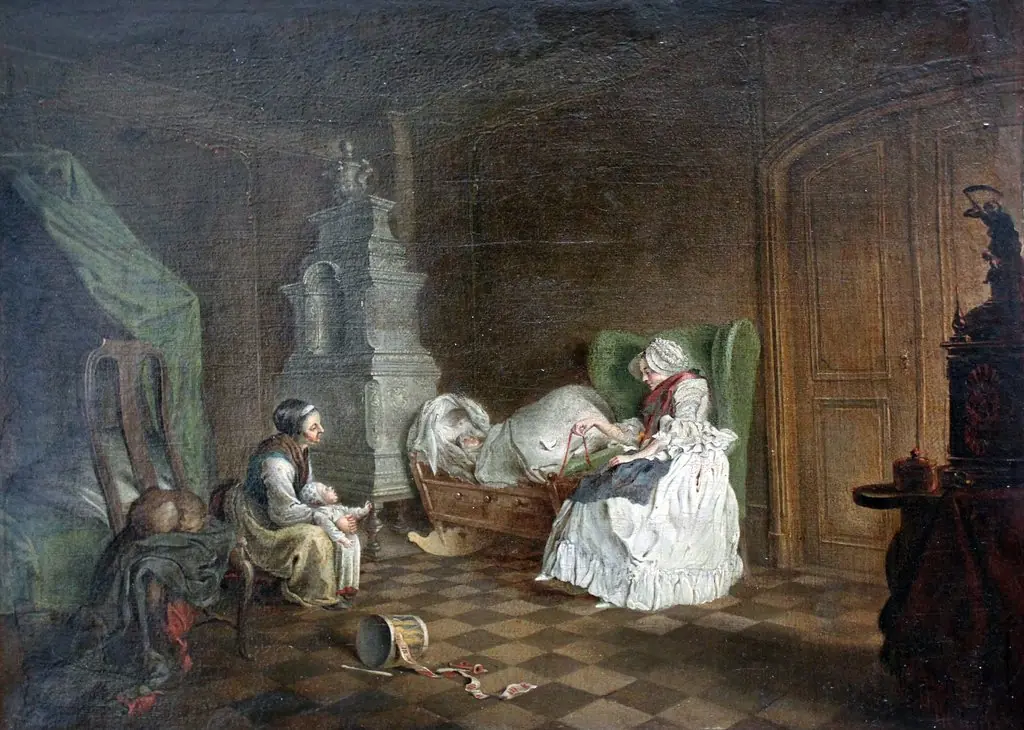 Family scene
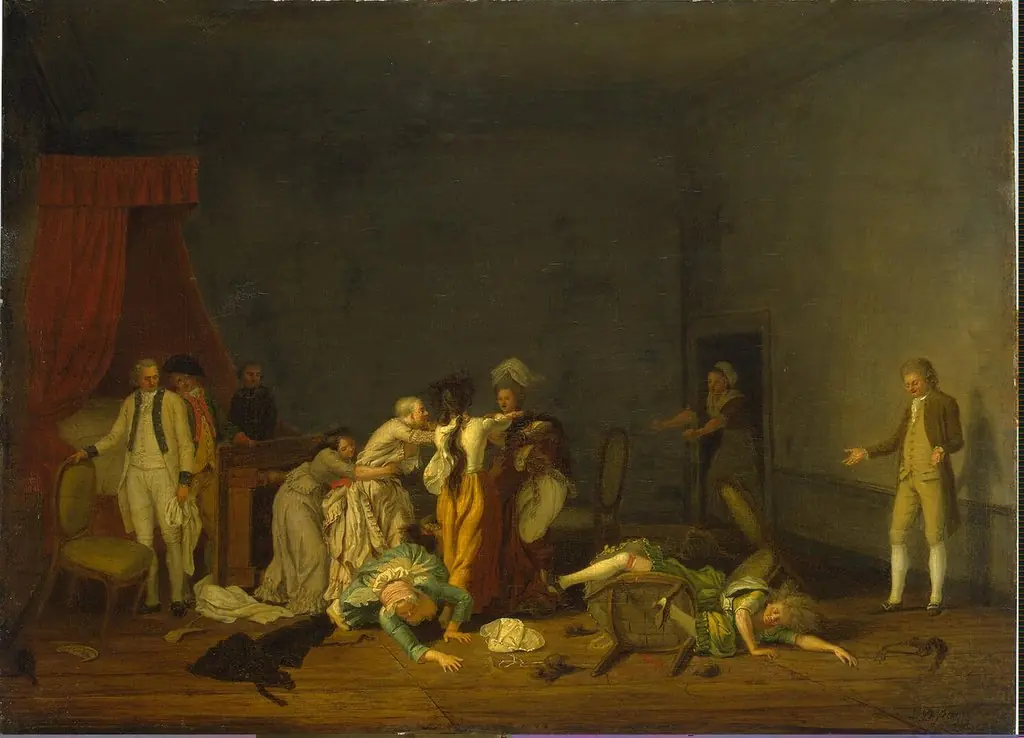 Women Fighting
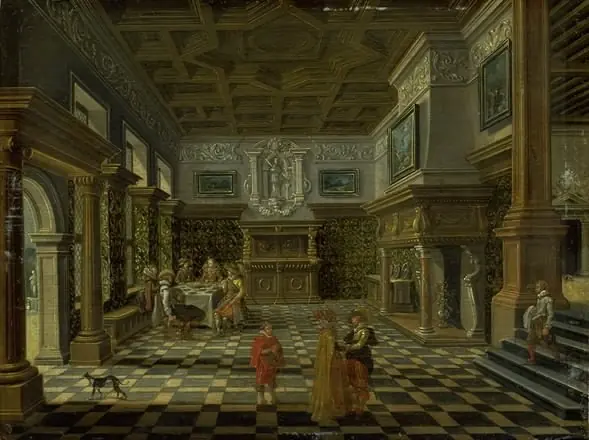 Sumptuous renaissance interior with a banquet
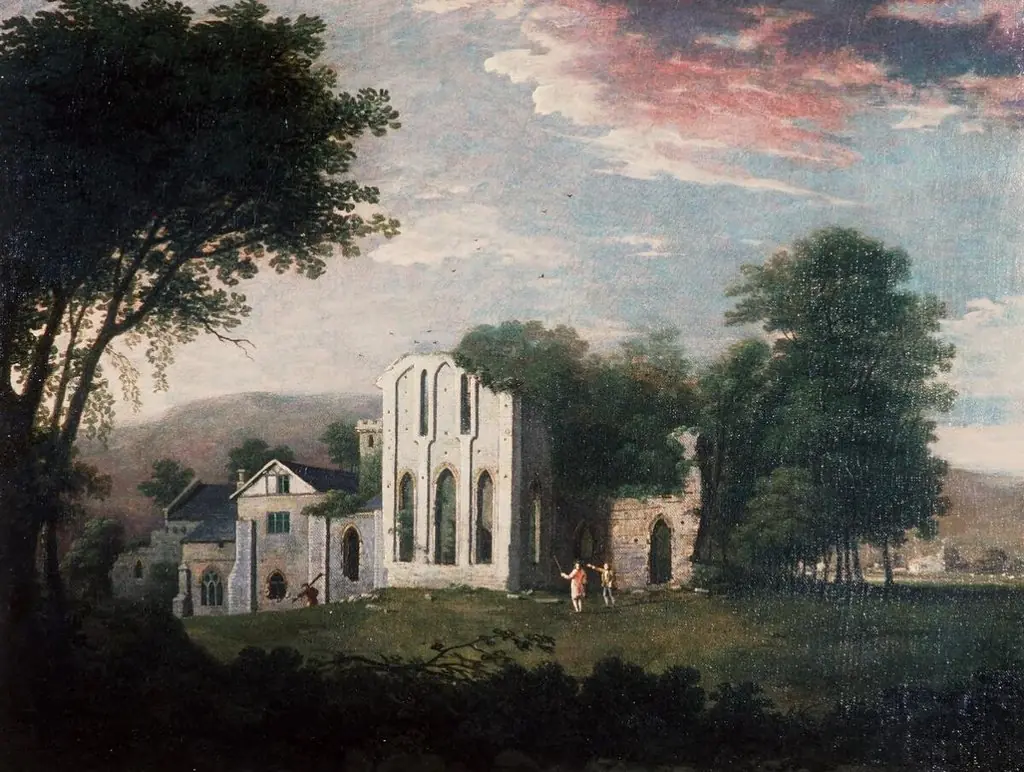 Valle Crucis Abbey
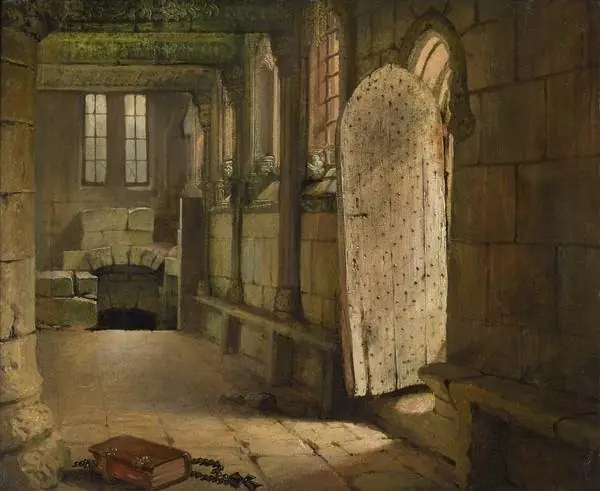 Rosslyn Chapel, South Aisle
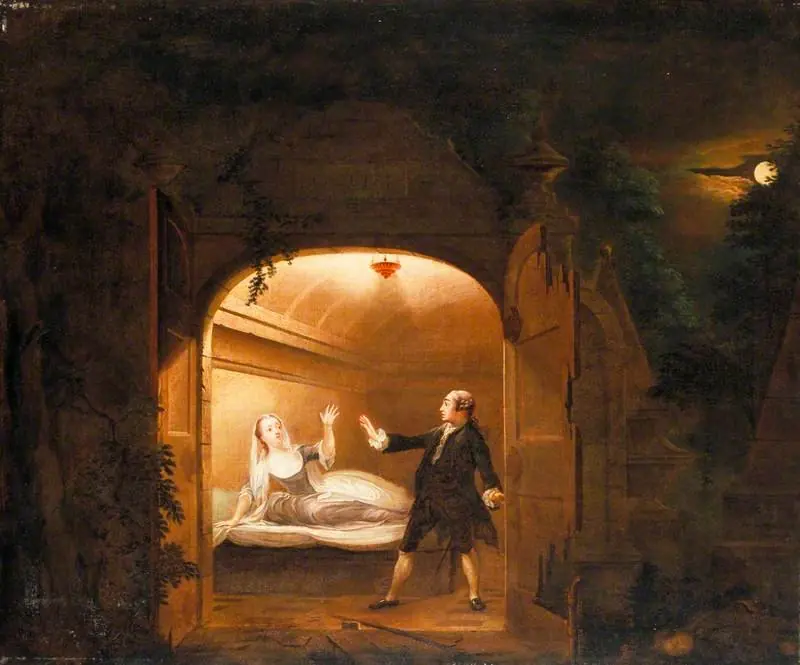 David Garrick (1717–1779), as Romeo, George Anne Bellamy (c.1731–1788), as Juliet, and Charles Blakes, as Tybalt, in 'Romeo and Juliet' by William Shakespeare, Adapted by David Garrick
 Scene in a Bedchamber