Artwork
The Holy Ignatius of Antioch
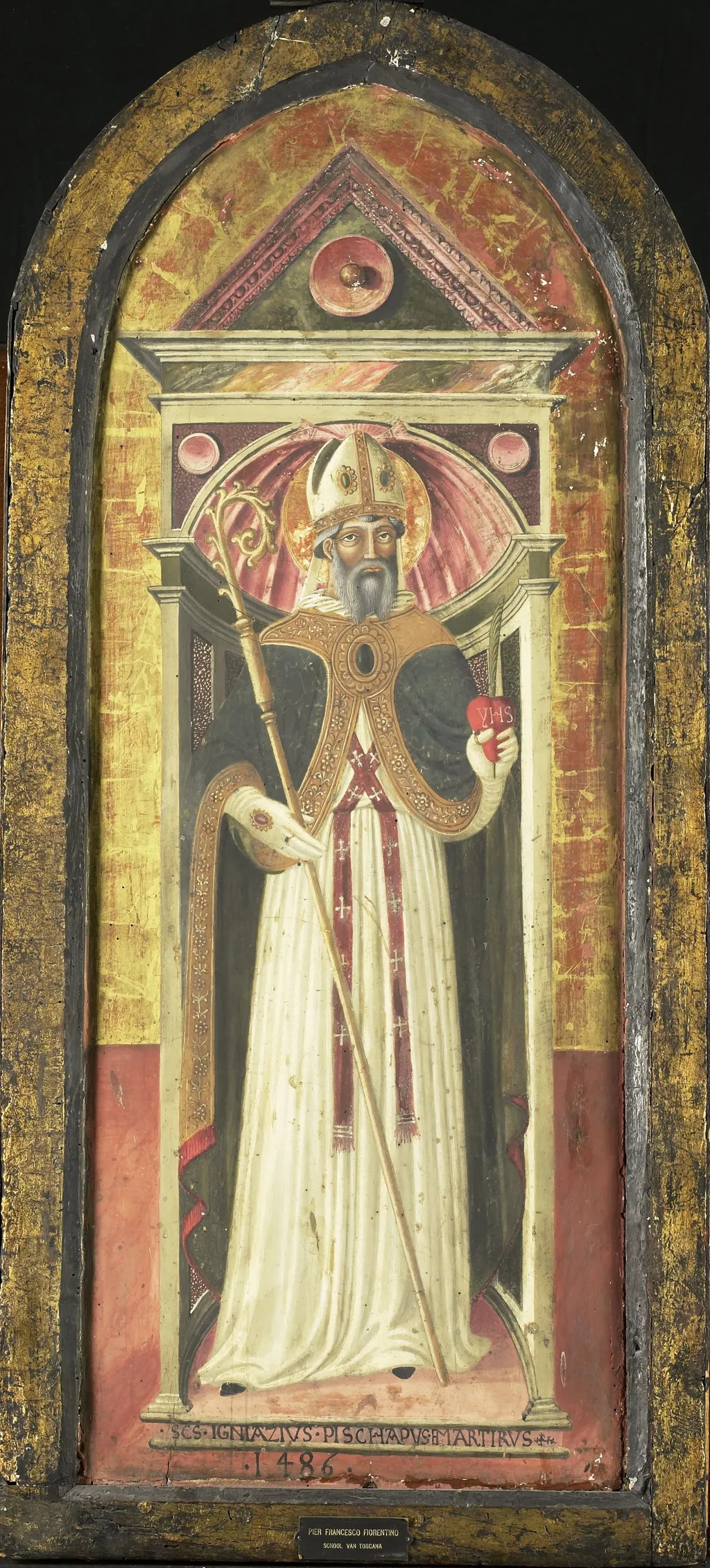
The Holy Ignatius of Antioch is an oil painting. It dates from 1494 and is held in the collection of the Rijksmuseum.
About this work
The painting depicts a man dressed in white robes with a red sash, holding a staff in his right hand and a red object in his left.
The painting depicts a man dressed in white robes with a red sash, holding a staff in his right hand and a red object in his left. He wears a tall, ornate hat and a large, circular necklace. The background features a red and yellow patterned wall with a triangular section above the man's head. A small, circular object is visible at the top of the painting, and a sign at the bottom reads "S. IGNATIUS PISCHIADVS ANTIOCHVS" with the number "1486" below it.
Overview
The work titled *The Holy Ignatius of Antioch* is an oil painting that portrays a figure in white robes with a red sash, holding a staff in the right hand and a red object in the left. The composition includes a richly patterned red‑and‑yellow wall, a triangular space above the head, and a small circular motif at the top. An inscription at the base identifies the subject and includes the date 1486.
Subject & Meaning
The central figure is identified as Saint Ignatius of Antioch, a third‑century bishop and martyr. He is shown in liturgical attire, complete with a tall, ornate hat and a prominent circular necklace, symbols of ecclesiastical authority. The red objects he carries may allude to his martyrdom and the blood of his sacrifice.
Technique & Style
Executed in oil on panel, the painting employs a limited palette dominated by whites, reds, and yellows. The patterned background creates a decorative surface that frames the saint, while the use of chiaroscuro gives the figure a modest three‑dimensional presence. Linear details on the hat and necklace reflect a meticulous, late‑medieval approach to rendering textiles and metalwork.
History & Provenance
An inscription at the bottom reads "S. IGNATIUS PISCHIADVS ANTIOCHVS" followed by the year 1486, indicating the work was completed in the late fifteenth century. No further ownership records are provided, suggesting the painting may have remained in a local ecclesiastical setting or private collection since its creation.
Context
Created during a period when devotional images of saints were commonly used for private prayer and liturgical instruction, the painting reflects the theological emphasis on martyrdom and saintly intercession prevalent in late medieval Christianity. Its decorative background aligns with contemporary trends in panel painting that favored ornamental interiors over naturalistic settings.
Artist & collection
