Artwork
John the Baptist preaching and the Baptism of Christ
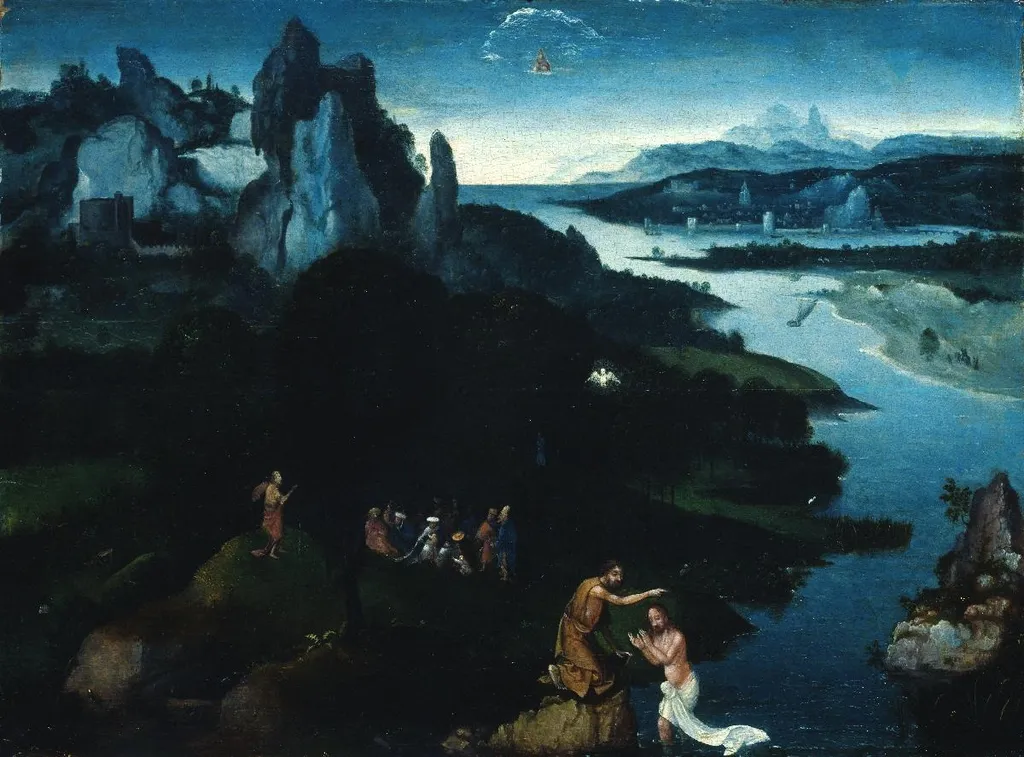
John the Baptist preaching and the Baptism of Christ is an oil painting by the High Renaissance artist Unknown. It dates from 1520 and is held in the collection of the Foundation E.G. Bührle Collection. The oil painting presents a dual narrative set within a single landscape.
About this work
Overview
The oil painting presents a dual narrative set within a single landscape. On the left, a figure in a vivid yellow robe addresses a gathered crowd from a rocky outcrop, while on the right, a man in white stands in water, placing his hand upon the head of a kneeling individual. The background features undulating hills, a river, and a distant settlement beneath a blue sky dotted with clouds.
Subject & Meaning
The left panel depicts John the Baptist delivering his sermon, emphasizing his role as a prophetic voice to the masses. The right panel illustrates the baptism of Christ, with the baptizer’s hand symbolizing the imparting of spiritual authority. Together, the two scenes convey the continuity between John’s call for repentance and the initiation of Jesus’s public ministry.
Technique & Style
The artist employs a chiaroscuro-inspired handling of light and shadow, creating pronounced contrasts that model the figures and give the landscape a palpable depth. A palette ranging from the bright yellow of the preacher’s garment to cool blues and greens defines the natural environment, while subtle gradations of tone suggest atmospheric perspective across the hills and river.
History & Provenance
Executed in oil on canvas, the work reflects the compositional conventions of religious narrative painting popular in the Baroque period. Although specific details of its commission and ownership are not recorded, the piece aligns with the devotional artworks produced for churches or private patrons seeking visual representations of key New Testament events.
Context
The juxtaposition of John’s preaching with Christ’s baptism mirrors theological themes of preparation and fulfillment prevalent in Counter‑Reformation art.
The juxtaposition of John’s preaching with Christ’s baptism mirrors theological themes of preparation and fulfillment prevalent in Counter‑Reformation art. By situating both episodes within a single, cohesive setting, the painting underscores the doctrinal link between the prophetic precursor and the inaugurated Messiah, a motif frequently employed to reinforce Catholic teachings on sacraments and salvation.
Artist & collection

 Domestic Scene
 Giacomo and Cardinal Marco, investing Andrea, Abbot of San Zeno, with his Benefice
 The Nymph of Fontainebleau
 Portrait of a Woman
 Madonna and Child with Saints in the Enclosed Garden
 Venus and Minerva
 Family Group of Four on Sofa
 Wall painting from Room H of the Villa of P. Fannius Synistor at Boscoreale
 The Baptism of Christ
 Landscape with the Penitent Saint Jerome
 Landscape with Saint John the Baptist Preaching
 Landscape with the Rest on the Flight into Egypt
 Landscape with the Penitent Saint Jerome
 Landscape with Orpheus
 Landscape with St Jerome
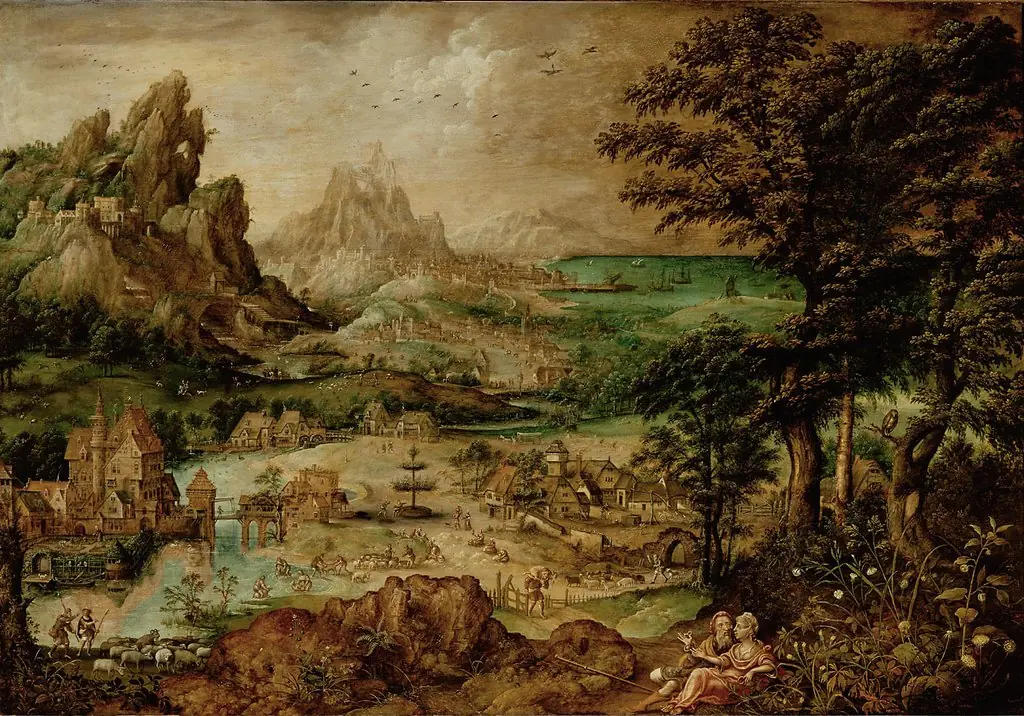 Landscape with Judah and Thamar
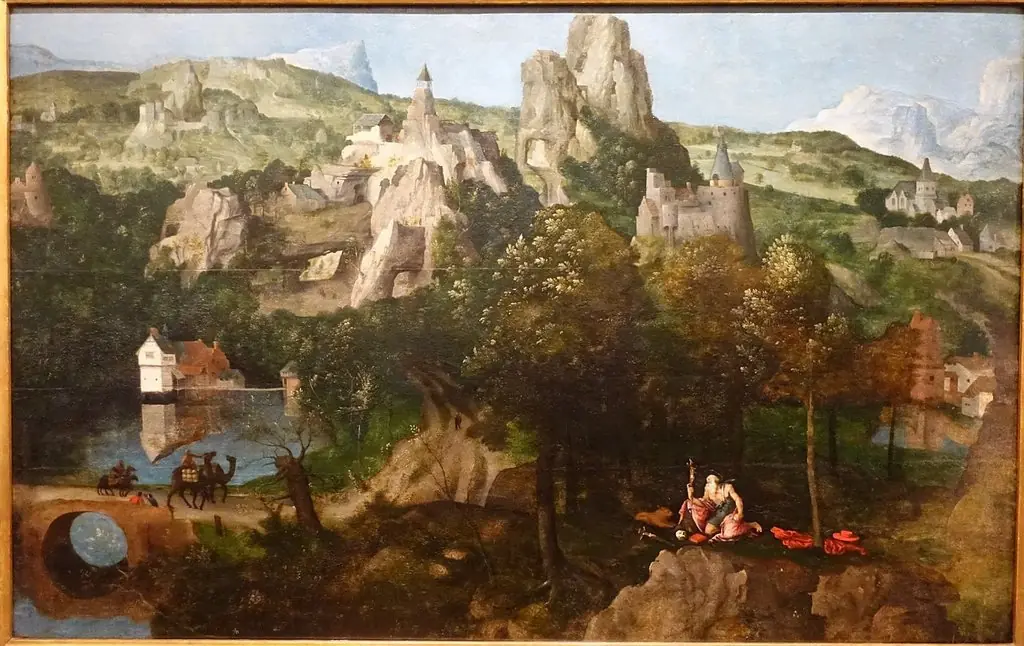 São Jerónimo em Adoração
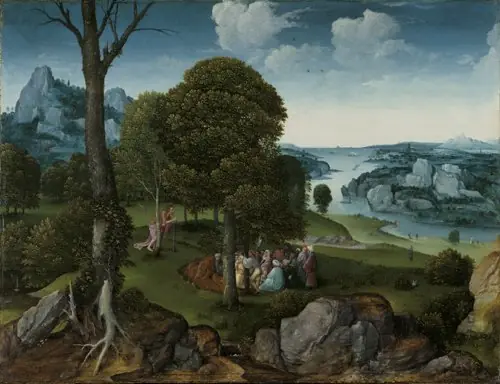 Landscape with St John the Baptist Preaching
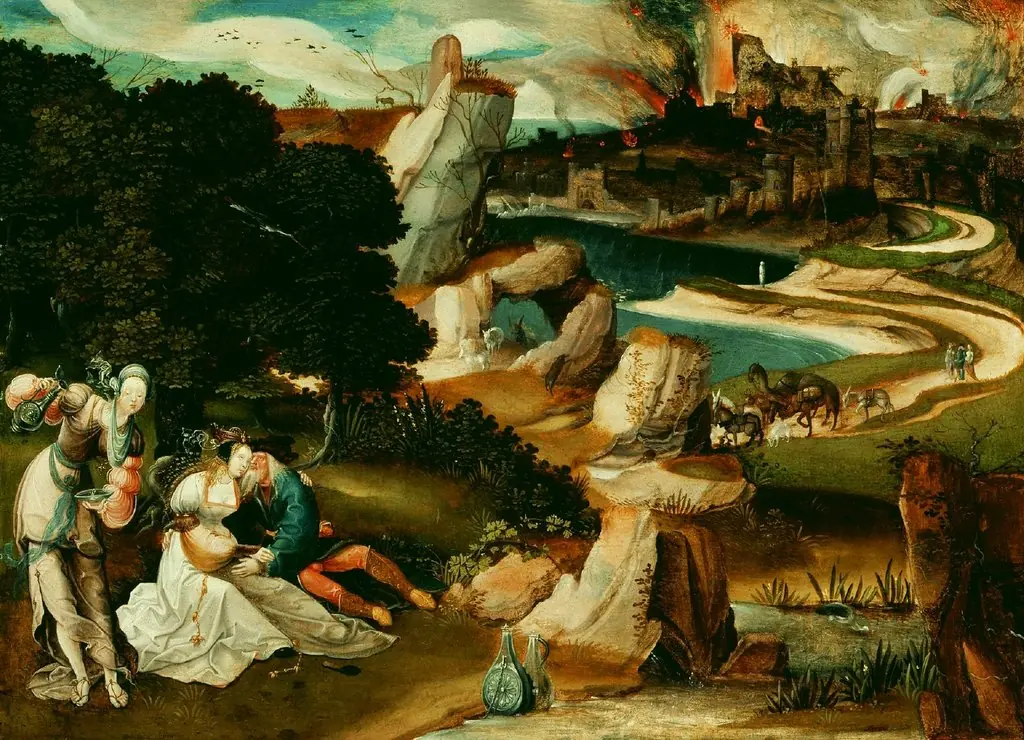 Lot and his daughters
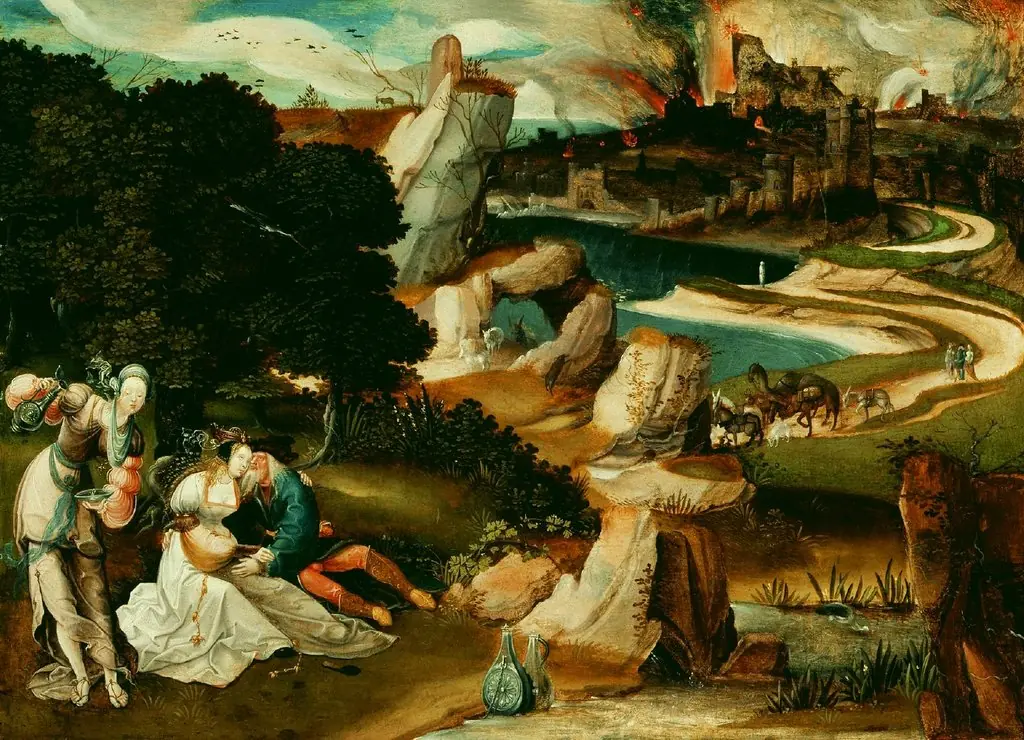 Lot and his daughters