Artwork
Diagrams of the Universe: The Two-and-a-Half Continents, the Universe in the Shape of a Person, and the Seven Levels of Hell
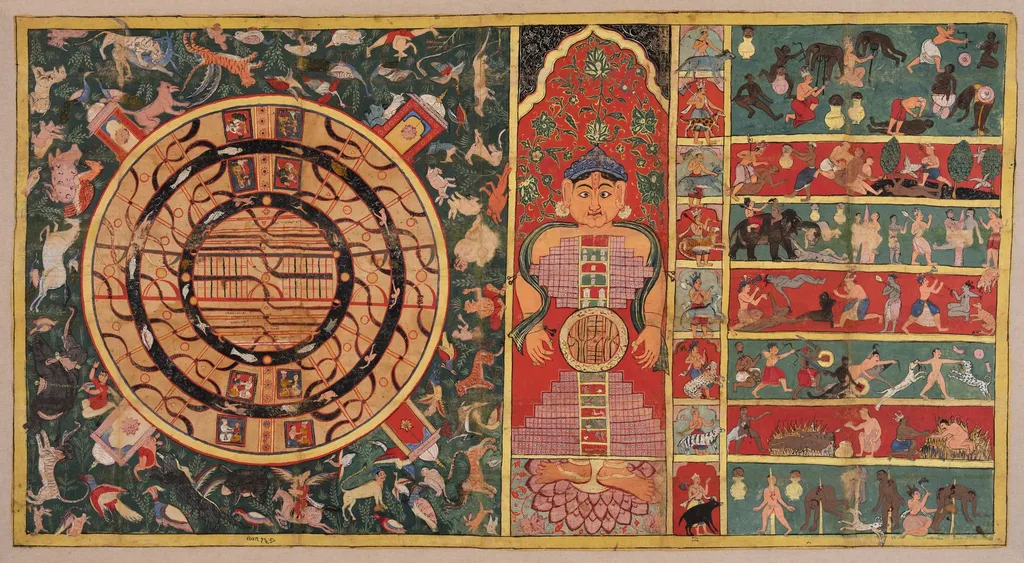
Diagrams of the Universe: The Two-and-a-Half Continents, the Universe in the Shape of a Person, and the Seven Levels of Hell is an unspecified painting. It dates from 1613 and is held in the collection of the Cleveland Museum of Art.
About this work
Overview
A large circular motif on the left depicts a building surrounded by tiny figures and animals, while a towering human figure on the right grasps a grid‑like map.
The work, titled *Diagrams of the Universe: The Two-and-a-Half Continents, the Universe in the Shape of a Person, and the Seven Levels of Hell*, is a densely composed painting that fills its surface with a multitude of miniature scenes. A large circular motif on the left depicts a building surrounded by tiny figures and animals, while a towering human figure on the right grasps a grid‑like map. Beneath this figure, rows of small panels illustrate varied landscapes in red and green, populated by numerous characters engaged in activities ranging from flight to combat.
Subject & Meaning
The composition appears to function as a visual encyclopedia of early cosmological ideas. The circular building may symbolize a central city or sacred space, encircled by the everyday world. The human figure holding a grid suggests an anthropomorphic representation of the world, echoing medieval notions that the Earth was shaped like a person. The lower panels, labeled as scenes from “Hell,” convey a hierarchical vision of the afterlife, aligning with contemporary theological maps of the seven levels of damnation.
Technique & Style
Executed in a bright palette, the painting employs meticulous, miniature rendering to pack narrative detail into each compartment. The artist uses a flat, diagrammatic style, favoring clear outlines and symbolic coloration over naturalistic modeling. Repetitive motifs—tiny flying figures, dancing forms, and fantastical beasts—create a rhythmic visual texture that guides the viewer’s eye across the complex surface.
History & Provenance
The piece is part of the collection of the Cleveland Museum of Art, where it is displayed alongside other works that explore similar cartographic and allegorical themes. Its precise date of creation and original creator are not documented in the provided information, but the subject matter aligns with early modern European traditions of cosmographic illustration.
Context
During the period when such diagrams were popular, scholars attempted to reconcile geographic knowledge with religious doctrine, often depicting the world as a microcosm of the human body. The inclusion of the “Seven Levels of Hell” reflects the era’s preoccupation with moral order and the visualization of spiritual realms, a practice common in medieval and Renaissance manuscript illumination.
Artist & collection
