Artwork
St Jerome and St Catherine of Alexandria
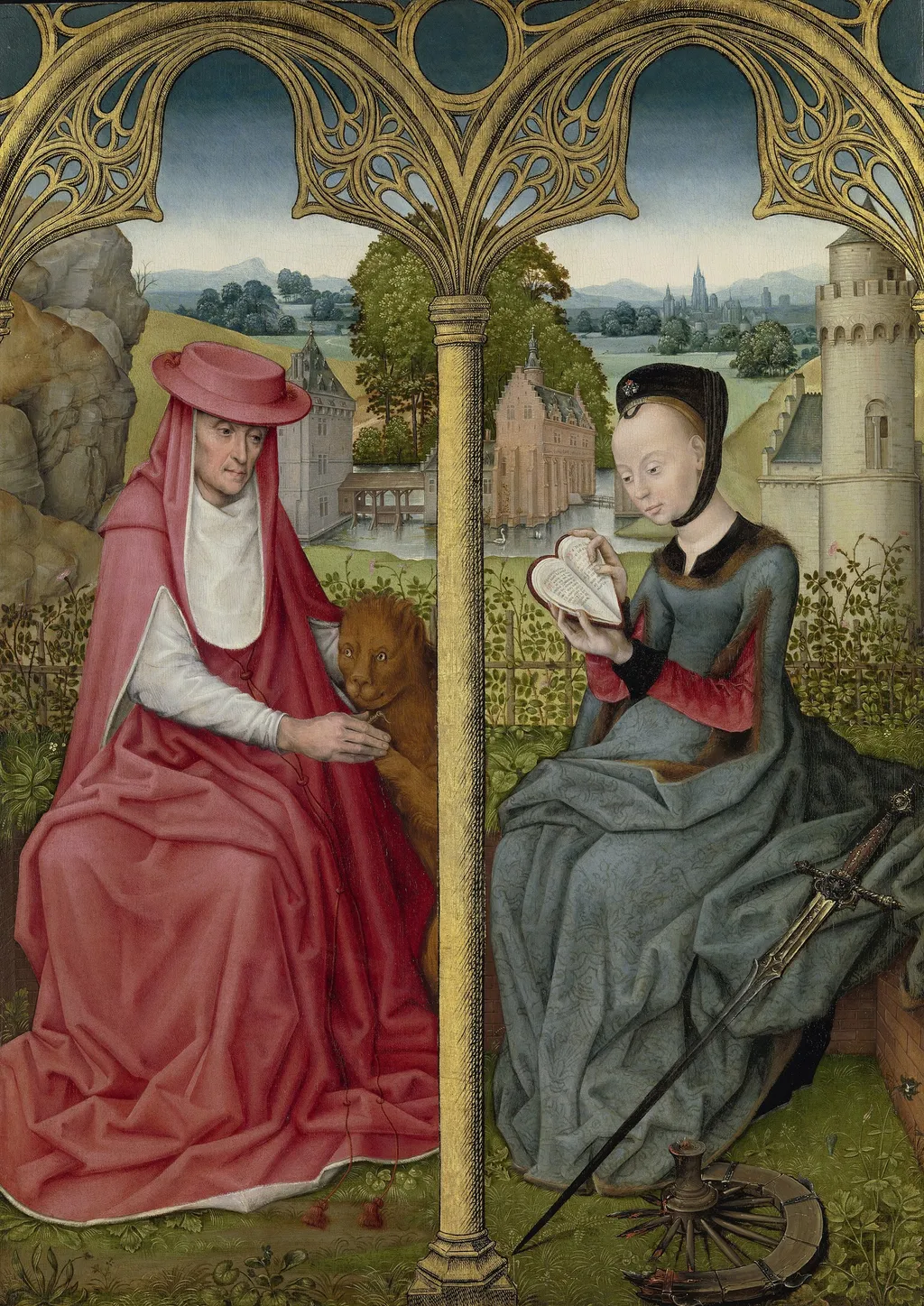
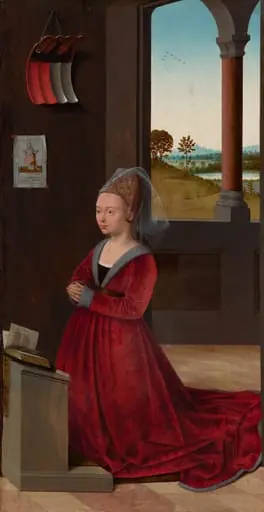
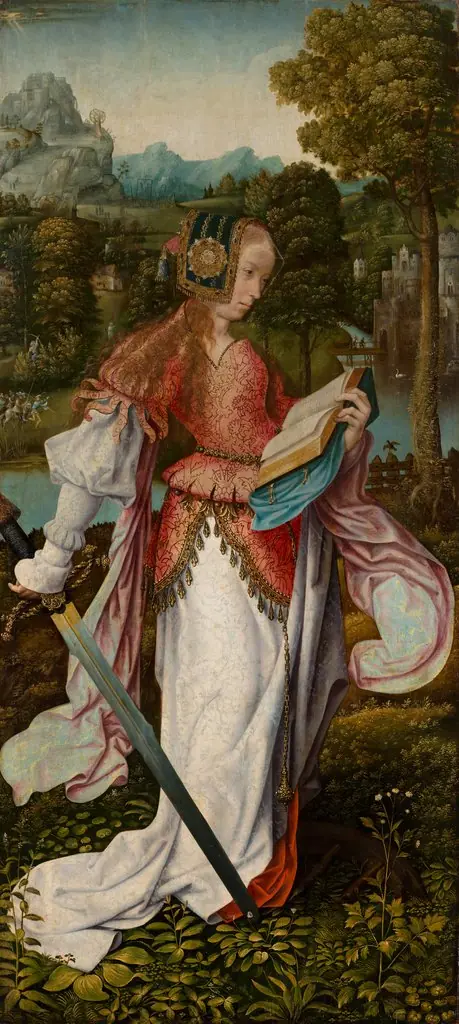
St Jerome and St Catherine of Alexandria is an oil painting. It dates from 1493 and is held in the collection of the Rijksmuseum. The work presents a diptych of Saint Jerome and Saint Catherine of Alexandria, each confined within an individual arched frame.
About this work
Overview
The work presents a diptych of Saint Jerome and Saint Catherine of Alexandria, each confined within an individual arched frame.
The work presents a diptych of Saint Jerome and Saint Catherine of Alexandria, each confined within an individual arched frame. Jerome, rendered in a red robe and hat, sits beside a subdued lion, clutching a staff, while Catherine kneels on a cushion in blue, a book in her hands and a sword at her side. Both panels share a background of castles, rivers and distant mountains, unified by gilded borders.
Subject & Meaning
Jerome is traditionally associated with a lion, referencing the legend of him taming the animal after removing a thorn from its paw; his contemplative pose underscores his scholarly reputation. Catherine, depicted with a sword and a book, alludes to her martyrdom for defending Christian doctrine and her learned status as a princess‑scholar. The juxtaposition highlights complementary virtues of erudition and steadfast faith.
Technique & Style
Executed in oil on canvas, the painting employs rich coloration and fine modeling to convey the textures of fabric, fur and landscape. Gold leaf outlines the arched frames, adding a decorative sheen typical of devotional diptychs. The background scenery is rendered with meticulous detail, integrating architectural elements and natural vistas to create depth and narrative context.
Context
The pairing of Jerome and Catherine reflects a common devotional practice of the late medieval to early Renaissance period, when saints with scholarly attributes were invoked together for intellectual and spiritual guidance. The inclusion of elaborate landscapes and gilded framing indicates a work intended for a private chapel or affluent patron seeking both aesthetic refinement and theological resonance.
Artist & collection