Artwork
Portraits of Two Lineage Masters of the Kagyu Order: Phagmo Drupa (1110–1170) and Tashipel (1142–1210)
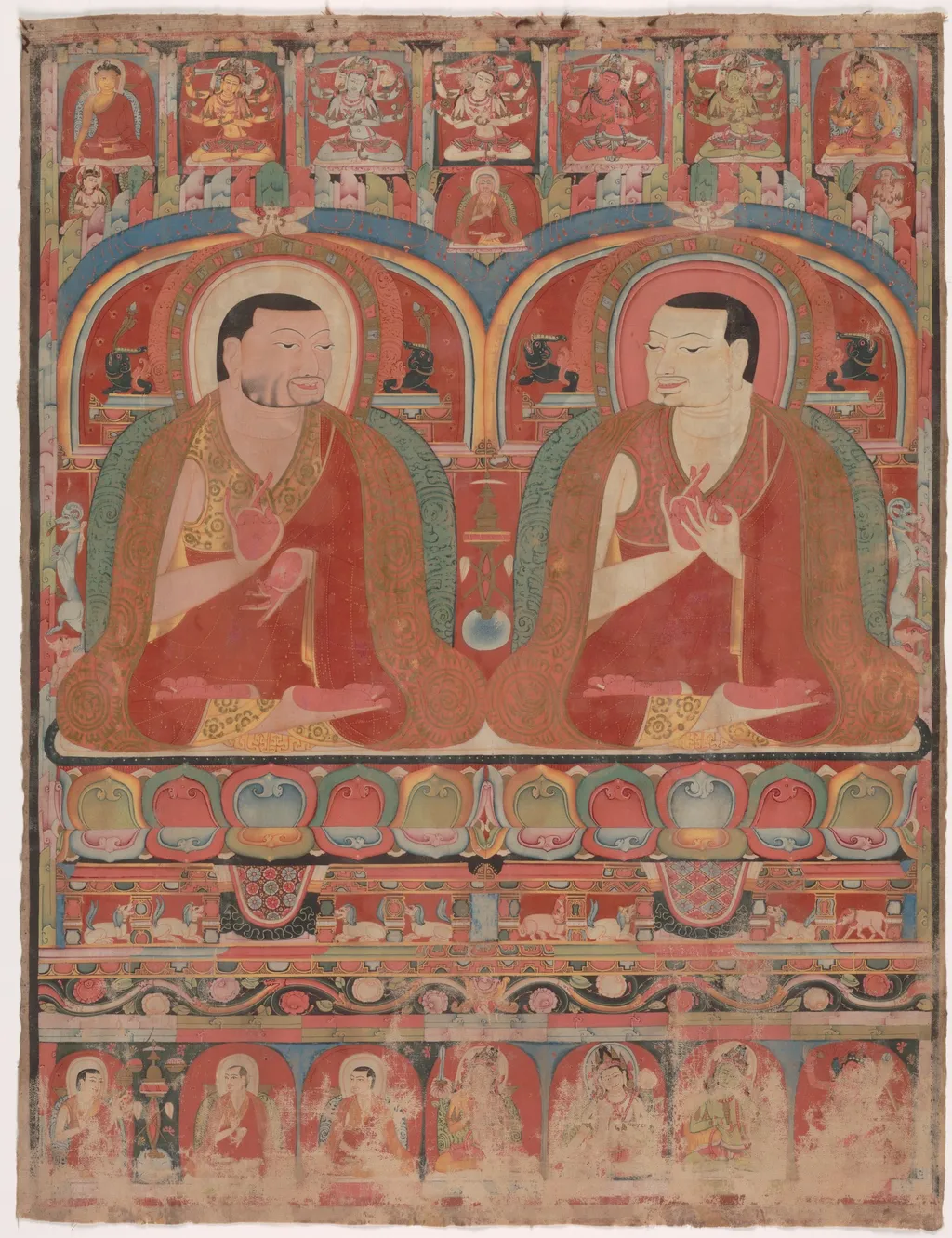
Portraits of Two Lineage Masters of the Kagyu Order: Phagmo Drupa (1110–1170) and Tashipel (1142–1210) is an unspecified painting. It dates from 1300 and is held in the collection of the Cleveland Museum of Art.
About this work
Overview
Their serene expressions and central positioning underscore their revered status within the Kagyu lineage.
The work, titled *Portraits of Two Lineage Masters of the Kagyu Order: Phagmo Drupa (1110–1170) and Tashipel (1142–1210)*, is a painted panel that places the two historic teachers side by side. Both figures wear red monastic robes trimmed in green, sit cross‑legged, and hold symbolic objects. Their serene expressions and central positioning underscore their revered status within the Kagyu lineage.
Subject & Meaning
Phagmo Drupa and Tashipel were pivotal figures in the transmission of Kagyu teachings during the 12th and early 13th centuries. By depicting them together, the artist emphasizes the continuity of doctrinal authority. The surrounding miniature scenes—smaller figures in similar robes within arched frames—function as a visual genealogy, linking the two masters to earlier and later disciples.
Technique & Style
The panel employs a bright red ground enriched with gold and blue ornamental motifs, a palette typical of Tibetan religious painting of the period. The figures are rendered with fine brushwork, their robes outlined in delicate line and highlighted with subtle shading. The lower border features a repetitive band of colorful patterns, echoing decorative borders found in contemporary thangka formats.
History & Provenance
Although the exact date of execution is uncertain, stylistic cues suggest an early modern creation intended as a commemorative object for the Kagyu tradition. The painting entered the collection of the Cleveland Museum of Art through a mid‑20th‑century acquisition, where it now contributes to the museum’s holdings of Asian religious art.
Context
The work reflects a broader Tibetan practice of honoring lineage holders through portraiture, often displayed in monastic settings. By situating the two masters within a hierarchical visual field, the painting reinforces the doctrinal legitimacy of the Kagyu school amid a landscape of competing Buddhist lineages.
Artist & collection
