Artwork
Tempelgang Mariae
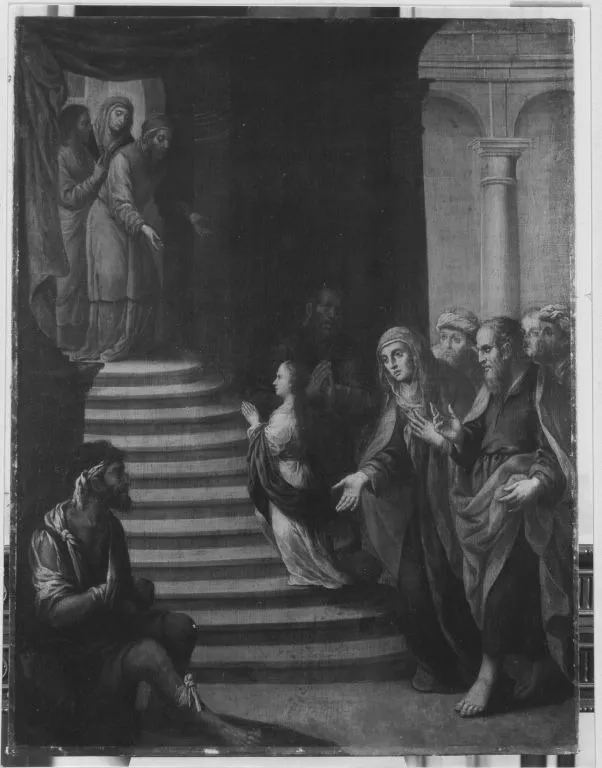
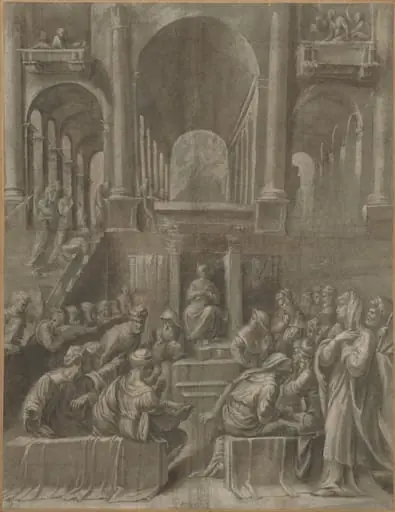
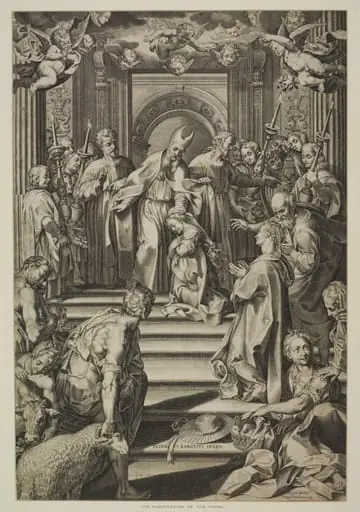
Tempelgang Mariae is an unspecified painting by the Rococo painting artist Unknown. It dates from 1698 and is held in the collection of the Bavarian State Painting Collections. This painting depicts a ceremonial moment in which a woman ascends a stone staircase, surrounded by figures in draped garments.
About this work
Overview
Subtle contrasts of light and shadow enhance the three-dimensionality of the figures and their surroundings, fostering a mood of solemn stillness.
This painting depicts a ceremonial moment in which a woman ascends a stone staircase, surrounded by figures in draped garments. The setting is an architectural interior with columns and arches, suggesting a sacred or institutional space. The composition centers on the woman’s outstretched hands, drawing attention to her gesture. Subtle contrasts of light and shadow enhance the three-dimensionality of the figures and their surroundings, fostering a mood of solemn stillness.
Subject & Meaning
The scene likely illustrates the Presentation of the Virgin Mary in the Temple, a traditional episode from apocryphal gospels. The woman at the center, identified as the young Mary, is being presented to religious authorities. The surrounding figures, dressed in ancient robes, appear as priests or temple attendants. Their attentive gazes and restrained postures convey reverence, emphasizing the spiritual significance of the ritual rather than its narrative drama.
Technique & Style
The artist employs chiaroscuro to model forms with quiet intensity, defining volume without dramatic contrasts. The figures are rendered with soft edges and muted tones, avoiding theatricality. Stone architecture is rendered with precise linear perspective, grounding the scene in a tangible space. The clothing folds are carefully observed, suggesting texture and weight, while the overall palette remains restrained, reinforcing the contemplative atmosphere.
History & Provenance
The painting’s origins are tied to late medieval or early Renaissance devotional art, likely created for private or ecclesiastical use. Its style aligns with regional workshops in Northern Europe or Italy, where religious narratives were commonly depicted in intimate settings. While its exact provenance remains undocumented, its preservation suggests it was valued within a religious context, possibly in a convent or chapel collection.
Context
During the period in which this work was made, depictions of Mary’s early life gained popularity as devotional subjects, especially in monastic communities. The Presentation in the Temple was one of several scenes illustrating her sanctity from childhood. Artists often chose interior settings to focus attention on spiritual symbolism rather than external grandeur, reflecting a broader trend toward introspective religious imagery.
Legacy
This painting contributes to a tradition of quiet, psychologically grounded religious scenes that prioritized contemplation over spectacle. Its restrained composition and emphasis on gesture over narrative detail influenced later devotional works that sought to evoke personal piety. Though not widely known today, it exemplifies how medieval and early Renaissance artists conveyed sacred moments through subtle visual cues and spatial harmony.
Artist & collection

 Domestic Scene
 Giacomo and Cardinal Marco, investing Andrea, Abbot of San Zeno, with his Benefice
 The Nymph of Fontainebleau
 Portrait of a Woman
 Madonna and Child with Saints in the Enclosed Garden
 Venus and Minerva
 Family Group of Four on Sofa
 Wall painting from Room H of the Villa of P. Fannius Synistor at Boscoreale
 Christus am Ölberg
 Untitled
 Presentation of the Virgin
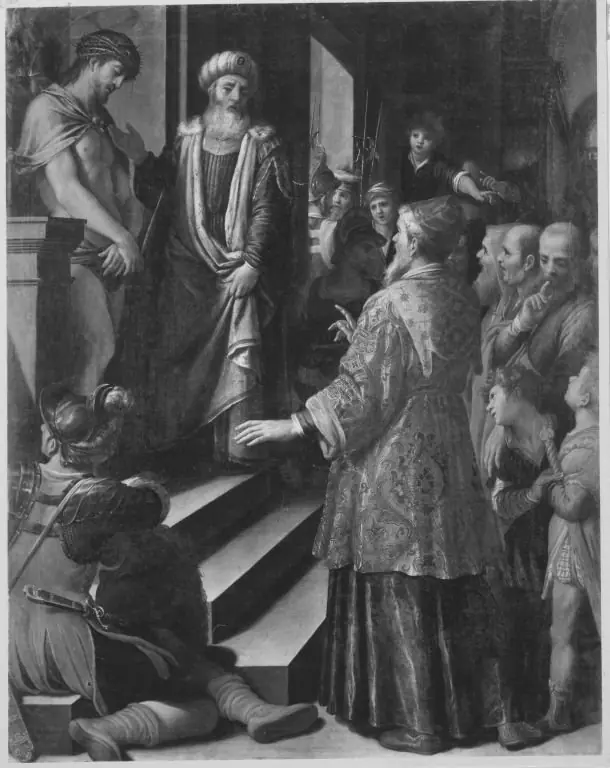 Ecce homo
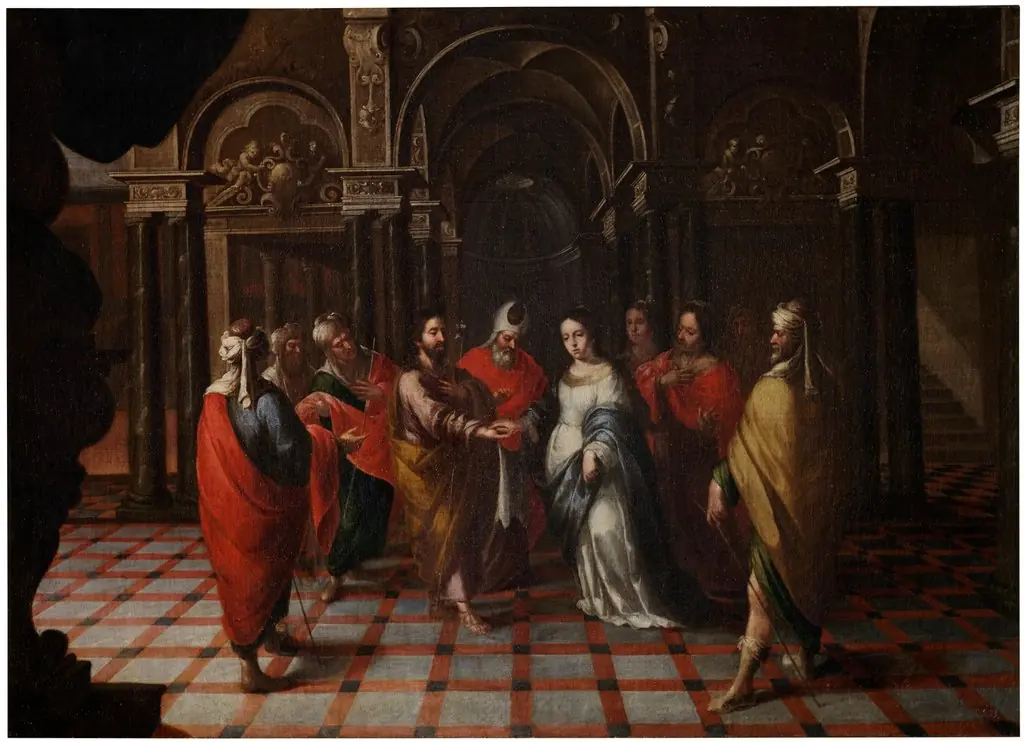 The Betrothal of the Virgin
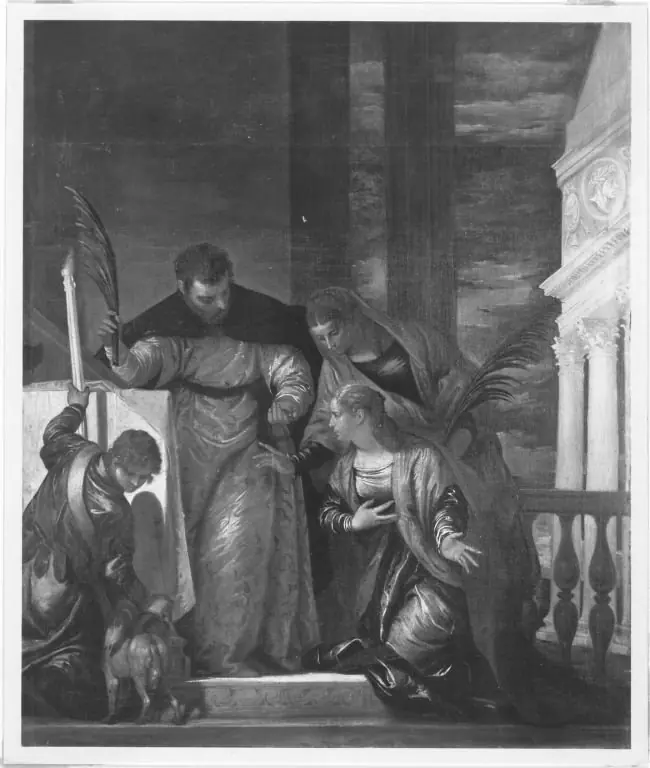 Szene aus dem Leben der hl. Klara (?)
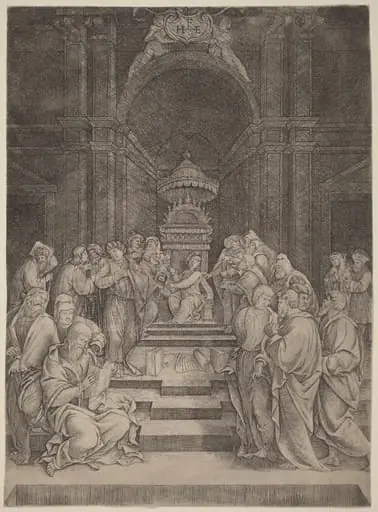 Christ Disputing with the Doctors
 Christ among the Doctors
 Raising Lazarus from the Dead
 The Adoration of the Kings
 Die hl. Katharina soll zum Götzendienst zurückkehren
 The Purification of the Virgin