Artwork
Virgin of the Rocks
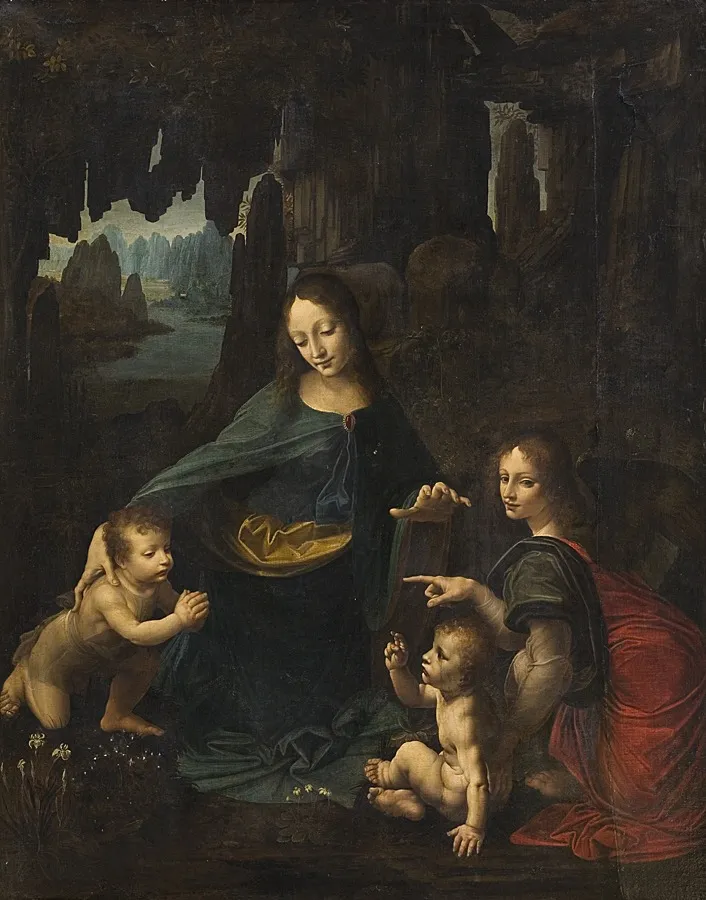
Virgin of the Rocks is an oil painting. It dates from 1650 and is held in the collection of the Statens Museum for Kunst.
About this work
Overview
The work presents a tranquil grouping in a rugged setting: the Virgin Mary seated on a stone ledge, clothed in a blue mantle, with the infant Christ standing nearby and a kneeling youth, traditionally identified as John the Baptist. Beyond them, a distant landscape unfolds, marked by towering rocks and a body of water, establishing a serene yet dramatic atmosphere.
Subject & Meaning
The composition emphasizes the intimate bond between mother and child, while the inclusion of the youthful figure introduces a foreshadowing of Christ’s future ministry. The rocky environment, often symbolic of the wilderness, underscores themes of protection and divine presence amid an untamed world, inviting contemplation of the holy family’s humility and spiritual resilience.
Technique & Style
The painter employs chiaroscuro to model forms, allowing figures to emerge from shadow with a palpable sense of volume. Subtle gradations of light illuminate the Virgin’s veil and the infant’s skin, while the surrounding rocks recede into atmospheric depth. The oil medium facilitates a smooth blending of tones, contributing to the work’s cohesive, three‑dimensional effect.
Context
Set within the tradition of devotional imagery, the scene reflects the Renaissance interest in naturalistic landscapes as settings for sacred narratives. The use of a rocky grotto aligns with contemporary iconography that situates holy figures in liminal spaces, bridging the earthly and the divine through a harmonious integration of figure and environment.
Artist & collection
